Categories
Uncategorized

WHAT IS TO BE DONE?

By A Small Wet Frog

I first came across Extinction Rebellion (XR) in the city in 2019. I was trying to mind my own business when I saw a spectacle drawing a crowd near Flinders St station. A group of activists had blocked the Princes St bridge and were calling for action on climate change. I hadn’t been involved in street protest or any activism before this time but it struck me instantly that I ought to be on their side. This, I thought, was the kind of seriousness demanded by the situation.
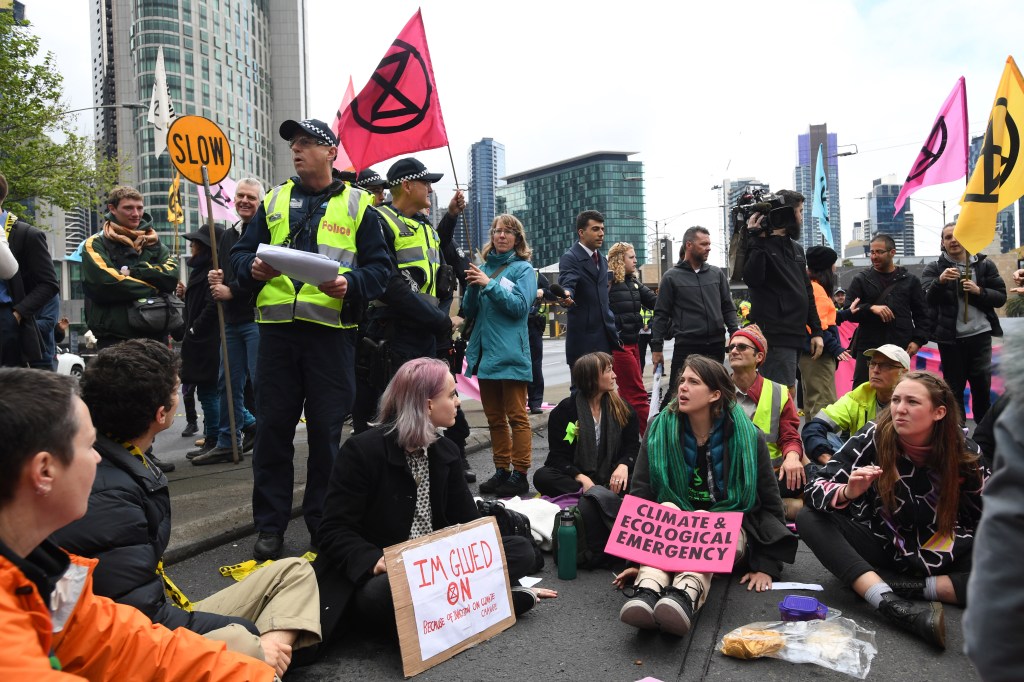
Photo by Erik Anderson


So I jumped in and found a hopeful, friendly and growing grassroots movement under way. I hadn’t been involved long before the pandemic came and took the wind out of the movement’s sails. When I crawled out of the rock I had been under for most of 2020 & 2021 things looked much different. The 3 local chapters of Extinction Rebellion in Melbourne’s north (one of which had filled every room of East Coburg Neighbourhood House during weekly meetings) had amalgamated into a single group, and the remaining participants could all now fit comfortably around a dinner table.


2022 and 2023 saw us pushing on in much the same vein as before. We cooperated with other XR groups around Victoria to plan ‘weeks of action’ – tightly scheduled periods of daily protests, media stunts, workshops, trainings, talks and performances all culminating in a big march or sit-in at the week’s end. There was some really amazing work done and I was constantly impressed by what was being achieved without anyone getting paid and without anyone being in charge. This model of intensive action periods, though, was starting to tire many participants out and new ones weren’t often coming in to take the weight off their shoulders.


More recently the strategy has changed. High flying schemes for synchronously dancing flash mobs, specially crafted puppets and costumed characters to take over the city centre in a riotous display of colour and life are out for now. Many organisers have been focused on a different and more straightforward tactic: the Slow March, which has recently been taken to the shopping strips of Brunswick, Preston and Collingwood.


It’s a decent loophole. You can march down the street with your signs and so on, but you get from A to B pretty quick and then you have to get off the road and go home without offering any material threat to the status quo. Or you can stand your ground and sit down on the road to make a demand. You’ll gain the leverage of stopping economic activity but police usually appear pretty promptly and carry you away.


The slow march cuts it both ways. You block the road and you move – just very, very slowly. “But officer,” you say “we ARE moving…” and somehow that’s good enough for them to let you do your thing (at least for a while). Slow marching has been pretty effective at causing the kind of disruption that makes people pay attention.


The TV crews like these actions – they’ll usually show up and film for the morning news. And they tend to cover it reasonably fairly, though they will always run to interview someone through the window of a truck or ute. The voice of reason in the Australian media: the everyday punter. The comment is usually “Yeah, I get that climate change is bad but I think we can deal with it.

These people are just being idiots.” Maybe that’s what they really believe and honestly I would like to believe it too. It’s not pleasant to know that the government isn’t doing what is needed to mitigate the escalation of deadly weather events and ecosystem destruction made worse every day by our economic activity. But it’s plainly factual as far as I can tell.


What we do often makes people very upset. People who are affected by road blocks feel targeted or punished by what we’re doing. I’m frequently shouted at and threatened with death. Sometimes I’ve been praised and thanked. It’s not always easy to know how to feel about it. Marching in your own neighbourhood is more complicated emotionally than in the CBD, where you can feel like you’re sticking it to “The Man” instead of getting in the way of people you might see at the grocery store later. I know that no-one who participates in these marches enjoys pissing people off and that everyone is there in good faith. So what is the correct way to protest climate inaction? Lots of things have been tried, and no-one thinks about this question more than the activists. But doing nothing and doing things that haven’t worked aren’t reasonable options so this is what we’re trying, either until it works or someone has a better idea.
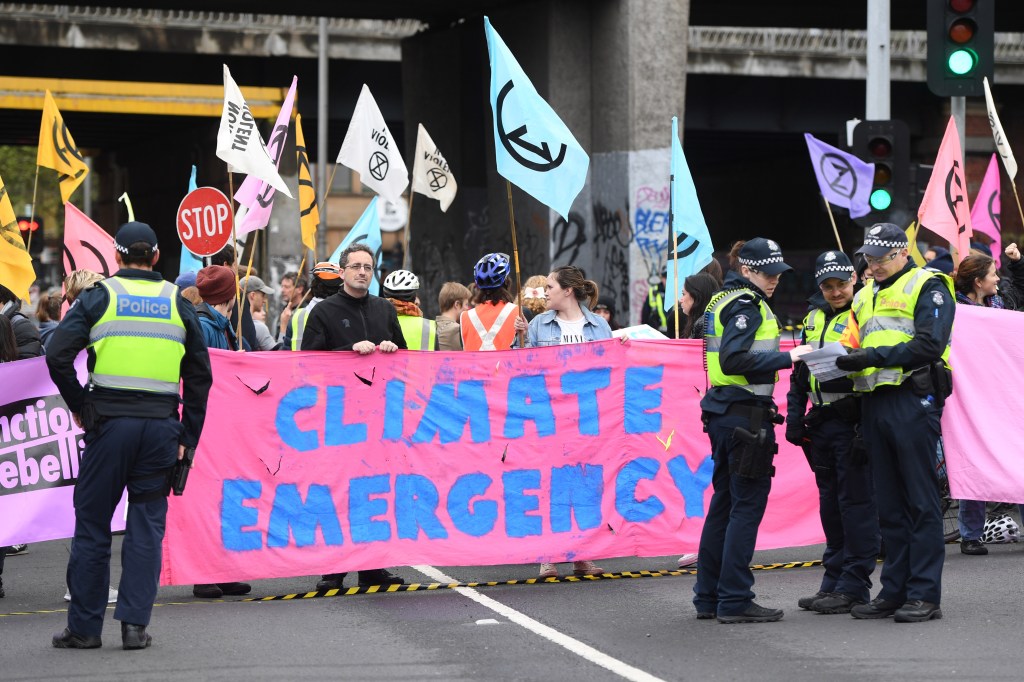
Photo by Erik Anderson


Global warming primarily caused by burning fossil fuels has already exceeded 1.5°C above pre-industrial levels (the safe limit agreed to by countries like Australia when it joined the 2015 Paris Agreement) and may pass 2°C later this decade. Projections from climate scientists indicate that the effect of this global change on our health, livelihoods and environment will be profound and devastating.


From some other dimension where none of this is real, the Labor government has approved or extended 16 fossil fuel projects in their current term. Australia is the world’s third-largest fossil fuel exporter. It’s a fact conveniently ignored because the coal and gas we ship overseas doesn’t count towards our already comparatively high domestic emissions. Will a movement like Extinction Rebellion make a difference? I have no idea, but I hold onto the hope that ordinary people can do something, and these are the people I have found who are genuinely trying.
Categories
Uncategorized

THERE’S ALWAYS A PLAN IN COBURG

By Edwina Snagge

Merri-bek Council has been deciding what should be done with Coburg central (AKA Carpark City) for a long time, but plans have often gone awry.


Coburg is the largest suburb in the municipality in both land area and population. Relative to the three Brunswicks, Coburg has a lot of space and a steadily growing population, making it attractive to developers.

In the late 1980s, the Council put out a tender for major development in the Coburg shopping precinct, which led to a few nicer benches, plants and shop fronts in the 1990s.

In 2002, the Merri-bek council created the ‘Central Coburg 2020 Structure Plan’. Community consultation was opened up, and people were encouraged to make suggestions.


In 2008, Equiset, a subsidiary of the much maligned Grollo construction dynasty, was announced as the primary developer for the suburb. Equiset quoted $1 billion for plans including 1500 new dwellings (20 per cent of the dwellings were set to be ‘affordable housing’, (which Daniel Grollo said he could “live with”). In 2011, the council terminated its agreement with Equiset, citing finances as the reason.


At some point during the COVID-19 pandemic, the Coburg 2020 plan was abandoned – presumably due to the difficulty of getting investors during the apocalypse.

In April 2024, Merri-bek council announced their latest plans to meddle with Coburg in their ‘revitalisation Coburg’ plan. This plan targets council owned land along Sydney Rd, with a focus on the massive carparks they own near the Coburg Library. However, the council is hamstrung by their (somewhat outdated) contractual requirements to provide a car parking quota to the adjacent businesses, hampering their development aspirations.

Recently, Merri-bek also released their ‘Coburg North Sports Masterplan’, seeking to rejuvenate what they have named Coburg’s ‘Sports Hub’. This area includes Harold Stevens Athletics Track, Jackson Reserve, Coburg Basketball Stadium, Coburg Olympic Swimming Pool, Ray Kibby Table Tennis Centre and the surrounding area.


Merri-bek has assured the community that they want input for both plans, and that they will take the proposals from the public very seriously. How much Merri-bek plans on implementing the thoughts of locals in their final plan remains to be seen. This is a Council that, in June 2024, proudly announced that 0.25 per cent of their 4-year budget would be spent on projects suggested by the community. We hope that the community’s input for such major projects will account for more than that.


Of particular concern is whether Merri-bek plans to sell public land, which it has been known to enjoy doing for quick cash injections, despite community and some councillor objections (hopefully the Merri Health Hub is worth it, Merri-bek).


As yet, nothing has been confirmed for the area other than a report on the outcome of initial community engagement.

In mid-2023, the Meddler decided to pre-empt the council’s next development plan by recommending a giant, multi-use onion. Currently the space is occupied by Schoolhouse Studios, bringing together local artists. In this vein, the Coburg Onion was intended to be a theatre and arts space in Coburg, to continue fostering local art projects.


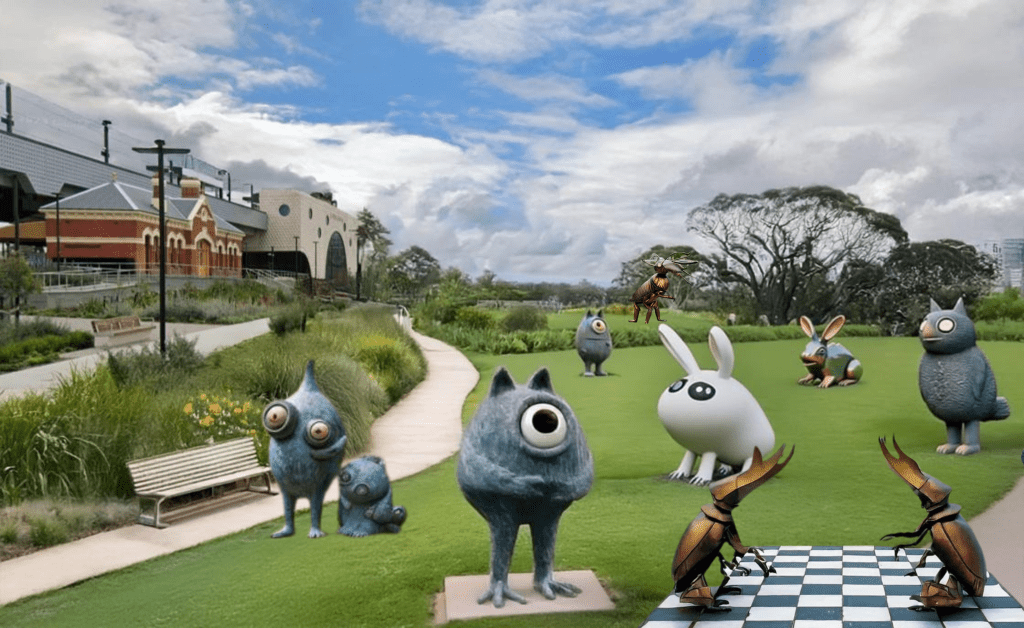
This suggestion did not generate much support. Unlike the local council, we are responsive to community sentiment (silence), and have changed our proposal to a Shaun Tan sculpture garden in response to a fairly intense resident who felt that Coburg was held back by its lack of a Parc Güell.

Categories
Uncategorized

GENOCIDE IS SCHOOL BUSINESS

By SAS & BB

Since November 2023, staff in Victoria’s government schools have faced pressure to remain neutral on the issue of Israel’s ongoing genocide. This began with the Victorian Department of Education issuing a direction to all principals to share a letter with staff in response to a ‘week of action for Palestine’ planned by workers. The week of action was organised by the Victorian Teachers and School Staff for Palestine group, and included wearing keffiyehs, hosting Palestine awareness events, posting photos and videos in support. The Department’s letter stated that it did not endorse the week of action, and that teachers and staff needed to abide by the Victorian Public Sector Code of Conduct at all times.

Whilst the letter was largely equivocal (e.g. support students, don’t upset your colleagues, stick to the curriculum etc.,) the Department did make clear that ‘school staff should not use their professional position to make political statements or seek to influence the political views of students’.

The Department’s Selecting Appropriate Materials policy is meant to ensure students are learning from resources created by ‘inappropriate organisations’, such as online gaming organisations, tobacco companies and companies involved in the sale or promotion of weapons. However, STEM programs commonly used in schools such ‘First Lego League’, ‘Code Quest’ and ‘Space Camp’ are branded by weapons manufacturers such as Lockheed Martin, Boeing and Northrop Grumman.

The Meddler spoke to two locals who work in government schools, about their experiences navigating this issue over the past year. One teacher recalled being spoken to by his worried principal after delivering a lesson about persuasive speeches. “We looked at debates around a few current issues… bike lanes, climate change… Often people look at Andrew Bolt” he explained. “The teacher will use a firebrand, with strong language, to analyse. We looked at one speech by Benjamin Netanyahu, who was responding angrily to the International Criminal Court’s deliberation over whether to issue a warrant for his arrest.” Referring to the Netenyahu content, the principal told the teacher that the Department did not want him teaching it, before instructing all staff to avoid the issue in their lessons. “I’m a teacher of humanities, which means I teach controversial issues”. Since then, I’ve still done little bits here and there; nothing major. When the students got to talk about Palestine, they were pretty engaged. No bad things happened.”


In brandishing the public sector code of conduct, the Department should probably read the whole thing. A second teacher told us that the code actually creates an obligation to support and advocate for human rights.

For him this means schools being consistent in their teaching of human rights. “Human rights only work if they’re universally applied and clearly the decision to not apply them, or to apply them selectively, is a political decision.” His motivation to teach is not only to help students do well in tests, he explained, but to help them to develop as citizens who have a political consciousness – which is a part of the prescribed curriculum. “Giving students an opportunity to develop a political consciousness means thinking about human rights and its selective application. It’s not specifically about Palestine. It’s also about West Papua or it’s about Kurdistan. It’s our obligation to teach these things. And that’s in accordance with Jewish values as far as I’m concerned.”


The teacher, who is Jewish, agreed that teachers shouldn’t be going into the classroom and telling students who to vote for, but they should be able to critically analyse with students a speech by a politician and to do that as a pedagogical practice.


“What I would say as well is that the [Department’s] directive, if one was to interpret that directive more extremely, is that you are not allowed to do anything political. If that was the case, it would hinder the work we do in the classroom. It becomes absurd.”

The teacher observed that young people know what is happening in the world; they are curious and have opinions. “The obligation of teachers is to meet students where they are at, whether they have connections to the issues or not.”


“We wear pride badges. We run queer clubs. We celebrate days like IDAHOBIT. So we’re doing political things at schools and anyone who says we’re not is either being disingenuous or spectacularly stupid.”


One of the ways concerned teachers are responding is through the vehicle of the union. At the Australian Education Union’s (AEU) annual branch conference, the highest decision making body of the AEU, teachers have been successful in passing motions. These include ‘Teaching for Peace’, and ‘Palestine is Union Business’. Amongst other things, these motions articulate teachers’ right to teach in alignment with their professional standards, their code of conduct and their conviction as teachers. “In these motions, we’re determining what’s appropriate as professionals, and as people who know our students.”


The AEU now officially promotes a union contingent to march the first Sunday of each month at the weekly protests for Palestine, and has called on the Department to equip teachers with the resources and guidance needed to educate for peace.

Categories
Uncategorized

DUKKANA AT THE OLD HASSOONS

By Eddie Snagge

The Meddler visited the new pop-up on a rainy Sunday and found Fatima, one of the sisters who run it, cleaning. She welcomed us in, saying that the pop-up would formally be open next week and run until February. “We chose the end of February more so as a pitch to our father, who owned and ran the shop”. The previous Sheikhtaba Grocery/Hassoons Cafe closed four years earlier and the space has been vacant since.

The plan, according to Fatima, was to run the old store as a place for community. The transience of the space was important to keep the fabric of the neighbourhood, but the future of Dukkana is ultimately being played by ear. “Our father is proud of us and the work we’ve put into this” said Fatima, when commenting on the experience of helping out in their father’s business as younger girls, and now taking over the space as an artistic, community-oriented project.

During the weeks that they are open, the sisters are running a schedule of art and community events. In the first week, there was an admin/co-working day, a ‘hang out’ day, and a decorative fruit platter workshop. The following week, there was embroidery and photography. On 21 February, Dukkana is hosting an art fair from 6pm-9pm.

Dukkana has a large lounge space for people to talk, read and play cards, and an exhibition space displaying various artists. The sisters have used the old bain-marie to showcase Safa’s (one of the sisters) embroidery business and designs.

In the back, there’s a ‘sister’s closet’ section, referencing the phenomenon of the shared sibling wardrobe.

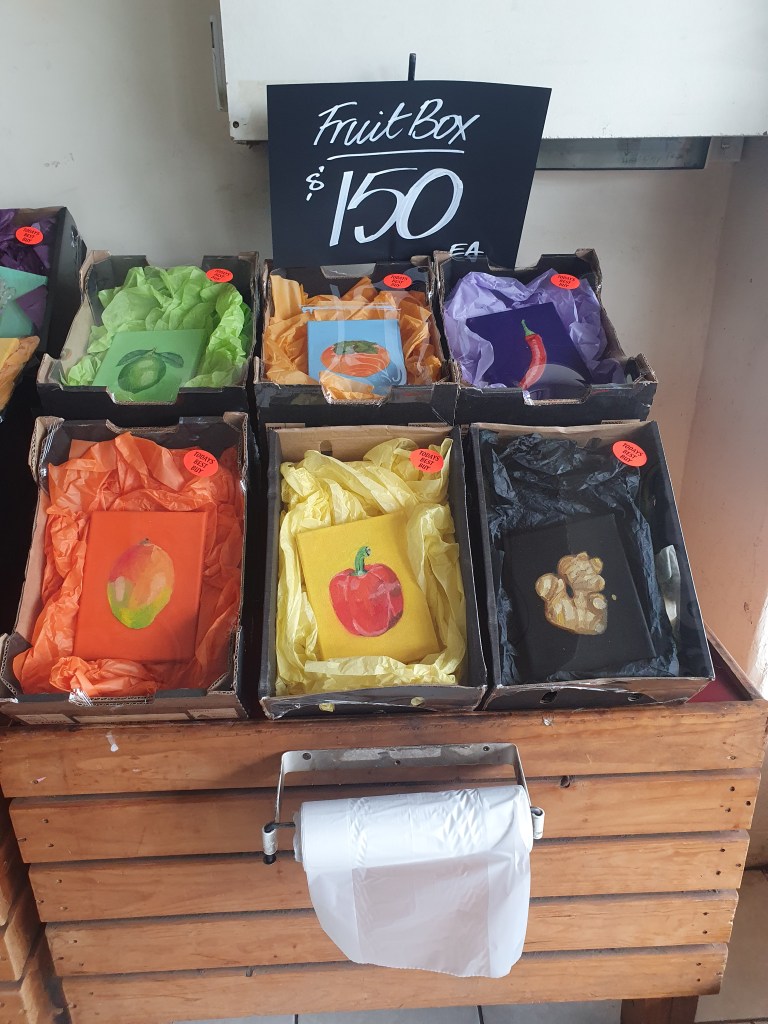
Charming still is the artwork paying homage to the Sheikhtaba grocery, with artwork of fruit and veggies populating old fruit stalls.

Dukkana pop up
99 Harding Street, Coburg 3058

Categories
Uncategorized

Houses for Mouses

By SAS & BB

Merri-bek can make you a mean kebab, but it can’t give you solutions to homelessness, a lack of public housing and high rental prices.

Any renter in Coburg can tell you that rent prices are out of control. And if you don’t want to talk to them about it – because let’s face it, who does –you can receive the same information from recent reports released by Homes Victoria. Median rent in Merri-bek is currently between $450-$660 per week (depending on rooms). Renting is unusually high in Wills compared to the national and state average, and ABS data from the 2021 Census determines that, in the electorate of Wills, 27.7 per cent of people are in housing stress. According to a 2021 council report, “the only people in Merri-bek guaranteed an affordable rent price are those in public or community housing (social housing), but this is only 3 per cent of Merri- bek homes of which very few are in Coburg’’.


While it’s true that Merri-bek can’t be held responsible for the State Government’s hostility to public housing, they can’t pretend there’s nothing to be done. As the Allen Government is currently busy gutting public housing in favour of a smaller number of privately owned ‘social housing’, local council should be investigating their own solutions. Social housing sounds good, but is often only semi-regulated with easily-met requirements such as short-term affordable rentals. It is also harder to get evicted from public housing, whereas social housing providers can follow the same rules as private landlords. There are plenty of other initiatives Merri-bek could trial pursuant to their ‘affordable housing action plan 2022-26’. At the moment, their plan is mainly focused on facilitating social housing.

In the June 2024 Council Meeting, former councillor James Conlan sparked some controversy by requesting a Council investigation into differential rates for property investors who have more than one residential property in Merri-bek. In response to the media storm, some landlords commented that they would simply raise the rent for their tenants, causing renters to express concern about increases in their already sky high rents. However, Conlan’s background to the report suggested that where the State Government made a similar decision during COVID-19, there was no evidence that the increased rates were passed on to renters.

Another approach is focusing on vacant homes. Housing unaffordability set against a backdrop of multiple unused properties across Merri-bek and broader Melbourne defies economic sense.

In late 2023, the Victorian Greens managed to pass a bill that raises taxes on vacant homes, which took effect on 1 January 2025. The legislation will add a 1 per cent tax liability in the first year, 2 per cent the next, and with a cap of 3 per cent (unless there is a genuine attempt to sell). It is too early to tell if this will make a meaningful impact on housing affordability and availability. The additional tax liability seems quite low.


According to 2024 figures released by Prosper Australia, 1.5 per cent of homes in Melbourne are vacant, and 3.7 per cent are barely used (Brunswick East purportedly wins the contest with over 12 per cent of houses vacant). Housing advocate and senate candidate for Victorian Socialists, Jordan Van den lamb (known on social media as Purple Pingers), has additional data sourced by individuals submitting suspected vacant properties. Mr Pingers reported to the Meddler that he has had 28 homes submitted for Coburg/Coburg North and 110 homes submitted for the Merri-bek area – (excluding some on the outskirts of Merri -bek). This data has been used to match people to empty houses, as well as to draw attention to the absurdity of vacant properties during a housing shortage.

Mr Pingers also argues there are numerous effective measures available at a local council level that could increase housing viability. These include: introducing a definition of “affordable” which is proportionate to renters’ incomes (instead of tied to the increasingly unaffordable “market rate); inclusionary zoning whereby a proportion of new developments are required to be public housing instead of “affordable housing” as defined by Homes Victoria; the purchase of empty properties by council to convert into (council-run) public housing, and removing the extra votes for landlords in local council elections, to name just a few.

Pingers’ tips to identify vacant housing:

  • Use common sense
  • Garden is overgrown
  • Check the gas meter (the gas is off when the
    red or yellow handle is at a right-angle with
    the gas pipe).
  • Look through windows to check for furniture
  • Check the mailbox for signs of use
  • Knock on the door a few times
  • Check for open doors and windows – common
    in vacant properties
  • Use common sense
Categories
Uncategorized

MERRI-BEK COMMUNITY SHED

Merri-bek Community Shed, or ‘MerriCS’, has steadily grown into a local institution. Despite this, in mid-2024, Merri-bek Council disclosed that the group only had a short-term user agreement that was set to expire at the end of last year. It appears that the fate of MerriCS hinges on whether the Council accepts a proposal from the Bachar Houli Foundation, a not-for-profit run by ex-AFL player Houli, to build a $20 million multi-purpose sporting facility for culturally diverse youths to feel safe meeting and playing sport together. Former Councillor James Conlan attempted to include in Council’s July 2024 motion an amendment to consider the inclusion of the various community groups that have utilised the space. This motion was lost.

What seems apparent is that if the Bachar Foundation can secure that amount of money from state or federal donations, which is their plan, they could probably afford to develop the facility anywhere else around the parameters of the Coburg Oval. Whereas MerriCS and the Coburg Commons Garden depend on existing structures to operate.

The president of the MerriCS, Dave, explained that the group started as a Zoom call in the midst of COVID-19. “I was the last person to step backwards when elections were happening for the main roles”. The group is very clearly not a men’s shed. When we arrived at the old Bowls club, we came across what appeared to be a true cross-section of the local community. “There’s nothing wrong with Mensheds, but this area needs far more than just 50 year old men whittling away at some wood”.


Merri-bek council owns the building, and the group negotiated a use agreement for some time before opening their doors to the public in late 2023. According to Dave, the group’s ultimate goal is to have a permanent facility set up for the work members want to do, as the current space doesn’t meet all their needs. Despite the building’s limitations, the group has members interested in woodworking, metalwork, pyrography, ceramics, glazier work and textiles to name a few. Recently, the group introduced a blacksmithing forge to their impressive collection of professional-grade equipment. Dave says that the group’s leadership, half of which is constituted by tradespeople, take their tools and safety very seriously. “We need to ensure safety. There have already been quite a few second hand tools that we just had to get rid of. If people want to donate stuff, we say ‘great, that’s awesome’ but we need to do a thorough round of testing to make sure it’s safe. We test in three ways: an electrical safety test, a mechanical safety test and an accuracy safety test”.

The group has been forging connections with other groups in the area too. For example, the Commons Garden which had to move away from its spot opposite Coburg Library due to Uniting Church undergoing a renovation, has made its home on one side of the green.


The group also sends some members to participate in things like the Sussex Neighbourhood House Repair Cafe. For those who may feel trepidation about stepping into a community shed with experienced tradespeople, Dave explained “people with very limited skills come in all the time”. Dave shared the story of a young man who walked in one day. “He said ‘I used to do woodworking with my dad and with my grandfather. I miss that now, and I just want to do that again’. Now he’s made two beautiful pieces. If someone comes in with limited skills but wants to make something, you just let them get on with it and wait for them to call out to ask for help with things, like ‘how the hell do you make this joint’?”


Part of the endeavour of the Shed is to teach people how to actually share tools. The Shed’s success and growth depends upon the quality of their tools. The Shed teaches people about what it takes to be responsible for the proper treatment and upkeep of the tools, not just by cleaning them, but by understanding their limits.

MerriCS is running a craft market on 16 February 2025 from 11-3pm, selling plants and locally made goods.

At the time of writing, becoming a member with MerriCS requires a yearly subscription fee ranging from $40 for concession holders, $70 for general membership or $100 for ‘patron’ membership.


Merri-bek Community Shed
19 Harding St Coburg
Open Sunday 9-1pm, Tuesday
5-9pm and Thursday 9-1pm

Categories
Uncategorized

THINGS COULD BE BETTER

By BB & SAS

Art by JO

In a push to keep the bastards honest, Sue Bolton has launched her campaign to be elected as the federal MP in the seat of Wills. A Kaffiyeh- clad Bolton can be spotted most weekends around the electorate at community stalls. At one such stall, we tried to question Bolton about the existence of gold deposits under Coburg (something we swear she had previously let slip), but she quickly pivoted to her campaign.

Bolton is running on a Socialist Alliance ticket promoting pro-Palestine and public housing policies.


Wills is a traditionally safe Labor seat (it has only once been held by a non-Labor MP when it was won by independent Phil Cleary in 1992), but the Greens have been battling hard since a notable surge of support in 2016, when Peter Khalil first took office. Although Khalil has so far managed to keep a Greens victory at bay, recent changes to electoral boundaries across Victoria increase the prospect of a Greens-held Wills.

Wills is amalgamating some 20,000 electors from Adam Bandt’s seat of Melbourne (while also losing voters to Maribyrnong).


Despite (or because of) his new role as special envoy for social cohesion, there is a question of whether support for Khalil has dwindled due to his Labor-aligned position on Palestine and inaction on climate change.


While Khalil could be seen to be simply toeing the party line, there is space for him to have taken a more progressive stance.

Consider the case of Tony Burke, whose Sydney electorate also has a large muslim population from the SWANA region, and who has been consistent in his attempts to push Labor’s agenda to recognise Palestine for many years, showing that there is some room for manoeuvre, at least for a senior MP. Khalil should not be let off the hook for simply sticking with his party’s position. Particularly in light of calls from the community for him to represent a more principled stance. When he refused to speak out against Labor’s reluctance to condemn Israel, protesters uncovered a number of his pro-Israel comments and positions. For example, it came to light that Khalil voted against a motion at an ALP national conference to recognise Palestine in 2018 (Burke voted in favour), and he has referred to being a ‘friend to the state of Israel’. The question is whether he will be penalised for his friendships this election.

As for his campaign platform, Khalil says he’s focusing on ‘real action’ on the housing crisis, the cost of living pressures, climate change and renewable energy. You could forgive a Wills voter for rolling their eyes at his promise of ‘real action’ on climate change, following his poor track record.

In 2023, after months of pressure, locals finally succeeded in getting Khalil to form the Wills Climate and Environment Advisory group (WCEAG). WCEAG’s remit was to gather information and create climate priorities to inform Khalil’s climate decisions. In mid-2024, the group resigned en masse, in frustration of Khalil’s silence on Labor’s continued approval of a series of coal mines (an ongoing hobby of theirs, with three more approved while voters were in a Christmas ham frenzy). There are another forty currently awaiting approval. The WCEAG stated in a public letter to Khalil, that while Labor came into office with a strong mandate on climate action to limit temperature increase to 1.5 celsius, its actual policies were “inadequate” in terms of emissions targets, “misguided” in its over-reliance on offsets, carbon capture and storage, and in “need of review”. WCEAG pointed out the contradiction between the government’s stated reduction targets and its continued subsidisation of new fossil fuel projects, citing a list of misdemeanours including new coal and gas projects, a dubious carbon credit system, expansion of offshore gas projects and attempts to exclude offshore emissions from scrutiny, to name a few. The group felt that their hard work had been ignored, stating:


“Initially we thought that working with you could bring a better outcome. We engaged in the process of priority setting (as requested by you) with a high level of commitment. At the meetings that followed we provided official reports, media statements and arguments supporting the group’s priorities. We had hoped that by arming you with this information you would be able to add value to the government’s policy setting process and say your piece in caucus to get some sense. Instead over the past year, again and again, we have been dismayed and disappointed.”

The group concluded that “the climate crisis demands that we turn our energies to actions that give us greater hope”.


For the 2019 and 2022 elections, Khalil’s control over Wills was stable, but with a shift in the electoral boundary, and with Samantha Ratnam as a high-profile state MP throwing her hat in the ring, Khalil may have a significant run for his money. Ratnam provides a well-timed and enticing option for those spurned by Khalil’s inaction. A local union delegate said Ratnam’s speech at a Teachers4Palestine rally was ‘really good’, and before the union had even gotten involved.


In the last Wills election, Khalil came out on top with a firm, but not comfortable, 58.6 per cent of the vote. Things could be better in Wills. The question is whether Ratnam and Bolton present an answer the locals are ready for.

NB: Our local photographer was unable to supply us with a photo of Khalil because he (Khalil) is keeping a low profile, but our local artist worked overtime to ensure our readership wouldn’t miss out.

Design a site like this with WordPress.com
Get started