Categories
Uncategorized

MALL-CONTENTS

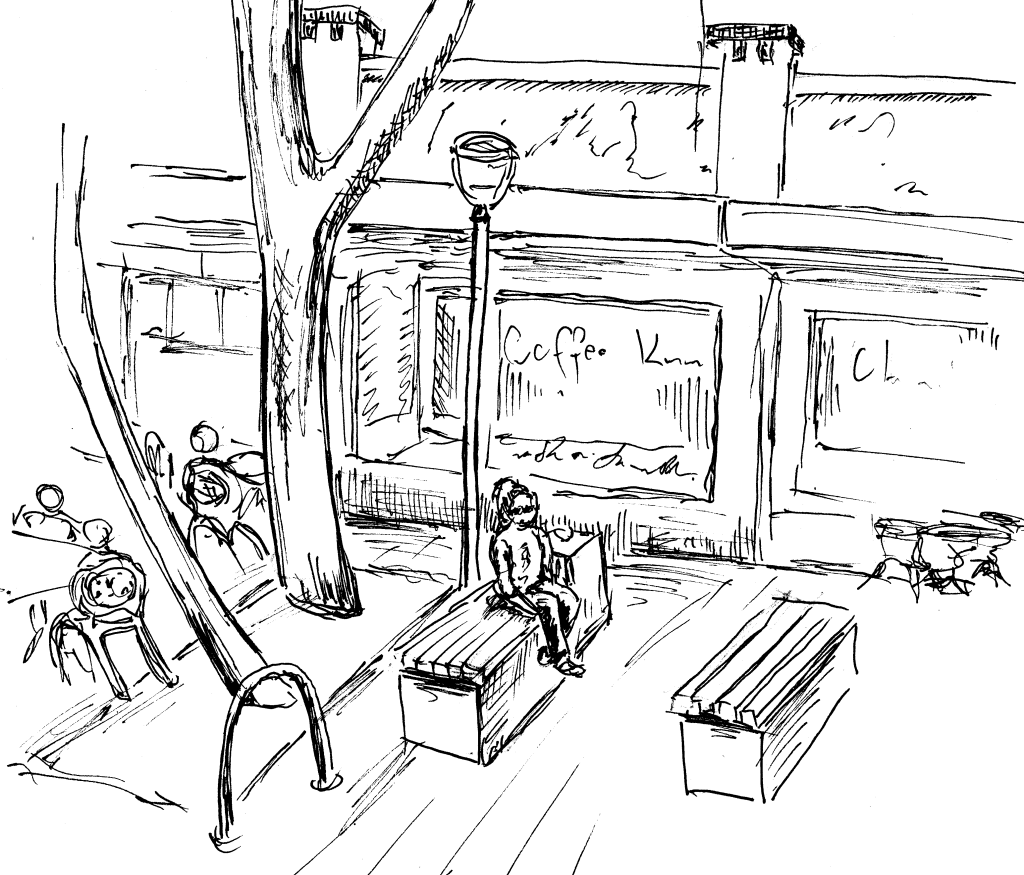
Mak was sitting outside Chorba Cafe, a popular Turkish cafe in Victoria Mall. She was enjoying a coffee and a Turkish delight. Mak was generous enough to spend some time between sips to regale the Meddler with some stories.
MAK: I’ve lived all over Melbourne, but I was raised in Coburg. I’ve recently re-bought in Coburg, so I’m over the moon. My mum is 15 minutes away, my sister lives in Brunswick and my brother lives in Carlton. My son lives interstate and he has a beautiful young family; I’m a proud grandparent.


MEDDLER: Did you spend a lot of time in Coburg when you were young?

MAK: Yes. When we first immigrated from Turkey, we were all staying at the hostel in the old army barracks, and then we mainly lived in Coburg. We shared a house with another family and then we lived at Jewell Station at the flats there, and then we actually purchased our first house in Coburg. Now I have a big family, which I love. We’re all spread out. That’s just what happens with migrant families.


MEDDLER: What was it like growing up in Coburg?


MAK: I first started going to Coburg Primary and then I went to Brunswick Girls High. When we moved back to Coburg, I went to Newlands High. When we first moved here, the real estate agent gave us a little booklet explaining the cafes and stores in Coburg; she also told me about Chorba. It’s beautiful, because it’s my heritage. It’s familiar. When we first came here, there were a lot of immigrants in the area. I experienced bullying at school because of my name; no one could pronounce it. When I started working in childcare, where I’ve worked for 25 years, people started calling me ‘Mak’. Which I thought was easier for people. I was originally named after my mum’s first child who she lost to whooping cough.


MEDDLER: What changes have you noticed?


MAK: When I was young I was quite comfortable walking around. Me and my sister used to walk to school with no problems. I didn’t remember seeing any homelessness or drug use, but now I see it. It’s sad, but it’s a part of life in this day and age. No one wants to be in that situation. I know it’s because of their circumstances that they get pushed aside by their families.


I love all the stores that I used to come to, but I can see a lot of change and struggle, too. The small milk bar that we used to go to doesn’t exist anymore because of bigger stores like Coles and Woolworths who are open 24/7. And now the cake store, Ferguson Plarre, has closed. But despite all this, I always feel home when I’m here.

Categories
Uncategorized

LOCAL SHORT STORY OF THE MONTH

In the early days of our lockdown-meltdown, I wrote this, but failed to send or deliver it immediately. Within days many of my fellow travellers had acted delightfully in a similar vein, making this passé. I will argue that some of my more serious thoughts in this hurtle of nonsense continue to be relevant.

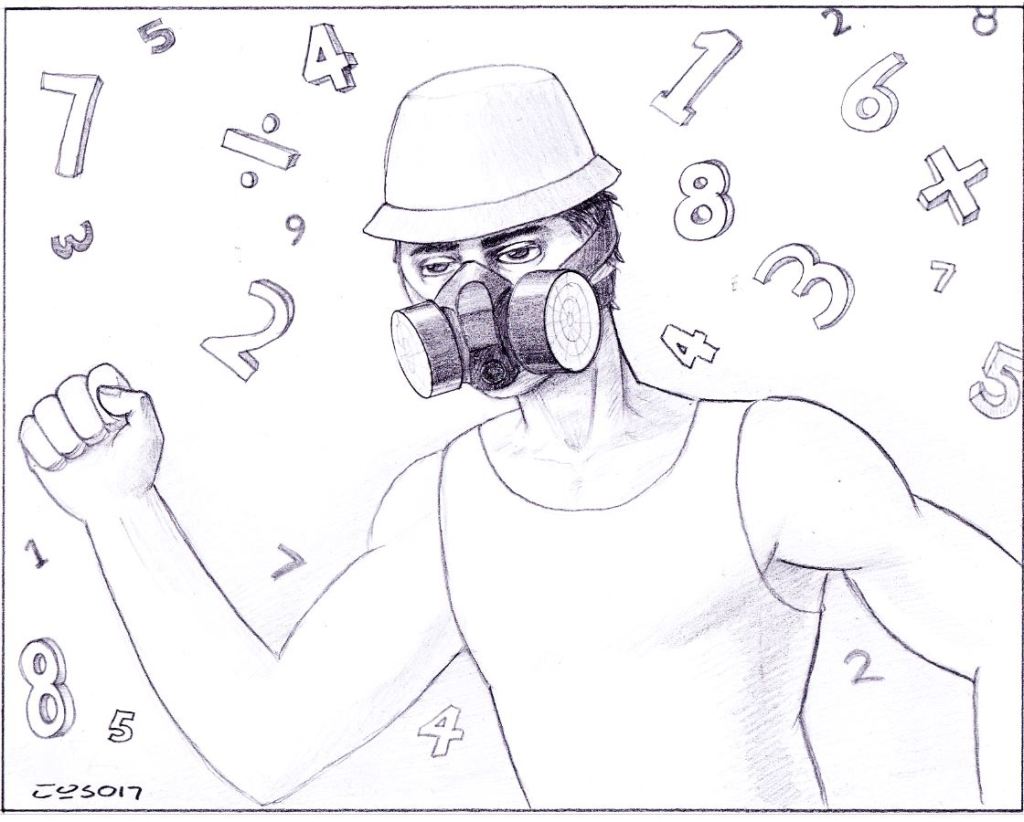
Illustration by Tyson Kalender (TheDrawingDroid on Etsy)


PRESS RELEASE


VIRUS ZOMBIE
March (in July) of the VIRUS ZOMBIE (a notification of a demonstration)


On Saturday July 25th 2020 at 11am, there will be an outrageous demonstration by one local ratbag at the Sydney Rd/Albert St intersection in Brunswick, offering mirth & nonsense as an antidote to the Pandemic Panic. The VIRUS ZOMBIE will be wearing an industrial level Fume Mask (recycled from spraying woodwork), a clear label, & marching with a slightly strange gait!


This ECCENTRIC BOHEMIAN is crushed almost lifeless by what can be cast as illogical arithmetical projections which demolished the capacity to travel to the wilderness of Marysville, chasing those yummy, introduced trout. The willingness of trout to be caught & cooked is precisely seasonal & cannot be deferred!


The nonsense aspect of this protest is believed to be caused by a recurring infiltration of the little hero ALICE, read nightly to sooth the anxieties. While this outburst against authoritarianism may lead to arrest & imprisonment, the ZOMBIE has prior agreement that no-one will pay the bail, producing some time in the LOCKUP! This might lead to an innovative literacy program for prisoners & their guards, (police persons may apply for inclusion), & virus verse is likely to emanate. While these dark days will possibly lead to the extinction of humanity by Xmas, that could be environmentally beneficial (& those trout will be delighted).
“Always look on the bright side as well” shouts this hopeful descendant.


VIRUS, VIRUS, BURNING BRIGHT
CUTS ALL FREEDOM & THE LIGHT
BUT NONSENSE SALVAGES DELIGHT
LET US UNITE, EVEN IN FRIGHT!
[name & addressed cannot be discerned]


(my most serious concern involves mathematical projection of data – the logic can be indicated:


If no-one died yesterday from falling trout, & never has before, but someone appears to have suffered that unpleasant ending this afternoon, that is a zillion % increase! With careful digital projection of that frightening data dynamic it can be alarmingly expected that we will all be dead by Tuesday …)


By Ken Taylor

Categories
Uncategorized

LETTERS TO THE EDITOR

As a Coburg resident I must say I find your meddler quite interesting at times. But I have to say if you decide to criticize someone, please have the decency not to share very personal information that had nothing to do with the article. I’m sure you can work out what I’m talking about. If you had done that to me I would have sued your meddler. Meddling is one thing but giving personal family information is not on. Think wisely before you meddler with people’s business next time.

Anonymous

MEDDLER’S THOUGHTS


Perhaps there are a number of people who share similar concerns about last edition’s front page article titled ‘Crooked House – Demolition by Neglect or Design?’. In this article, we named the applicant of a demolition permit for a home on the Grove in Coburg that had a heritage protection. Not only did we name the applicant, but we also shared details about his character; namely, that he had been found guilty in court of both tax fraud and recently physically assaulting his parents.


The media’s influence on the public’s feelings about other people means that if journalists are reckless and vindictive, then they can have a hugely negative impact over people’s lives.


It’s not a very satisfying defense to claim that the information that we published was public knowledge, proven in a court of law. The Coburg Courier, which ran from x to z, was once in the habit of publishing the names and details of people going through divorce proceedings in open court. The insidious outcome of which likely helped to keep unhappy partners trapped in unsatisfying or abusive marriages. Even though certain information is public, does not mean that journalists should still recklessly weaponise it against individuals.


Regardless, there are instances where a person’s character and past crimes are relevant to a current question. Reasonable minds might disagree over whether our last edition’s article crossed the line. We personally stand by it.

VERBAL COMMENTS TO THE EDITOR


“I’m sorry, but you should get a life”.

Uncle P

Categories
Uncategorized

ARTIST OF THE MONTH

Coburg Lake, 2021
Nadine Roseboom

Nadine is part of the Art Film Workshop.

The Artist Film Workshop (AFW) – an artist-run collective of analogue filmmakers – have recently moved their lab from Fitzroy to 5 Cross St, Brunswick. AFW members run public screenings and workshops, as well as producing collaborative and independent projects that screen globally. Although they are currently in the final stages of setting up the lab, they expect to resume their program of public screenings in the latter part of 2021, providing locals with the rare opportunity to see film projected live.
If you are interested in learning more about film cameras or processing, or you just want to find a group of like-minded locals, feel free to contact them at http://www.artistfilmworkshop.org/about or on Instagram @artistfilmworkshop.

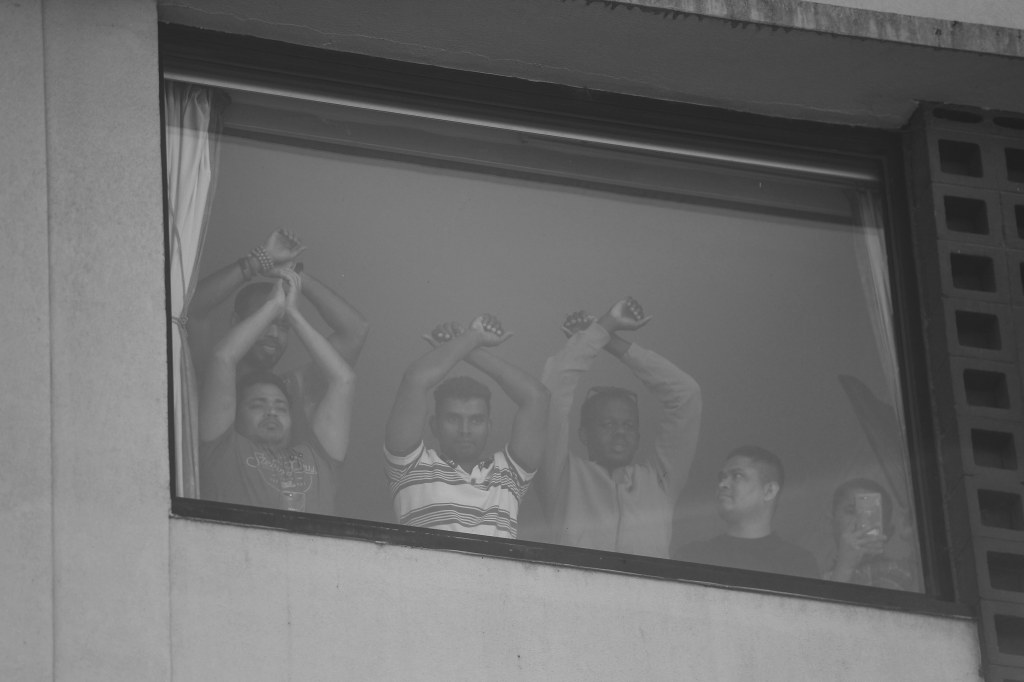
‘Window’ is a collaborative film project by @artistfilmworkshop made in response to the first pandemic lockdown.

Categories
Uncategorized

INTERVIEW WITH LOCAL AUTHORS

Authors’ own photo

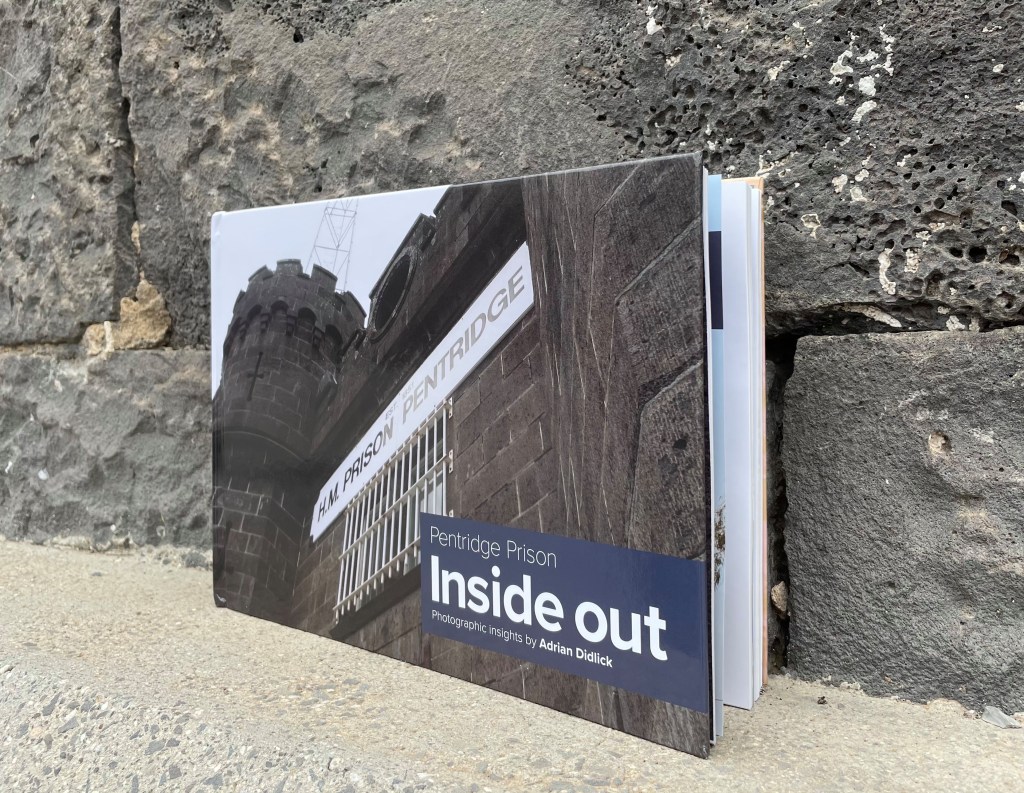
Pentridge Prison – Inside Out

Adrian Didlick, Katrin Strohl and Don Osborne

The authors write: About 12 years ago Adrian started taking photographs of Pentridge Prison. His interest in preserving images of the then abandoned, 146 year old prison and its environs, grew into a fascination. A fascination that hasn’t stopped.

Over the last years Katrin Strohl dedicated many hours going through Adrian’s photographs, sorting and curating them into a 288 page book. The photos appear as Adrian took them – sometimes in a rush to get out of there. 

Don Osborne, a very good friend of Adrian and Katrin’s, a former teacher in Pentridge during its most volatile years and the author of Pentridge: Behind The Bluestone Walls, has gracefully written a brief history of the prison complex as a preface to the book and texts to all its divisions.

The intention was not to write another book about Pentridge, but to give a unique insight into this important historical landmark and show, warts and all, the conditions that people worked, lived and died in. 

MEDDLER: Why is Pentridge important to you?

ADRIAN: It is so much a part of Victoria’s history, good and bad, it held some of Australia’s most infamous prisoners, it also held children. Pentridge Prison was for many years self sufficient supplying meat and vegetables to the residents of Coburg. It supplied labour for building bridges, roads, churches and its own prison build. It is also of interest that they made some of the equipment used on the Burke and Wills expedition. During the World Wars, the gaol supplied and repaired some of the items the soldiers desperately needed, like clothing, bedding and footwear. The overall story of Pentridge is fascinating and its importance in the growth of Victoria is undeniable.

KATRIN: Pentridge is important to me as being part of Victoria’s heritage. The State of Victoria thought the same, and due to this great importance, the former HM Prison Pentridge was listed on the Heritage Victoria Database.  Like other heritage places, I see Pentridge as a great resource for local education – for people of all ages. The more we learn and know about our heritage, the more we value it and look after it. In my opinion, the best way to preserve cultural heritage is to share it with others. 

MEDDLER: How long did it take to produce the book?

ADRIAN: Just over three years ago, Katrin became aware that I had a large collection of photos of Pentridge and suggested we should put a book together. Along with the help of others, in particular Don Osborne, it evolved into a book that we are very proud of.

MEDDLER: Were you able to gain full access to the site?

ADRIAN: For about the first nine years, access was via fallen fences, open doors or gates, I even took photos through keyholes. During the last couple of years, Katrin and I were given access to areas and buildings not open to the public. 

MEDDLER: Do the new developments in the old Pentridge site respect its history?

ADRIAN: There has been an enormous amount of money spent employing specialists and historians to restore the gaol to the period of the 1890’s. It is now a safe environment after the current developers removed thousands of tonnes of contaminated material, dumped by previous owners of the site. Had this work not been done, the public would never have had the benefit of seeing it today. They would, most likely, have seen an overgrown, broken and vandalised ruin.

KATRIN: In my opinion, yes. Unfortunately, after Pentridge’s closure in 1997, a big part of the former prison complex has long been neglected. Adrian’s photos are proof of that. 
The development of the site included preservation and passionate restoration of the original fabric. Bits and pieces of heritage interpretation can be found on site, which is a good start and tours are going to commence early next year. I still have high hopes for a Pentridge Museum, which would be the best place to tell stories from both sides of the bluestone walls…


If anyone is interested in purchasing the book, it can be found here or by contacting the authors at pentridgeinsideout@gmail.com

Categories
Uncategorized

CROOKED HOUSE

Demolition by Neglect or Design?

65 The Grove has been in the hands of the same owner, controversial Coburgian millionaire Mr John Poulakis, for almost 18 years. In this time, the heritage protected, Edwardian-style home has sadly sunk into a state of irreversible disrepair.


Mr Poulakis has been in the public eye for being convicted of fraud and avoiding jail time. He had falsified customs documents in order to evade $1.47m worth of import tax for his fashion company, Harrolds. Most recently in 2018, he faced court for allegations of physical assault against his elderly parents and property damage of their home. He avoided conviction and jail time (again) despite pleading guilty.


Mr Poulakis has applied for a number of permits over the course of his ownership of 65 The Grove, primarily seeking demolition and subdivision of the land.


In 2016, the Moreland Council’s decision to reject Mr Poulakis’ application for demolition was appealed to VCAT. At the hearing, which was ultimately unsuccessful for Mr Poulakis, VCAT member Russell Byard commented that he had seen instances where “some owners of land wish to free themselves from the encumbrances and restraints” that heritage building overlays impose, and that “there have been cases where apparently deliberate destruction has been undertaken”.

Byard also added that in this case “[it] is obvious that something is amiss”. He questioned a report completed by a structural engineer claiming that there were no building footings. Byard asked: “is it seriously being suggested that this building, which has apparently stood for approximately a hundred years, has no footings resting on its foundations?”.


More questions abounded in a Moreland Council January meeting. In the agenda notes, there is photo evidence of 4 verandah posts firmly holding the roof line in place in March 2014; less than three months later, all 4 verandah posts are missing and the roof line completely sagged from the lack of support.


In 2018 an independent structural engineer gave a report on 65 The Grove to the Moreland Council. The engineer noted that: “if it were not for the partial collapse of the roof and verandah roof structures, the structure of the dwelling would be typical of dwellings of a similar age…”


Whilst there are laws preventing owners of heritage properties to demolish or destroy their heritage property without a permit, legally there is nothing requiring owners to take care of their properties. Demolition by neglect is a loophole available to owners of properties with heritage overlays to eventually get their desired outcome.

In the January Moreland Council meeting to discuss the latest application by Mr Poulakis, there were suggestions that this was indeed the case for 65 The Grove, and that potentially important structural walls and supports had been willfully removed (no one suggested that Mr Poulakis was responsible for the removal). The Council ultimately decided to reject the latest application despite the likelihood of Mr Poulakis appealing their decision in VCAT.


Heritage overlays exist to preserve historically significant architecture and objects. Protection of old buildings has long been acknowledged as a benefit to the broader community, and Melbourne has a rich history of unionised builders taking a stand against developers having the freedom to knock down old buildings for the sake of profit.


The political context of heritage protection debates in Australia should not be ignored, however. All buildings are erected on land stolen from Aboriginal communities; Aboriginal communities who have struggled and continue to struggle to claim heritage protection for historically significant places. Not everyone has the same nostalgia or concern for colonial buildings.


Perhaps a uniting concern, however, is the ability for developers to side-step laws that average people can’t. Even more repugnant is when a developer potentially being rewarded for breaking the rules.

By El S

Categories
Uncategorized

THERE’S NO SUCH THING AS A FREE SAUSAGE SIZZLE

MORELAND ADOPTS NEW SPONSORSHIP POLICY

Moreland Council has voted in favour of a formal policy enabling private sponsors to fund events and festivals.


Moreland Council has already been accepting private sponsorship for some events, however the February 2021 Council Meeting was an opportunity for the Council to either entrench the practice into formal policy, or take a stand against it.


Labour councillor Lambros Tapinos argued that this would be an opportunity for local businesses to fund local events; however nowhere in the policy is sponsorship limited to small or local business. Whilst the policy disallows sponsorship from industries such as coal, gambling and tobacco, it still allows sponsorship from developers and multinational corporations. This calls into question Lambros’ implication that the policy would benefit local businesses. The policy does state that sponsorship candidates should ideally be based within the municipality, however this is not required. In fact, in the same paragraph of the policy it states that sponsorship candidates can be companies seeking to conduct business in Moreland.


Another issue is that the policy incentivises bigger businesses, not small local businesses, to sponsor events. If a company offers over $10,000 of investment, then the sponsor can have their logo on all materials related to the event, have a significant presence in the marketing for the event/s and is allowed a major presence at the event in premium positions. If companies contribute less than $5,000, they are allowed a limited presence in the marketing and are not given an opportunity for a physical presence at the event. For many smaller, local businesses, a contribution to a local event of over $5,000 is untenable.


We should be thinking about corporate sponsorship of local government events for what it is; political donations. Allowing this formal policy to be developed gives the bigger private companies an opportunity to gain access to the Council and to weigh in on decision-making.


As Greens councillor James Conlan argued: “seeking money from big business for sponsorship is not the way forward…we might get the Bunnings street food party perhaps with free sausages, but I don’t know if that’s a path we should be pursuing”.


By SAS & BB

Categories
Uncategorized

COUNCIL VOTES TO INVESTIGATE REFUGEE DETENTION CENTRES IN MORELAND

Photo by Erik Anderson

In mid-January this year, 46 men were finally released into the community after spending roughly 8 years in detention for seeking refugee status in Australia. The men were transferred to Melbourne from the offshore detention centre on Manus Island for medical issues under the now-repealed Medevac scheme. The men were forced to remain locked in hotels with minimum access to facilities for over a year. Many of the men reported that these conditions caused a significant decline in their mental health.


Whilst many of the men have been released into the community on 6-month bridging visas, there are still more refugees continuing to be held in Park Hotel, and protests continue.


Concerningly, the use of hotels for detaining refugees — often covertly — is on the rise, with revelations that a Moreland motel was being used as a refugee detention facility coming to light in December last year.


The Australian Border Force confirmed to the City of Moreland that a Fawkner hotel has been secretly used for months for this purpose. Best Western Fawkner Suites and Serviced Apartments on Sydney Road, holds a number of refugees (including refugees from Nauru) who are locked in self-contained units. The detainees are only able to exercise in the unit courtyards that are roughly 2m2. No visitors are allowed and reports suggest that the detainees in separate units are unable to communicate with one another.


Council passed a motion introduced by Cnr Bolton, calling for an investigation into whether the Fawkner hotel had breached its planning permit by operating as a detention facility. The motion also called on the state government to reform planning restrictions so that any use of motels as detention facilities is made illegal.


By ES

Categories
Uncategorized

WHAT IS TO BE DONE?

Updates on political activism within the community

EVICTIONS COMING


After 28 March we could see a big spike in evictions and homelessness in Victoria, as the moratorium on evictions for people who can’t afford their rent due to COVID-19 will come to an end. We’re also currently seeing evictions happening to the homeless people who were housed through the hotel contracts that the government established at the beginning of the pandemic.


As is now plainly obviously, the pandemic was never over in Victoria; we had simply had it under control. The recent announcement of the new and highly virulent strain of COVID-19 in Melbourne highlights the fact that the government acted too soon in its eagerness to cut costs, starting with the more vulnerable communities first.


The newly established Renters and Housing Union have been actively protesting this development, and are running regular meetings and eviction defence training sessions.

Police tactics have recently changed. Photo: Erik Anderson

RECENT THREATS TO ACTIVISM IN VICTORIA


Last year, Refugee Action Collective activist Chris Breen was arrested for his involvement in the protests outside Mantra Hotel in Preston. The protest was organised to support and interrupt the relocation and re-detention of over 60 refugees to a new hotel in Parkville. Breen was arrested for ‘incitement’, and around 30 others were each given fines of $1,652 for breaking quarantine measures. Breen is being accused of incitement for allegedly organising a ‘solidarity convoy’ for the men being transferred.


‘Incitement’ under the Crimes Act 1958 (Vic) is an indictable offence. If Breen is successfully convicted, this will be a serious concern for activism in Victoria. Breen’s next hearing is on 17 March at the Magistrates’ Court in Melbourne.


By SAS & BB

Categories
Uncategorized

PADDY EGAN’S DOG

Local writer, Gwendalyn Kneebone, has started documenting her memories of Coburg during the 1950s and 60s. This poem draws from her memories of living two doors up from a warder at Pentridge Prison

At 5.30 each evening the big man passed by
and the little girl joined him joined and him
walking the dog.
The man worked at Pentridge- — all men worked somewhere.
The little girl wondered about work.


The neck of the park took them out of the street
away from the duty of warding the bad
away from the house where eyes were so sad
the dog for an amble


The chatter was formal but wound around justice
Curly Wee from “the Age” our Global defender.
He fought crime and ignorance and was a great symbol of moral divide.
The little girl needed to have someone read it.


She wore her apron, embroidered by someone, ready for tea.
His boots were heavy.
The dog wore short curls
and leered and dribbled.
At 6pm as damp rose they parted to dinner and news.


He lead the gardening team on the floral clock —
leaf fall and petal death, fresh air and punishment
a piece of string and a thirty year pansy.
His garden at home was plush with dahlias
and giant tomatoes from vats of compost fearful to fall in.


In the neck of the park
crashed by the boys with the blunt brainless digits.
Nothing happened. Nothing happened. Yes it did.
The heat of the dog
trips against the wide comfort of fur.
I remember Paddy’s stick.
I remember we joked a prisoner escaping would not stay in Coburg.
We all leave footprints.


The park has replanting by green conscious neighbours.
The man has left, buried the dog.
Paddy Egan’s Dog


The little girl grew but not changed entirely.
The blue stone dreams on.


You can buy cells from the plan in the High Street.
Rising damp is a downside, the chill when life goes.
The heritage castle now sold by the madmen
— a ‘natural escape’, an ‘exclusive enclave’.
Poor taste, poor joke.
Now I write history and will do the life cycle of Pentridge plumbing
to smell the backdraft to melt new ideas.


I wish I had a picture of the big man, the little girl and the wide dog.

By Gwendalyn Kneebone

Design a site like this with WordPress.com
Get started