Dermis by Lou Smith your skin layered sweet, layered thick with ointment made from soft orange flesh, sweet soft stink of Pawpaw shield on lips, on hands, on fingertips
your skin was powder, baby down feathers in morning breeze I would touch your earlobes, your arms, the flexion creases of your daily routine
and your thick black hair you plaited and spun with fingertips kinks of paths of here and there from end to root
ovals in cross-section
but my hair grew blonde honey-hued like the darkened comb skin the shade of olive oil you coated in Calamine to ease the sting painted cool dusty white, uneven over mozzie bites, and scabs, and here below the eye one scar remains
Previously published in SWAMP. #1. June 2008.
Lou Smith is a Melbourne-based poet and researcher who grew up in Newcastle, NSW. Her work investigates sense of place, cultural memory and familial identity. Lou’s first collection of poetry riversalt was published by Flying Island Books in 2015.
Local clown doctor answers your medical questions.
Why is it called bulk billing? Once upon a time there was a very tiny bill. The smallest bill in the world! Because this bill was so small, they had to be cashed at a very small bank, and very small banks are hard to find, so over time, people stopped choosing the very tiny bill and they ended up squished at the back of a doctor’s drawer. At the back of the drawer, the very tiny bill met a holistic healing book, and they struck up a nurturing, world-expanding relationship. The very tiny bill reimagined their relationship to the self and the world, and emerged from the drawer as a bill with vision and wisdom! They went to speak to the government about their new understanding of bills and size, and landed on a new agreement – the very tiny bill would get together with all the other bills, big and small, and together they would be the Bulk Bill.
A beautiful story of working together and supporting each other.
The ‘second Coles’ site next to Coburg Station is about to open as a performance, arts and studio space run by not-for-profit organization Schoolhouse Studios. Schoolhouse has been active in the northern suburbs since 2012, taking over leases on disused buildings and turning them into art spaces. Their previous sites consist of a former boys college in Abbotsford, and warehouses in Collingwood and Brunswick. They’ve been known for hosting numerous events from parties, poetry and gigs to activist meetings and markets, and providing studio space for artists of every medium.
Schoolhouse Director Hollie Fifer (who, after some uncouth harassment by the Meddler, still generously spoke to us) was enthusiastic when asked about plans to engage the local community.
Hollie said the studios had recently held two community meetings in Coburg for anyone interested, to hear what people wanted to happen at the venue. “What we heard was different artists and groups saying they wanted more community programming and they wanted to have a space where they could either learn about different cultural experiences within the area or give a space to their own expression”. She added that Schoolhouse were keen to have the program co-created as much as possible by the local community: “If anyone has an idea about what they want to do- any community programming events or different offerings, then we’re willing to change our model to fit that. We basically want to have a yes mentality”.
The Coburg site is currently decked out with 31 studios with the potential for a further 22, however Schoolhouse are keeping the architecture responsive to what people might want. On that note, we were excited to learn that there is currently a big area left free which, for the moment, has been termed the ‘roller disco space’ (we were told to keep 30 July free!). We asked Hollie about the temporary nature of the lease, and she explained that Schoolhouse Studios is used to this model: “We normally take over meanwhile spaces… we basically move every 5 years, and each time we do we more than double our capacity. It would be great in the future if we could find something longer term, say 10+ years, but with being in Melbourne and running a space as big as we are, that’s always a challenge”. The land, which is owned by Moreland Council, is still being leased to Coles, who are now subleasing it to Schoolhouse studios for a 5 year period.
It is telling that Schoolhouse’s former Abbotsford site is now due to be turned into high-rise buildings. Similarly, the Coburg site has been marked for redevelopment after the 5 years are up.
Hollie was polite about Schoolhouse’s current landlord, saying Coles as well as Moreland Council had been quite generous in allowing the Studios to move there. However, the Meddler can perhaps better afford some open scepticism here (but that could be easily changed -please sponsor us!). It is surely in Coles’ best interests to have a non-food related lessee for the space, and perhaps even in Moreland Council’s to have a pro-community stop-gap. We note that the Coburg Development Plan 2020 was severely delayed because of the pandemic, and so potentially the developers for this site still need to be sourced. What we can say for sure is that we would like to see this new project, as well as many community projects, be secure, long term and unconditional.
We are excited to find out what experiences we’re in store for, and hope that others are too. Hollie emphasised that Schoolhouse Studios are not interested in being a “highbrow exclusive art space… Melbourne has way too much of that” she said. “We try to make the space as fun and accessible as possible so that people from any kind of walk of life can access the arts, and produce something or exhibit something.” However non-permanent their stay, it will surely be a fun one.
For enquiries, contact hello@schoolhousestudios.com.au
Directions Place one cup of sunflower seeds in a medium bowl, cover them with a few centimetres of boiling water with a pinch of salt, alternatively soak over night in cold water so they soften.
Drain the soaked sunflower seeds and rinse them well.
Put sunflower seeds in a food processor or a pestle to crush into a paste. (In the processor you need to just pulse so you don’t get a full paste, you want some texture.)
Add extras such as a pinch nori flakes, a squeeze or drizzle of lemon juice or olive oil, a tablespoon of chopped fine red onion, olives, capers and a lot of dill or parsley.
If not vegan add kewpie mayonnaise. If vegan, add the amazing sriracha mayo found at most shops.
Stir and season very well with salt and pepper.
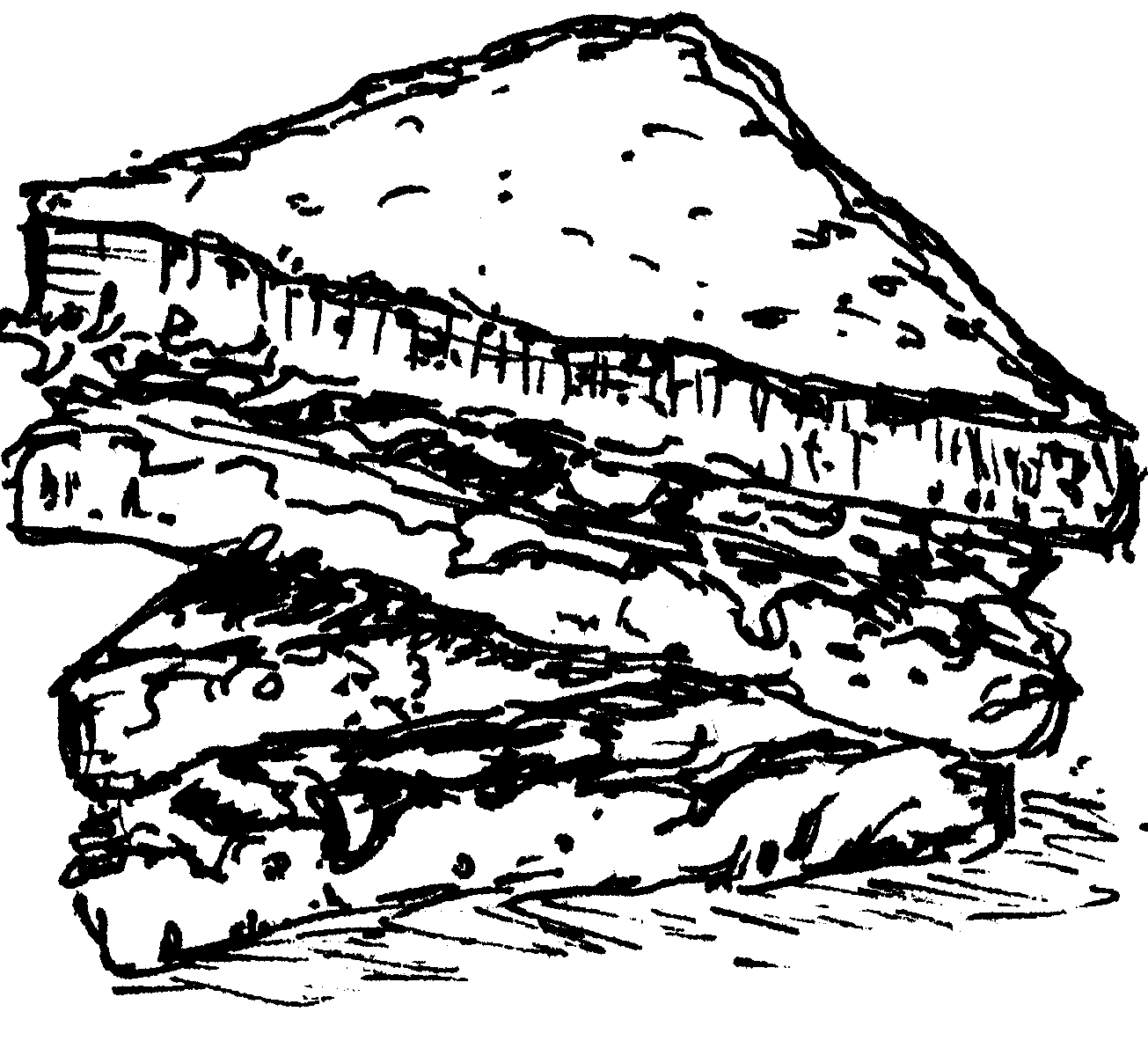
Cut two thick slices of fresh bread (see below for optimum loaves). If stale, toast it.
Spread the paste on one side. Don’t be stingy.
Other side could include cos lettuce leaves, rocket, sprouts, micro greens.
Press the slices together and slice in half.
RECIPE NOTES
This recipe is also good with chickpeas, don’t need to soak just straight from the can.
The bread should ideally be from the following local bakeries that know their way around a loaf: Oven’s Street Bakery – I love the classic or the dark rye Back Alley Bakes – classic white loaf Wildlife – the seeded loaf rules, as does the baguette
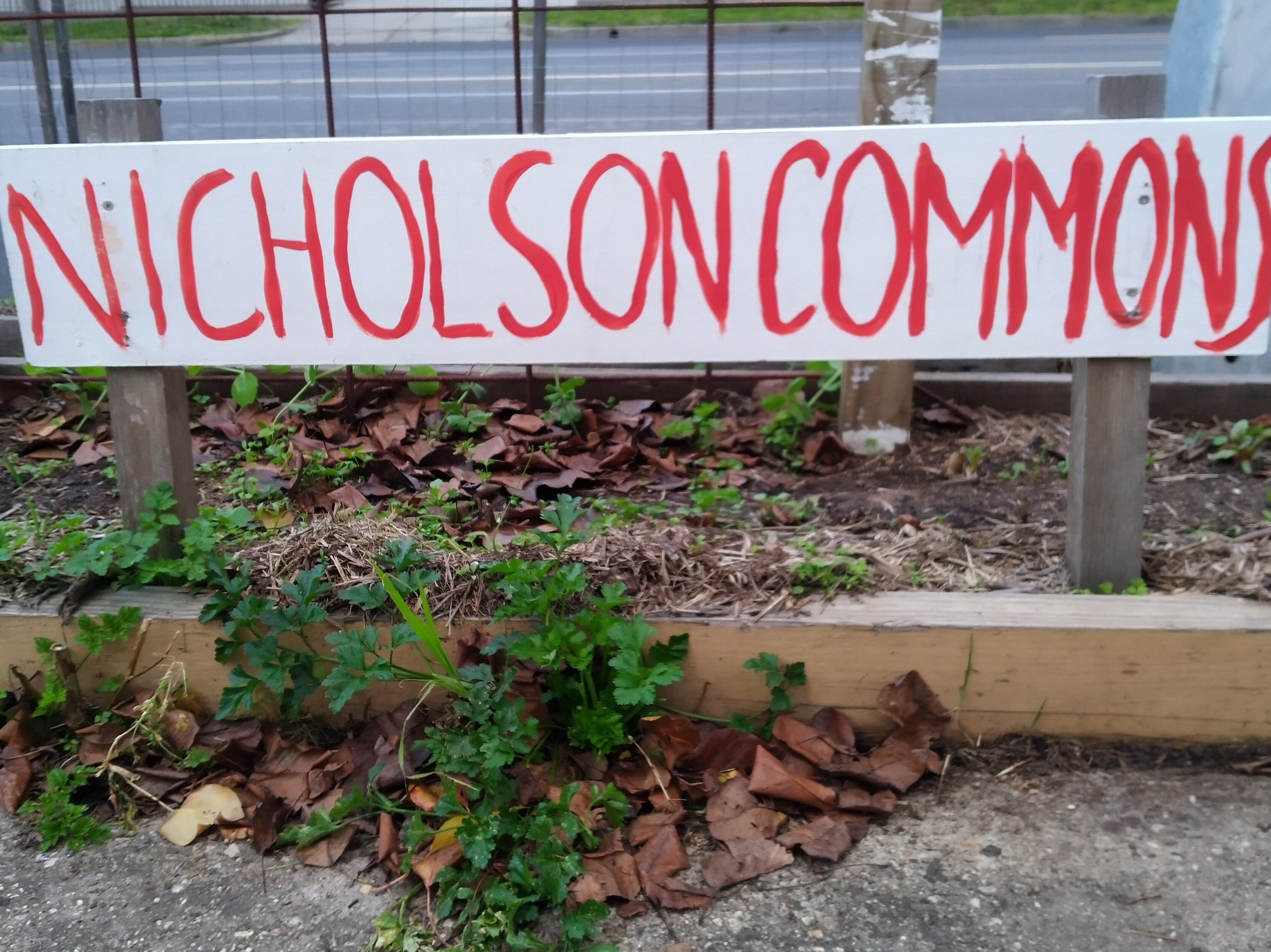
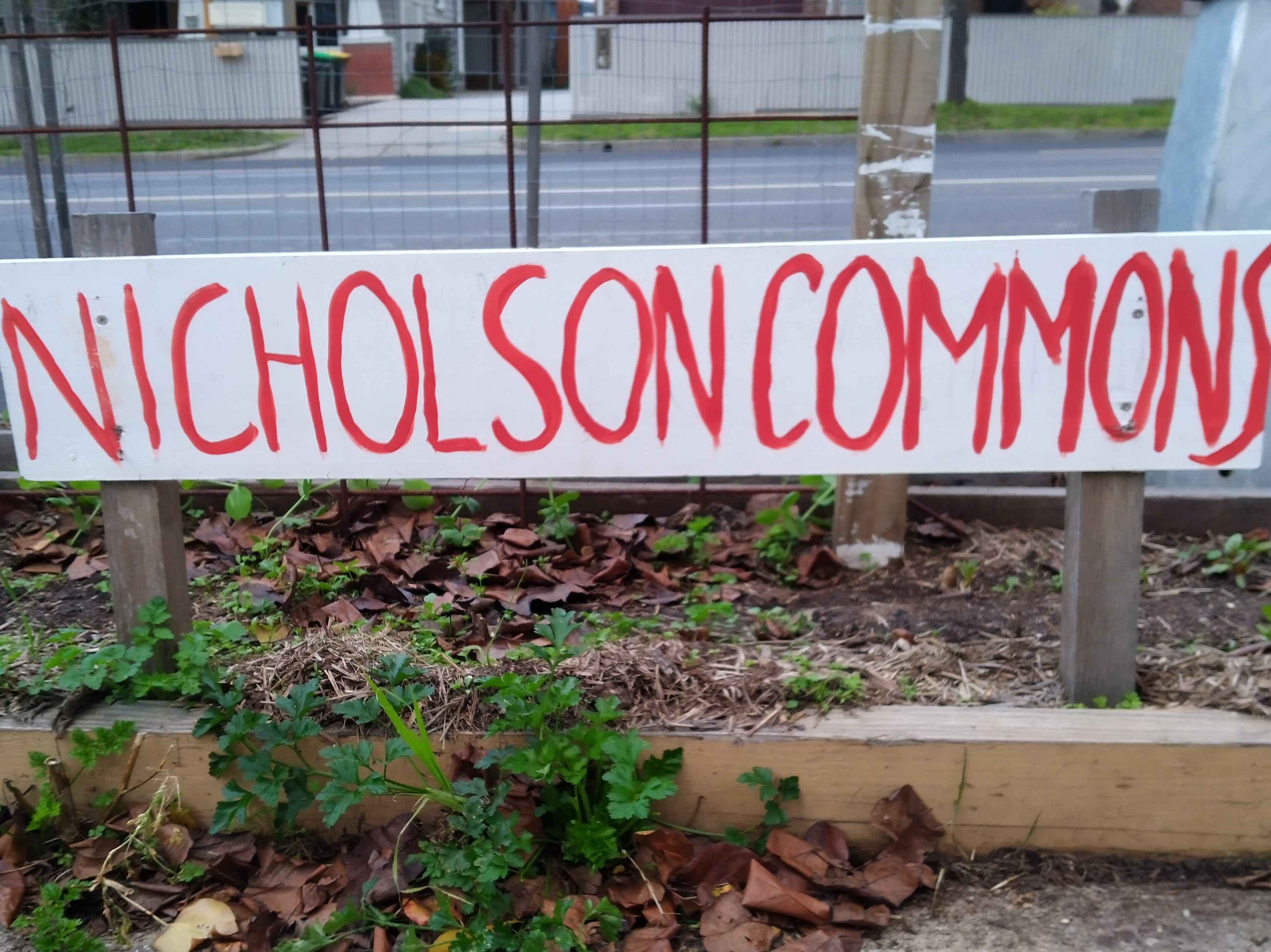
Yep, you got me. The lovely little piece of paradise on Nicholson St, which has brought many an eggplant, tomato or smile to thousands of passers-by, it seems, is the same patch of ground which has so deeply offended you. For this, I am deeply sorry.
I agree with you that the ‘Nicholson Commons’ is not, in the strictest of terms, actually a true ‘commons’. A true commons, as you point out, is a shared resource that is owned, managed and governed in common, usually by a community of people with a shared interest in the resource. In fact, the Nicholson Commons is almost an extension of private property, as it is managed privately and arguably, for private gain.
But Hyper Bowler’s theoretical interpretation of the commons misses the spirit that the act of commoning is intended to engender. At its core, the commons movement seeks to fundamentally challenge private property as a concept, demonstrating its inefficiencies, injustices, violence and inequality. I would argue that seeding small germs of resistance by encouraging people to rethink how their streets are used (or not used), can only be helpful for the broader project of bringing down capitalism by deconstructing its core institution (private property).
Commons theorist Silvia Federici (look her up) has written extensively on the concept of the commons as a key tool in challenging capitalist relations, redistributing resources, creating community, and breaking down neoliberal individualism. Under capitalism, labour is divided along gendered lines. Men do the ‘productive’ labour like building, selling, making and buying things in exchange for a wage. This work is done in the public realm and is highly visible in society. ‘Women’s work’, on the other hand, is the ‘unproductive’ labour of social reproduction which is done for FREE! – rearing kids, cooking, cleaning etc.
To Federici, de-privatising domestic labour by bringing it out of the privacy of the home, is a key part of the process of ‘demystifying’ women’s work and challenging its devalued status. Further, the act of conducting domestic work in the public realm, is more conducive to this work being done collectively, rather than individually, helping to create communal bonds and solidarity amongst women – a basic foundation for any successful political resistance to patriarchy.
Beyond the theory, I can attest to the seeds of community, solidarity, and humourous interactions that the Nicholson Commons has created. Many of the relationships with my neighbours have been borne out of the curiosity and interest that the garden has roused. One day, when I was saving the seed of my expired basil plants, I got chatting to my passing neighbour, Prunella, about what I was doing. We talked about gardening, we exchanged ideas, then I gave her some basil seeds to sow next year. Today we exchange olives, cups of tea, and compost. The seed of our relationship literally sprouted from the Nicholson Commons.
Also, the act of commoning in physically challenging places like a Category 1 Road Zone, is one way to expand one’s horticultural skills. Harvesting roadside broccoli in peak hour is a truly exhilarating and terrifying experience – there’s nothing sweeter than the taste of self-grown broccoli picked from the jaws of death, narrowly avoiding your own decapitation in front of a speeding semi-trailer.
So, Hyper Bowler (or maybe you’d prefer Hyper Angry?), if you are so upset by my community project, maybe you should come round for that cup of tea so we can plan for its removal? To make it a true ‘commoning’ project, I suggest you bring your mates, I’ll summon my neighbours, and we’ll commence the process of bulldozing the garden (including all radishes, broccoli, lettuces, beans, peas and kohlrabies which I was intending to gift to my neighbours), filling it with concrete (collectively mixed of course), and covering it with Astroturf. Perhaps after this collective destruction, the Commons Police will issue a permit allowing for the continued erection of the ‘Nicholson Commons’ signage, to which this semantic kerfuffle centres upon. But that ironically sounds like a capitalistic, bureaucratic process to me.
Many of you would have gone past the beautiful little curb veggie patch on Nicholson st, Coburg. It might have made you smile, maybe given you a bit of hope for humanity, and maybe even a tomato or eggplant. For me it has been a different story. I am outraged by whoever thought it was a good idea. I imagine you are wondering why someone would be outraged by a simple act of sharing produce. It is not the sharing or the veggies I have a problem with. It’s the act of calling it ‘the commons’. It degrades the meaning of this concept which I hold very dear, and after many months of holding my tongue I feel the need to speak out.
Many people have heard of the concept of the commons, maybe as a thing of the past in Europe and many other countries, destroyed and enclosed by capitalist forces; maybe you’ve heard it refer to different projects around the world, and likely you’ve heard it in the concept of “tragedy of the commons”, one of the most unfortunate phrases to enter the English language.
The concept of the commons has been around for a long time, and today its definition is still debated. I am going to use a definition by Elinor Ostrom and her colleagues (absolute legend, look her up), which is: a resource that is “long-enduring, self-organized, and self- governed”. This means the resource, piece of land, information, etc. is held in common ownership by the people who use it, and who organise and decide the rules for governing it. As Ostrom and others have shown, this has happened and continues to happen successfully and sustainably for long periods of time in many parts of the world. That is until capitalist business backed by military power comes along, which is a whole angry letter to the Meddler in it’s own right.
So, dear reader, can you begin to see my issue with the well intentioned soul who built this little piece of paradise? The Nicholson St “commons” is not in fact a commons, as it is not self-organised or self-governed. I would love to be proved wrong, but I, as a local that walks past and occasionally takes from the verge garden, have not been involved in organising or governing it, has anyone else? I think, in fact, this resource is what should be more adequately called an “open access resource”, which are resources freely available for use. And when we confuse open access resources with commons, we are feeding into a much more damaging and sinister narrative.
In 1968 Garrett Hardin published an article called ‘The Tragedy of the Commons’. This created waves, and the use of the term “commons” increased dramatically, but often not in a good way. Hardin, an American ecologist known for his anti-immigration and racist views, described the issue of uncontrolled population growth as “the commons”, and constantly conflated the word “commons” with open access resources. His first and most well known example is grazing, and he states: “picture a pasture open to all. It is to be expected that each herdsman will try to keep as many cattle as possible on the commons” (italics added).
Now this shoddy academia should have been called out and dismissed, and it largely has by Ostrom and others (seriously look her up, such a legend), but the message hasn’t filtered through to the many people that continue to quote and refer to the commons in the same way Hardin did. And if you ask me why, it’s because enclosing and privatising commons is a very popular thing for capitalist business people, and Hardin’s rhetoric is a powerful way to justify what they are doing.
Anyway, the lovely editors of this fine paper will never publish me if I take up too much space with angry (well researched) ranting, so I can’t go into more depth here. Look up “Hardin’s imagined tragedy is pig shit” for further reading, and have a think about what narratives strengthen the influence of the rich and powerful!
So to conclude, the commons is a concept that is very dear to my heart. I think learning from commons projects – for examples look up “Re- imagining the future: A list of resources for commoning” – and creating our own, is part of the answer to our current planetary (including human) destruction. And I will not stand idly by when I see it being watered down in my own neighbourhood!!
So, to the hard-working folks of the Nicholson st “commons”, let’s sit down over a cup of tea and work out how to organise and govern what you have created, for the long term benefit of all.
Written by Hyper Bowler
The Meddler, having featured the Nicholson Commons in a past edition, felt inclined to reach out to the creators of the Commons and ask if they had a response. A response was provided.See ‘So-Called ‘Commons’ on Nicholson St, Coburg – A Response’
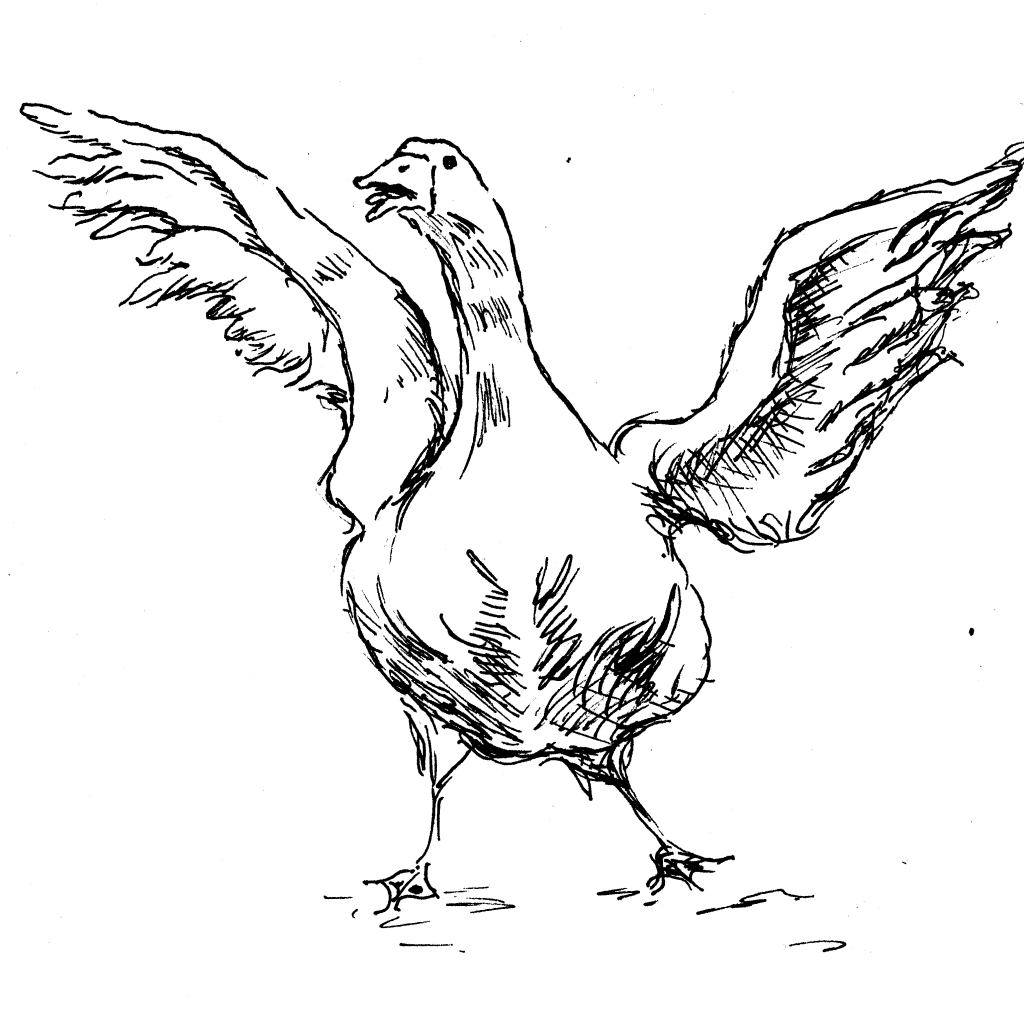
There once was a greedy young goose Who thought she could eat a whole moose After a difficult day Suffice it to say She turned to a goal less abstruse
There once was a motive named vengeance That took every slight as its engines But years of plotting Left a lifetime of rotting And a funeral low in attendance
The northeastern dawn sky of July 7th, at about 6:45am, say, will present the almost-dark crescent Moon next to the Hyades group, with its bright orange star Aldebaran. The following dawn will show the lowering Moon in line with Mercury and the orange star Betelgeuse in Orion.
Unlike the planets, most stars shine with constant brilliance. For a variety of reasons, some do not; Aldebaran and Betelgeuse are two such. Betelgeuse’s brightness varies by about one magnitude over a regular period of about 400 days, while Aldebaran’s variation is smaller, and its period irregular.
A tradition of the Kokatha people of southern central Australia has the vain hunter and woman-chaser, Nyeeruna, in about the same position in the night sky as western astronomy’s hunter Orion, with a club of fire magic (Betelgeuse). Each night he pursues the Yugarilya sisters (the Pleiades) who are of the Mingari, or Thorny Devil Lizard totem (Mingari women live by themselves and shun men). Fortunately their eldest sister, Kambugudha (the Hyades), intervenes and protects her younger sisters. But she also taunts Nyeeruna by spreading her legs (the inverted ‘V’ of the Hyades) at him, and raises her left foot (Aldebaran) with its own fire magic, to ward him off. The two combatants’ fires wax and wane as they struggle – but although Nyeeruna is powerful, Kambugudha is victorious, and keeps him at bay.
In the western twilight (about 6 pm) of July 12th, the Evening Star, Venus, will approach within one degree for a passing flirtation with red Mars, just above Diana’s Bow, the thin crescent New Moon in the west. The two planets will drift apart over the following nights, as each then brushes past the star Regulus in Leo; Venus on the 22nd, and Mars on the 30th.
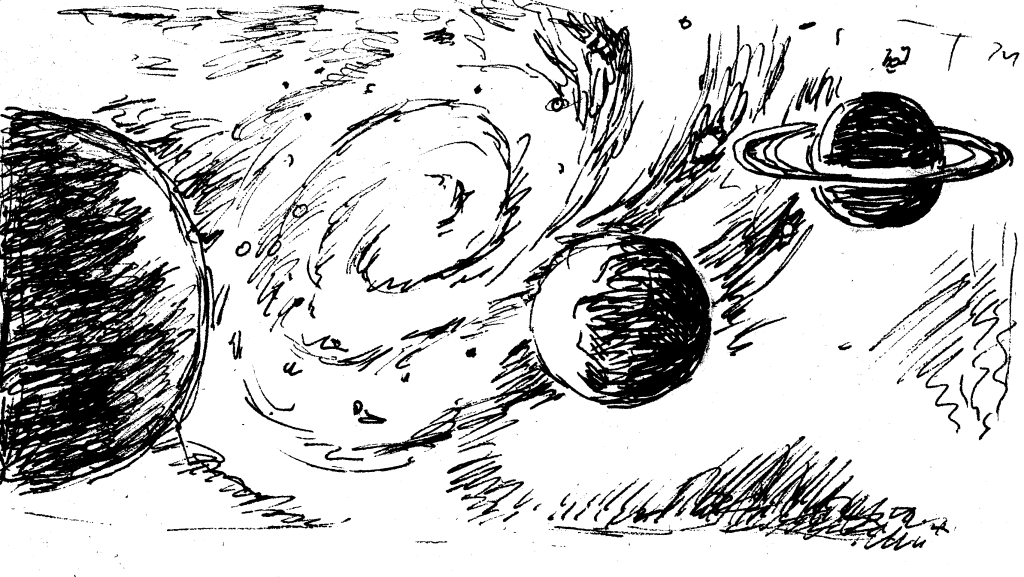
Jupiter and Saturn will both be in opposition (at closest approach) to Earth in July, making a striking sight in the eastern evening sky, especially when joined by the full Moon (24th-26th). Two meteor showers peak on July 30th. The Southern delta-Aquarids fall, at best, at the rate of about twenty sightings per hour, but are usually faint; look for them in Aquarius, near Jupiter. The alpha-Capricornids, in neighbouring Capricorn (near Saturn) have a much lower hourly rate of about five; their compensation is the spectacle of long and bright falls, and sometimes even fireballs. Both may be seen from dusk until dawn.
Evening twilight (6:30pm) on August 10th will show Mars next to the New Moon low in the west. From August 17th- 21st, Mars and Mercury will be very close, Mercury far outshining Mars, even though its face towards Earth is now only partly lit (but you would need a telescope to see that detail).
Jupiter and Saturn will still be close to us and bright in August- a wonderful chance to spy some of their fascinating details (Great Red Spot, rings, satellites…), if you have a telescope or good, steadied binoculars. For example, on August 8th at 11:30pm, two of Jupiter’s moons, Ganymede and Europa will be in transit across the face of Jupiter, with a third, Io, about to be eclipsed by the gas giant. With a telescope, the transiting moons, as well as their shadows on the planet’s surface, may be seen.
Written by some kids who are definitely cool and know what they are talking about, they are not just guessing – they definitely know what’s up (trust us). The “cool” kids – Hanana Sibling (HS) and Coal Happy (CH) and Both of the aforementioned people (BOTAP)
heyyy.its.soph on TikTok
Are turtlenecks cool? HS: Although they aren’t considered trendy currently, I’d still say that turtlenecks are pretty cool. CH: It’s cool to be warm, and turtlenecks certainly keep you warm
Is nihilism cool? HS: I don’t exactly know if people are nihilistic because it’s cool or if we’re all just mentally ill CH: Nihilism is not cool anymore. You can deny religion (if you want) but that doesn’t mean that life has no purpose, you make your own purpose in life
Are funky socks cool? CH: Cool kids wear fun socks, uncool kids wear fun socks. Everyone is in agreement, they are fun to wear and they spice up your outfits. They are also comfortable and warm and as I said before “It’s cool to be warm”
Is breathing through your nose cool? BOTAP: Yes, it is also shown to be beneficial to breathe through your nose, so not only is it cool, it’s a good habit too! HS: It makes your bones good CH: Trust us, it’s true. Scientists say so
Are shapes cool? HS: Shapes are cool but maths isn’t CH: The kids these days have been absolutely raving about shapes, quadrilaterals, parallelograms, triangles, the whole lot of ‘em. Personally I think you can never go wrong with a good rectangle, they’re just such a well put together shape, I mean what’s not to love?
Is saying ‘lol’ out loud cool? HS: Saying lol out loud probably isn’t cool but I do it anyway as a force of habit CH: I hear the ‘cool kids’ say lol out loud, but I think they do it as a joke. So maybe? Maybe not?
What’s the coolest thing you’ve seen this month? – Backyardigans? – Breathing through your nose – Funky socks – Funky glasses – Knife glasses – Shapes – Board/card games – Jackbox – E3 – Genshin – Minecraft – The Dream SMP – Being gay (capitalism said it was cool (only for a month tho)) – Among us – Specifically the memes – Barbie Movies – Animals – Zoe is cool – Gender (“gender is wack” ~ Hananananana) – Hunting down Bubsy for sport – Sonic the Hedgehog – Bo Burnham – Being nice to people – It’s hip to be square
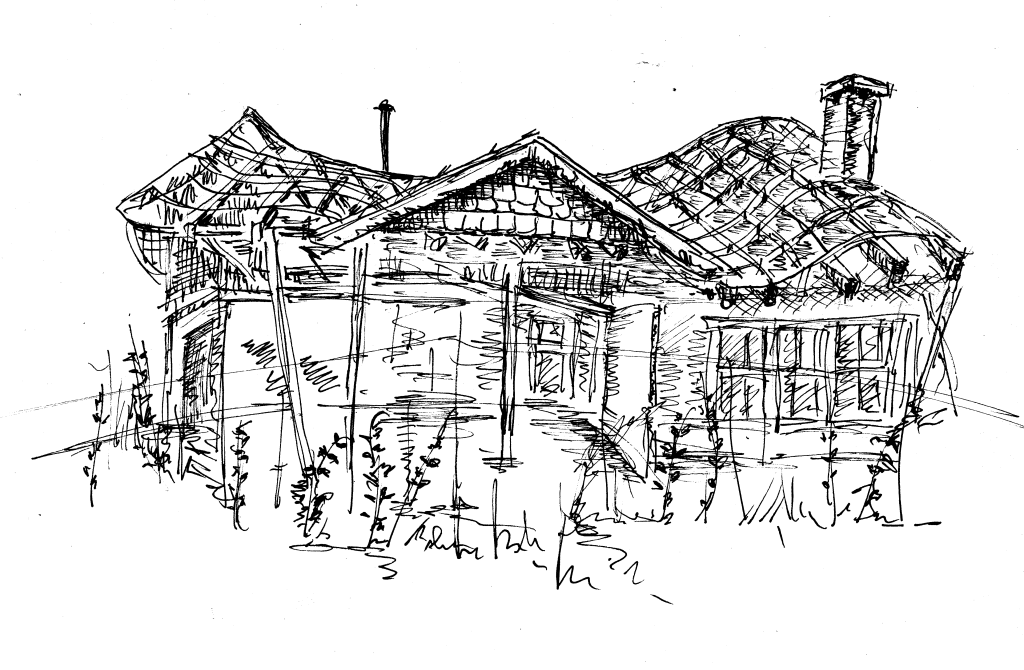
Recently I read the update provided in issue 8, and I was greatly dismayed to hear that the developer has decided to pursue the council in VCAT. I wholeheartedly approve the Meddler’s principled coverage of the issue, as I have an long-standing and abiding love for the built heritage of my neighborhood, and vehemently oppose its despoliation.
Taking the words of the applicant’s representatives at face value, during the applicant’s possession of the property over the past two decades, he has allowed the house to deteriorate beyond the point of irrevocable damage. The subsequent proposal that he has submitted was enabled by and contingent on a council policy (see Clause 15.03-1L of the Moreland Planning Scheme) that housing in such a state should be demolished (rather than be reconstructed) and its replacement must make a positive contribution to the heritage of the precinct. It is also council policy that such buildings adopt innovative and contemporary designs. Hence if a house is derelict to the point of structural unsoundness, the policy encourages its demolition and replacement with a completely modern design. This is exactly what the proposal envisions.
We must also remember that the proposal entails a subdivision of the property, which according to the architect will provide homes for the families of him and his brother. This is a pious motivation but it is reasonable to ask: why was the complete demolition of the original house, other structures and vegetation (as shown in the submitted planning documents and supporting engineering reports) necessary for such a goal to be met? We may never learn the answer, however it is plain that the applicant has been highly motivated to build, as he has spent close to two decades and considerable funds (in council rates, land tax, planning fees for multiple rejected applications, architectural fees, engineering consultancy fees) to get the redevelopment off the ground.
It is telling that at the planning meeting on the 27th of January this year the architect made a veiled threat of defamation action towards anyone who would suggest the demolition was deliberate. It is also telling that an anonymous author felt compelled to write a poorly-worded and condescending letter to similarly threaten legal action against your publication (Friendlyjordies’ voice of Yilmaz comes to mind). This strategy of dragging objectors through the courts is perhaps the last card in the deck for people who clearly object to the scrutiny and wider negative media attention that their proposal has attracted. In response we need to keep holding a magnifying glass to this issue.
In light of this debacle, the council should act on the concerns of the objecting councillors and revise the planning guidelines to remove the loopholes and incentives for such developments. It goes without saying that this process must not be led by those with developers’ interests at heart.



 The Coburg Meddler