Categories
General News

RENT AND MORTGAGE STRIKES

We’ve Been Here Before
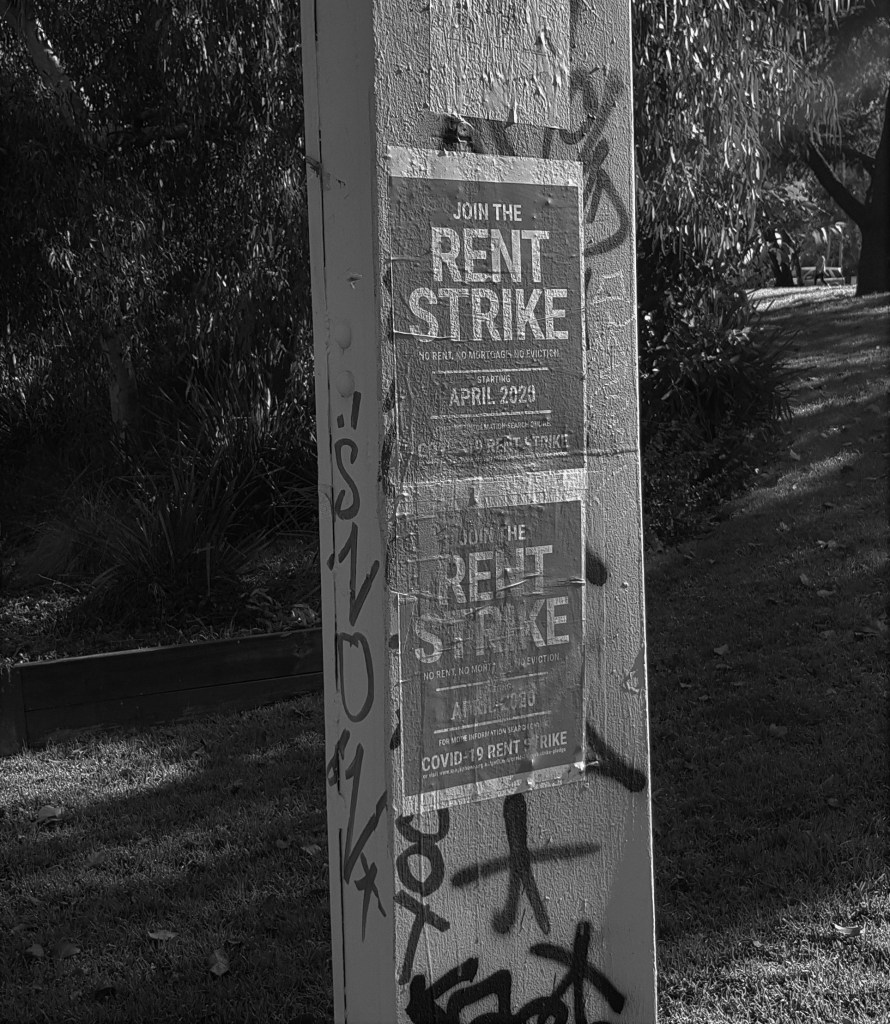
When the pandemic hit and a large proportion of the global population lost their normal income, many people were left wondering whether they could make their rent. Advocacy groups emerged in response to this concern, calling loudly for a halt to rent and mortgage payments and evictions. For the last few months in Coburg and the northern suburbs, a rent strike group run and contributed to by volunteers has been attempting to provide support and advocacy on behalf of tenants.

The group initially called for a wide-scale rent strike, claiming that this would even the playing field between landlords and tenants when negotiating fair arrangements. Before the strike could garner enough support, in April the government instituted a moratorium on evictions with an exception for people who were neglecting to pay their rent despite having the means. Although the rent strike movement was stymied, it was largely accepted by the broader community because it ensured that those who couldn’t afford their rent would be temporarily protected from evictions. The moratorium will be in place until the end of September this year.

Before the rent strike was largely abandoned by May, the online group provided comfort, advice and resources for those who feared eviction. It demonstrated the need for collective action and solidarity in situations where the current system fails to adequately assure and assist people.

This isn’t the first time that we’ve seen collective action in the northern suburbs in response to a catastrophe. During the Great Depression (1930-1936) the community of Coburg banded together to fight against hunger and homelessness. In his book “Between Two Creeks” Richard Broome writes that in 1932 an anti-eviction group intervened in an eviction in Coburg by returning the pieces of furniture that were being removed by the bailiffs, piece by piece. Broome noted that at the time there were 162 tenants owing rent and facing eviction. Back then the Coburg Council were willing to work with the anti-eviction movement, so long as the needs of landlords were also acknowledged. This can be seen in the local court cases at the time; while some evictions were ordered for situations where rent wasn’t paid for one or two years, other cases saw landlords agreeing to waive rent until a job was secured.

The rent strike movement in Melbourne’s northern suburbs has since formed the Renters and Housing Union (RAHU). They claim that they will be fighting ‘for the right to safe and secure housing through self-advocacy, education and frontline eviction defence’. They are not the first tenants union in Victoria. Tenants Victoria originally started as a union in the 1970s, however has in the last few years decided to distance itself from the status of a union and instead largely operates as a free information, advocacy and legal advice service. It appears as though RAHU aims to be more hands-on, however it is too early to say how they will perform.

Rent strike and anti-eviction movements are incredibly powerful initiatives that force landowners and banks to consider the human right to shelter above profit. Homelessness and rental security is still a major problem in Victoria; hopefully the new union and other housing advocates will find a more sympathetic ear now that more people have been exposed to the uncomfortable fragility of maintaining housing.

By ES
Categories
General News

POLICE VIOLENCE AND THE SYSTEM THAT PROTECTS THEM

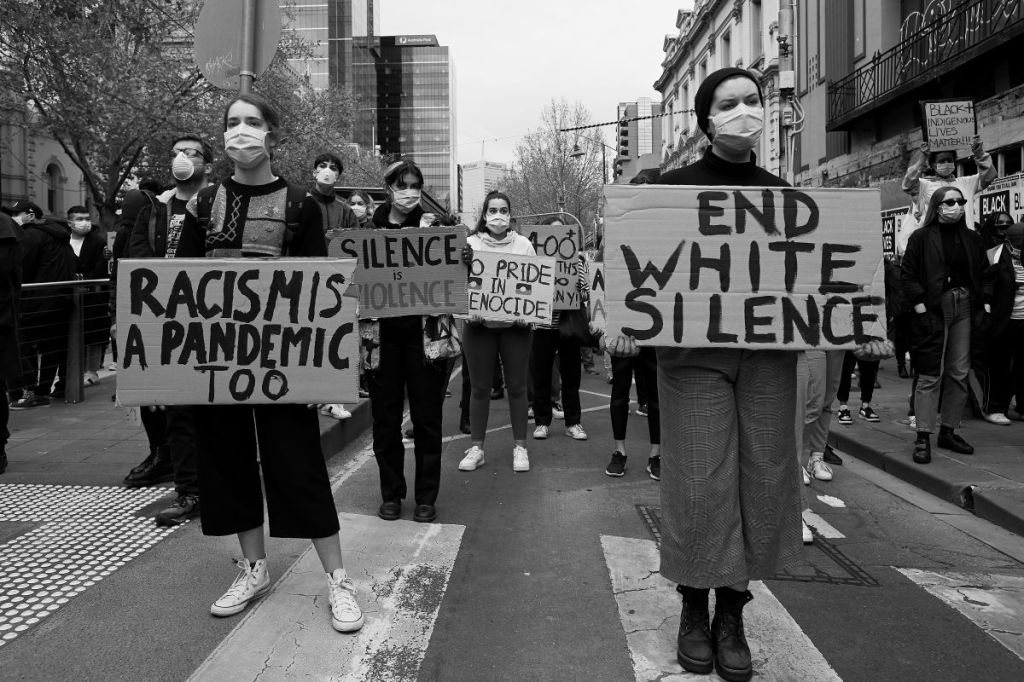
Photo: Erik Anderson

The system of accountability that is meant to keep Victoria Police in check has never worked. The impact of this is felt particularly in Aboriginal and Torres Strait Islander communities where people are incarcerated at higher rates than any other race in the world and have seen 432 deaths in custody over the last 30 years. Despite these deaths no one has been convicted. So, why not? What happens when someone dies, is killed or is mistreated under the watch of Victoria Police?

When a complaint is made against the police, the Chief Commissioner of Victoria Police is legally obliged to refer the complaint to the Independent Broad-based Anti-corruption Commission (IBAC). IBAC is then tasked with either dismissing the complaint, transferring it back to Victoria Police or investigating it themselves. In practice, the majority of the complaints made by the public are referred back to the police, who then undertake their own investigation; put simply, the police investigate the police. As a result, Victoria Police consistently only finds 11 per cent of complaints are substantiated. In the period between 2018-2019 there were 3607 allegations assessed by IBAC from Victoria Police, with only 16 incidents investigated by IBAC.

Added to this is a cultural norm of not taking violence seriously by both the courts and the police force. In IBAC’s 2018-2019 annual report, only four outcomes from investigations were listed. One officer was found guilty of using excessive force but was given a good behaviour bond with no conviction recorded. Another officer was found guilty of two charges of unlawful assault; he was convicted but is now simply on a 12-month good behaviour bond. On the other hand, the other two outcomes show that the non-violent crimes (both unauthorised uses of police information), resulted in large fines of $3000 and $5000 and the officers either resigned from the police or retired. Presumably within the Victoria Police it’s more of a career-ending move to misuse police information than to be excessively violent; they can work with a racist and violent co-worker, but not with someone who won’t uphold confidential information.

On Saturday 6 June, tens of thousands of people protested in Melbourne’s CBD against police racism and the system that enables, protects and aggravates it. Aboriginal and Torres Strait Islanders led the rally, calling for justice and change for their loved ones who have died in police custody and for those who face incessant police discrimination. This comes off the back of Australia’s tone-deaf outrage at the racism faced by people in the US at the hands of the police. The rally was a reminder that the situation in Australia isn’t any better, as well as a show of solidarity with the Black & Blak Lives Movement happening locally and around the world.

If you need help with a police complaint, call the Kensington Police Accountability Project on (03) 9376 4355.

Consider donating to families of the people who have died in custody and who have been left with enormous legal and funeral costs.
• Justice for David Dungay Jnr: https://bit.ly/justicefordavid
• Justice for Kumanjayi Walker: https://bit.ly/justiceforyuendumu
• Justice for Tanya Day: https://bit.ly/justicefortanyaday
• Justice for Joyce Clarke: https://bit.ly/justiceforjoyceclarke

By BB

Categories
General News

HOW WILL YOU GET THERE?

TRANSPORT DURING THE PANDEMIC

Which way will workers decide to go when they are required to return to their desks, restaurants, salons, wavepools? Premier Daniel Andrews has already expressed concern about Victorians flocking to public transport and cars now that restrictions are easing and peoplea are starting to return to work. In order to encourage ways of travelling that are more in-line with safe physical distancing, we need to see more investment in safe walking and biking lanes.

In Coburg and Brunswick the debate around how to make Sydney Road more bike friendly has once again been enlivened by calls to reduce pressure on potentially unsafe or environmentally friendly transport options. In July 2019 VicRoads asked Sydney Road users in Coburg and Brunswick to weigh in on four potential designs for a permanent bike lane along the main road, but had neglected to share the results of the survey. On May 17 this year, the results were finally obtained through a successful Freedom of Information request. 52 per cent of the 7000 respondents supported ‘Option 3’ which would remove all of the parking along Sydney Road to facilitate an extended footpath and a protected bike lane. Trams and cars would share one lane at all times.

Moreland BUG committee member, James Conlan, says that the results of the poll are promising and show that residents of Coburg and Brunswick are largely supportive of making Sydney Road more bike friendly at the expense of on-road parking. Indeed, the Council have been pushing for separated bike paths on Sydney Rd for a couple of years now, but the State government keeps getting in the way.

This year the Moreland Council has proposed allocating $3.13 million in their upcoming budget to ‘footpaths and bike paths’. James says that the Moreland BUG will be making a submission to double the bike budget and to separate it from the walking footpaths budget. The BUG have been seeking input from locals to suggest what bike-related improvements they would like to see.

Moreland BUG: https://www.morelandbug.org/

By BB

Categories
General News

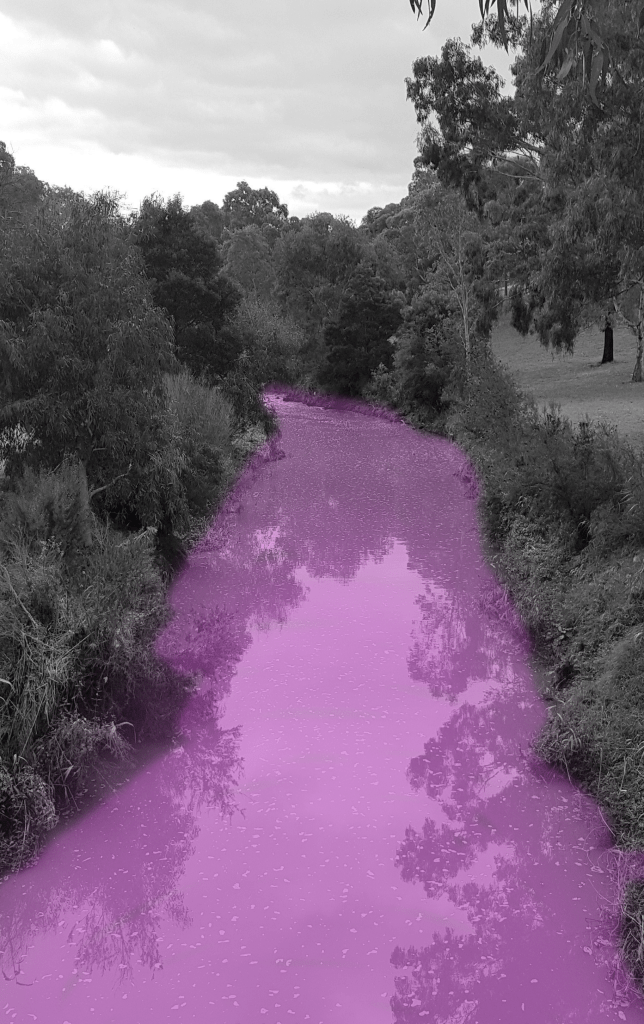
EDGARS CREEK AND THE INCIDENT THAT TURNED EVERYONE PINK

a lake that is pink
*Shade not exact

On the 5th of May locals in North Coburg were alarmed to find Edgars Creek running bright pink, with some reports of a pungent chemical smell. Melbourne Water and EPA Victoria were called in immediately to contain and investigate the pollution. Attending the scene on the 6th and again on the 9th, officers placed ‘boom’ containment devices around the area most heavily polluted. The booms were intended to remain for a few days, however heavy rains rapidly flushed out the creek and the colour returned to normal shortly thereafter.

EPA Victoria has since released a statement to assure locals the pollutant discovered was a dye, most likely used for clothing and non-toxic at the levels present in the water. It was unclear from their statements however, if these measurements reflected the water pollution levels before or after the rain, and at all points in the creek. The Meddler contacted Melbourne Water to obtain a full water quality report but at the time of printing have not yet received the documentation. When contacted by the Meddler, EPA Victoria were also unable to provide any further comment given the potential for future litigation, but have confirmed that through drain chasing processes, the business responsible for the spill have been identified and contacted.

For some locals this statement of assurance was not sufficient, with many online calling for a stronger response from EPA Victoria. Another strikingly similar incident occurred in the nearby Stony Creek back in September 2019 when a large bottle of red dye was blown over and spilled into the water system. In this case, the business responsible was identified to the public as Marchem Australasia – a chemical importer and distributor. As such, some are pushing for EPA Victoria to release more information regarding the recent Edgars Creek incident, but it looks like at least for now, they’ll need to wait.

By Thyra Mclellan

Categories
General News

INTERVIEW WITH MARTIN

FROM COBURG, GERMANY

In an attempt to be more virtually social, the Meddler reached out to what must be Coburg’s sibling community: Coburg (a town in Bavaria, Germany), to find out how the locals are feeling about their isolation. The following is an interview with proud Coburgian, Martin.


Please describe your city.
A small town where people all know each other, went to school together, or belong to the same sports club. The city is proud of its history, the Duchy (Saxony, Coburg and Gotha) and the connection to the English royal family. Coburg has all the things that would be considered advantageous in a big city (theatres, restaurants, sports facilities and international festivals – e.g. samba)


In the past few months, how has Coburg changed?
We have a new Lord Mayor who is just over 30 years old and full of energy. He gets a lot of planning and building done. The large companies (Brose, Kaeser or HUK) contribute millions in donations.


What are the quarantine / self-isolation restrictions in your city? Are these strongly enforced?
All the conditions imposed in Bavaria as a whole apply in Coburg, and the Coburgers stick to them.

Do you think your government acted appropriately in this pandemic?
Definitely. Of course you can always question and discuss one thing or another. All in all, the responsible parties are doing a good job. It is a difficult situation and “There is no glory in prevention”.

How did the people of Coburg react to this crisis? What is the general mood?
Just like everywhere else in Germany – Coburg is no different from the rest of the country when it comes to this situation.


What have you discovered personally recently?
Not much has changed for me during the crisis. Our company is surviving well through the crisis and is fully operational. It has launched a number of special items that are in great demand.


Do you have anything else you would like to share with our readers?
Yes – the golf courses opened again on May 11th… Finally.

Translation by Will Schmidt

Categories
General News

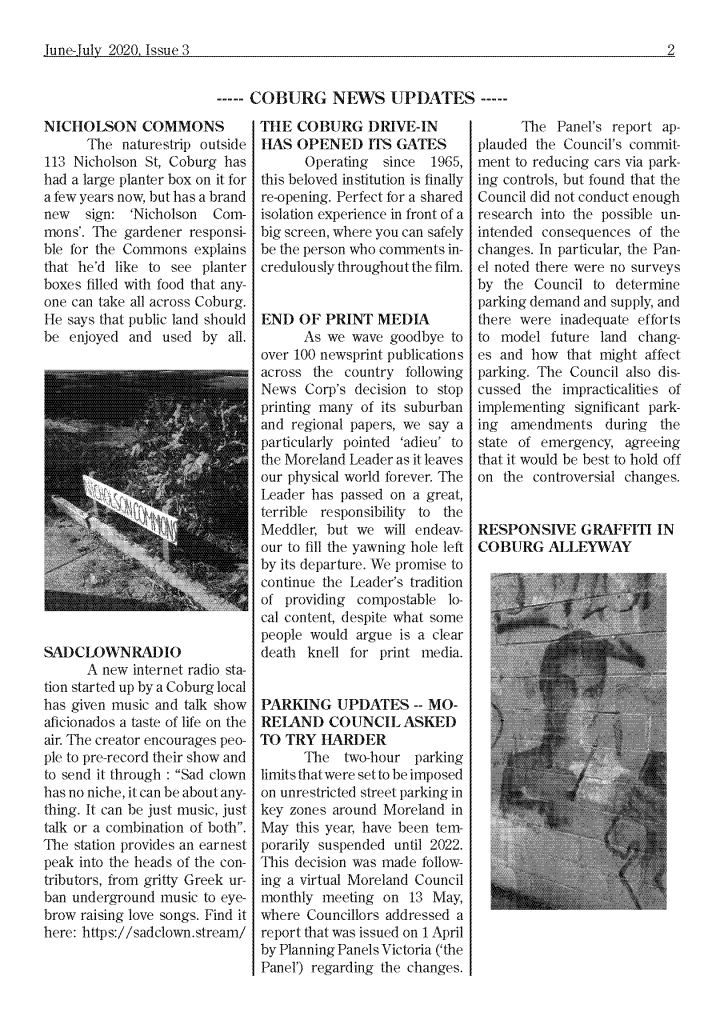
NEWS UPDATES PAGE

Categories
General News

Neoclassical economics: bullsh*t dressed as science

By Ani Seed

Do you often wonder how the mysterious ‘economy’ works? It’s so central to our lives; we engage in it just about every day and it’s pretty important in determining how our society works. Economics is the study of the making, distributing and using of stuff (both material things and services). There are heaps of different theories and ways of looking at the economy which focus on the various parts of the complicated system, but before you zone out and turn the page, don’t worry this will get juicy.

The current mainstream theory is called Neoclassical Economics. This is what is mainly taught in universities, and those who learn it go on to be a big part of the decision making process in our society. Hopefully understanding a bit more about the assumptions and conclusions of this pervasive theory will help you understand a little more about why our society is the way it is.

Neoclassical economics comes from the much more down-to-earth theories that understood the importance of power, historical context, psychology and other important things, but along the way some people decided to pretend it could be simplified into a science. It went from being called political economy to economics, signalling a conceptual shift from economics as a subjective and changing field to one dealing in absolute truths with its central thoughts explained in graphs and numbers. How can complicated ideas around how resources are distributed in a society with inequalities and complicated human nature be put into a graph you ask? Pretend like all humans have the same unchanging wants of course! Pretend like humans are completely rational all the time, and have perfect information about everything, including predicting the future. Sound bizarre? This is just one part of the loss of common sense that neoclassical economics exhibits.

In fear of this turning into a rant against neoclassical economics (which — for the sake of transparency — I am very much capable of, as I am harbouring a lot of anger against the way it impacts our world) I will add that of course it has its useful bits. It is usual to try and measure things in an uncertain world. All theories that look into the economy are useful, so we shouldn’t just throw it in the bin. Though there is definitely a part of my brain that wants to do just that — proving once again that we are not solely rational beings.

Categories
General News

Reducing Cars in Coburg: A Good Idea Done Poorly

Upon leafing through the mail on Friday 13 March, Coburg residents were likely met with a notice from Moreland Council announcing that there would be changes to parking limits in the area. The more watchful Coburg local may have heard rumblings of these changes back in July 2018, when the Council drafted the now-adopted ‘Moreland Integrated Transport Strategy’ (MITS). This strategy mentioned introducing better parking management in Moreland as a way to encourage residents of Moreland to reduce their reliance on cars and to use more sustainable modes of transport. 

The new parking changes will bring 2-hour parking limits to all unrestricted street parking within roughly 200 metres of the ‘Coburg Activity Centre’ (and other ‘activity centres’ around Moreland). The Coburg Activity Centre is the term the Council uses to refer to a large misshapen zone that captures various pockets of land close to Sydney Rd, stretching from Batman Station down to Moreland Station. The Council have identified the regions within this zone as being important to focus on for development, protection and growth. 

At the February Council meeting this year a large number of residents waited patiently to air their concerns about the new changes. Older residents were concerned that a mainstay of their social life – lengthy community club events and functions – would be negatively impacted. Local school workers raised the fact that under the new rules some staff members would miss out on permits. They also pointed out that parents would be discouraged from volunteering their time to assist with school programs. A number of residents raised the safety issue for women required to move their cars late at night (at this stage the parking limits were from 8am-11pm; they have now been made 8am-8pm). There were also people with big families who were concerned that the limit on permits available for residents would mean their adult children would be encouraged to leave home. Finally, there were calls to reopen public consultation on the matter.

James Conlan, from the cyclist advocacy group, the Moreland BUG, says that whilst he supports efforts to reduce reliance on cars in Moreland, he is frustrated by the MITS. “If the intent is to achieve genuine modal shift, alongside the drastic parking changes we’re seeing, there needs to be a similar drastic increase in the funding of cycling and walking routes, and that’s not what we’re seeing”. James’ main concern is that the new parking changes have taken the entire focus of Council and are sidelining the other elements of the MITS plan that are crucial to its success. “Usually every decade the Moreland Council creates a 10-year bike plan for Moreland detailing the things they want to fund, but this year it has been dropped and no proper strategy has taken its place” he says. 

The Council have justified the changes by claiming that limits on parking around the ‘Coburg Centre’ will go towards the bigger plan to ‘encourage sustainable transport, like walking, cycling, and public transport’ in accordance with the MITS. This is undeniably a valuable cause. There are too many cars on our roads, and there are not nearly enough safe cycling and walking lanes. It is also clear that parking limits can contribute to the goal of reducing cars. However, Coburg’s current infrastructure is not set up to support the different modes of transport the Council wants us to start using. Sydney road is only well-lit from Munro to Bell St, and the surrounds are notoriously dangerous. The buses only travel the main roads, and the tram and trains in the area are amongst the slowest and most infrequent services in Melbourne. Cyclists in Coburg have been calling for dedicated bike lanes and safe bike paths for decades due to dangerous road conditions. Limited car usage in an area ill-suited for alternative modes of transport creates more problems than it solves. 

The parking limits were set to be introduced from May of this year, but due to the current global crisis, Council have said they will delay implementation until the end of the year or until the state of emergency is over. 

WHY START WITH PARKING?  

The Council’s decision to start implementing parking restrictions without equally meaningful engagement and investment in the other elements of the MITS plan is curious. While the Council may just consider the move to be low-hanging fruit, it may instead be owing to another scheme approved by the Council; the Central Coburg 2020 Structure Plan. 

The stated goal of this plan, adopted in 2006, is to regenerate Coburg by developing the area to include more accommodation and retail space in the activity centre. Shortly after the plan was adopted, the Council purchased back the site of the notorious ‘second’  Coles of Coburg — the smaller, less stocked and less frequented Coles. Before this, Council had leased the site to a BiLo store. Incredibly, in 1980 BiLo had negotiated a whopping 99-year long lease with the Council which included the enormous car park area. Whatever caused this epic deal to transpire, it was far from the minds of Council in 2006 when they announced the ending of the onerous contract. They claimed the move was in pursuit of the then newly adopted plan which specifically refers to the ‘open lot car parking’ around the Coburg Activity Centre as not supporting ‘the mixture and intensity of uses which could support a more vibrant local economy’. Furthermore, supporting documentation for the development plan mentions that ‘much of the proposed retail, commercial (and possibly residential) development will be built on current car parking allotments’ in Central Coburg. 

With these moves to enable development of Coburg in mind, the rationale for the recent parking changes being strictly about fulfilling the MITS seems less clear. It’s clear that the Council is looking to develop the big car parks in the ‘Coburg Activity Centre’ (like the one between the two Coles’), and they are hoping to avoid the impact that reduced car parks will have on the surrounding residential streets.

If the introduction of parking limits around Coburg is in pursuit of alleviating long-term parking of Coburg Central users in the close-by residential streets, this needs to be communicated. If development will negatively impact residents, it should be openly spoken about and residents should be given the opportunity to respond. Instead, the parking limits are being presented solely as a move to increase sustainability. Ironically, this move to become more environmentally sustainable is also paving the way for developers to increase Coburg’s traffic. 

Categories
General News

A TRIP TO THE NEW AUSTRALIAN FLAG GALLERY

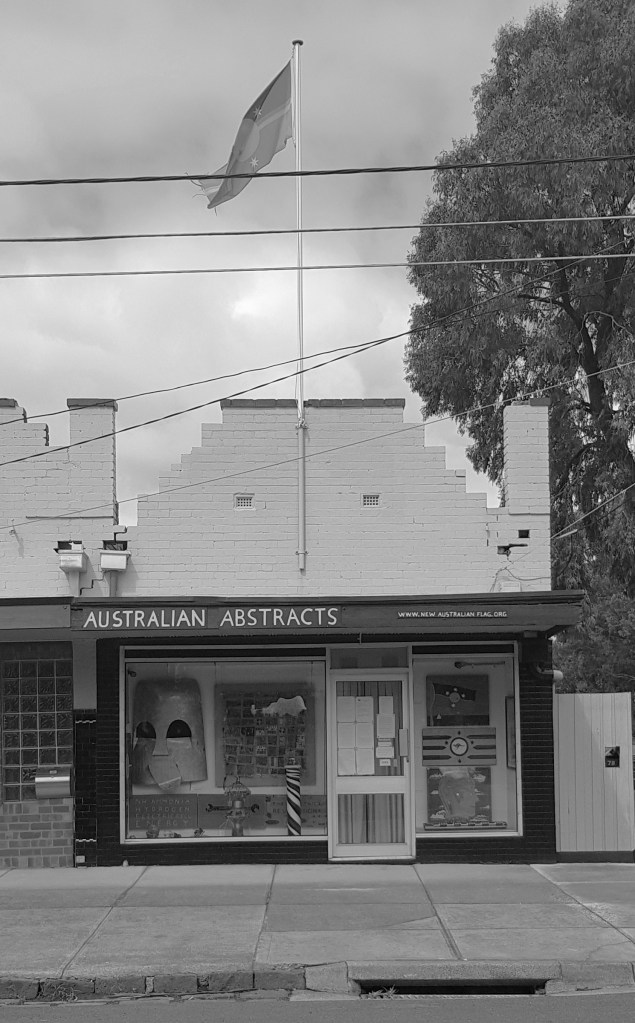
We made the journey to the New Australian Flag gallery one unassuming Thursday afternoon. The gallery can be found on the corner of Barrow and Walsh St, abruptly ending the string of houses along the street. The flagpole that is mounted on the roof offers an example of a ‘new Australian flag’ and is immediately conspicuous when approaching the gallery. After pausing to appreciate the display of various sculptures and flags in the gallery’s shopfront, we followed directions to a door along the side of the building. We needed to firmly knock a few times to get the attention of Arthur (artist-in-residence in the full sense of the phrase); he was busy composing music inside. Arthur welcomed us in, flicking various light switches on around the room. Virtually every available wall-space was covered with art. Large colourful sculptures crowded the area. We were drawn immediately to a transparent humanoid effigy with printed words plastered to the inside of the cranium. A plasma globe pulsated away at the centre of the head. 

Arthur has also made an isomorphic keyboard which, he says, makes playing chords easier, particularly if you haven’t learnt traditional music theory. This is because the intervals are regular and the same for every chord so you don’t actually need to learn the notes.

Arthur then showed us a synthesizer program that he created with the aid of a programmer and which takes the form of a touchscreen keyboard. It contains four rows of keyboard notes – this facilitates hand movement in any direction

He shows us several different keyboards, the eeriest of which is a quarter tone keyboard  (the keys are so slim that it takes a concentrated effort to hit the right one — Arthur says he’s working on this). This keyboard produces sounds reminiscent of a horror-movie soundtrack, the quarter tones warping into each other in our ears. He shows us his diagrams for the keyboard restructure that are plotted in black and white paint on a clear plastic overlay. 

Arthur questions the overly complex nature of traditional theory, in both his music and his visual art. His interest in making a new Australian flag, he says, revolves around doing what makes sense. He refers to the Australian government’s passing of the The Australia Act 1986. This Act marked two significant developments; the High Court of Australia became the highest court of appeal, and the UK could no longer legislate for Australia. Whilst the UK had not been legislating here for decades, and the ability to appeal to the UK Privy Court had been limited since 1975, many see 1986 as the moment where, as previous Chief Justice of the High Court Anthony Mason put it, Australia became ‘masters of our own legal destiny’. Arthur’s new Australian flag designs commonly remove the Union Jack and draws inspiration from the Aboriginal flag. 

New Australian Flag:
78 Barrow St, Coburg VIC 3058

Categories
General News

NEW YEARS CELEBRATIONS

On New Year’s Eve a communiy football (AKA soccer) game kicked off just before midnight in Fleming Park. A number of local residents came down to kick a fluro orange ball in semi-darkness. Though there was lighting strung from trees, locals still collided at a faster than usual rate. The game was rudely interrupted by someone in the city letting off fireworks, and the players begrudgingly stopped to watch. Attendence wasn’t limited to locals, with people coming from Keilor and Doncaster to join in. Many felt enlivened by the game. Local resident, Gary, said that the event inspired him to be more positive.

Design a site like this with WordPress.com
Get started