Categories
Uncategorized

WHAT’S UP?

By Vlack

February opens with a magnificent lineup in the evening twilight: Saturn, almost-New Moon, and shining Venus. This tableau of two planets and Moon, slightly reshuffled, will repeat on February 2. Look to the western sky just after sunset (7:30 pm).


On the nights of February 6 & 7, the waxing Moon will pass near the planet Jupiter, which is in the northern sky outshining all stars, including nearby bright star Aldebaran in the V-shaped Hyades constellation.

The alpha-Centaurid meteor shower can be seen between January 28 and February 21, falling from the southern sky near the Pointers. These meteors are renowned for their blue or yellow fireballs, with trains that can last for minutes. The peak rate, about 6 falls per hour, will occur on February 8. However, the Moon, approaching fullness at this time, may be
a nuisance for observers.


On February 9, the Moon can be seen to pass near yet another planet in the northern night sky- Mars, which will be in Gemini, and close to the Twin stars, Castor and Pollux.

Venus has been drawing closer to the Earth, and, being an inner planet, showing us phases and more of its dark side, but still getting steadily brighter- until February 15,after which it will fade and become lost to sight passing in front of the Sun.


Venus has often been thought of as Earth’s sister planet, and eons ago they may have had comparable environments. But thanks to a runaway greenhouse effect, Venus’s surface is now hotter than even Mercury’s, about 460°C, with a thick, acidic atmosphere. There are other peculiarities: Venus’s day (243 Earth days) is longer than its year (224 days); and, spinning counter to most of the other solar planets, Venus has the Sun rising in the west. Despite these eccentricities, humans persist in sending rockets to Venus; as this goes to press, Rocket Lab is launching the Venus Life Finder mission to search for complex organic chemistry, and perhaps even life in some form, within the high-reaching clouds of Venus (which are much cooler than the surface).


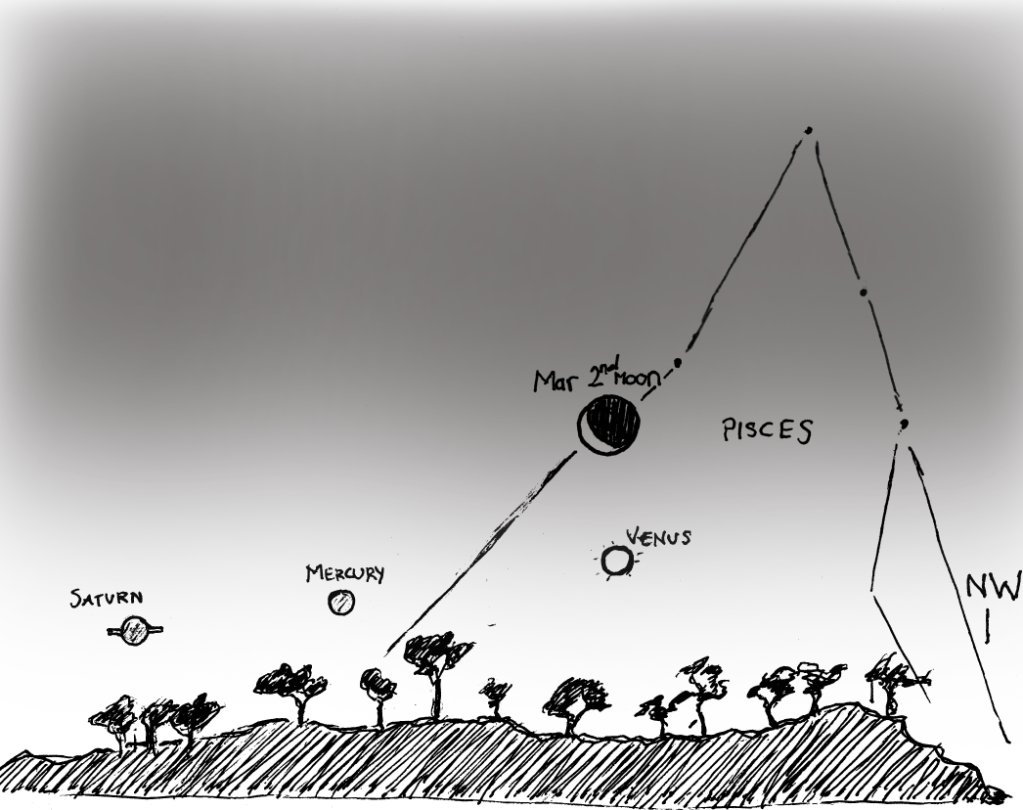
March starts with an array spectacular but difficult to view: Saturn, Mercury next to the merest sliver of New Moon, and Venus, all low on the western horizon just after sunset on the 1st – but only visible between about 7:15 and 7:40 pm, when they set. If you miss this, it’s worth looking the next two or three evenings at the same time – though the line will be broken.


March 14 will be eventful: the gamma-Normid meteor shower will be at its peak at this time, with up to six bright yellow, white or orange meteors falling per hour from the Norma constellation in the southern night sky However these will be rather outshone, and outdone, by the Full Moon, which will rise (at 6:40 pm) in a partially eclipsed state in the twilight, and reach maximum umbral effect just above the horizon – after which it will slowly lapse into normal brightness.


On March 20 the Earth will be at its first equinox for 2025.
Categories
Uncategorized

Merri-bek’s Future with Single Member Wards

This year, the municipality of Merri-bek will be split into 11 wards for the purpose of electing the new council in November’s election. Each ward will elect one representative in a cut-throat ‘winner takes it all’ system. This is a radical departure from the status quo in Merri-bek, which has for the past 20 years adopted a proportional representational model for our 3 ward municipality. While some argue that smaller ward sizes increases accountability, proportional representative systems provide minority (and less well funded) groups with a greater opportunity to gain a seat, thereby increasing the potential for non-affiliated locals to represent their community.


In 2004, when the independent Victorian Electoral Commission (VEC) was first entrusted with the responsibility of advising councils on the most appropriate electoral structure, Merri-bek took the VEC’s advice and shifted its single-member system to a multi-ward system.


The reason for Merri-bek reverting to a single-member ward system now, is that the Local Government Act 2010 (Vic) was amended in 2020 to ensure the default electoral structure of local councils across Victoria would be a single-member ward system going forward.


The amendment was proposed by ex(pelled)-Labor MP Adem Somyurek, who stated that ‘single member wards will enable residents to receive direct representation, and councillors will be more accountable to their local communities’.


Ordinarily, local councils undergo a representation review process every few years, which takes into account factors such as demographics, geography and community. These were conducted solely by the VEC, and as such, were independent of politicians’ interference. Somurak’s amendment overrode this review system, and subsequently ignored a number of recommendations due to be implemented across several councils.


When the amendment was passed in 2020, 8 councils, including Darebin, immediately had their electoral structure changed to single-member wards. Merri-bek was not due for review at the time and is only now being affected. Before this, only 1 council since 2004 had actively varied its structure to a single-member ward, and the prevailing trend prior to 2020 appears to have been toward encouraging a multi-member ward structure.


The Victorian Local Government Association (VLGA), which is an independent peak body for local government, made a submission against Somuraks’ bill, stating ‘[g]iven the lack of evidence highlighting any failure of the current electoral representation review process, the VLGA opposes the proposed reform…’. The VLGA pointed to an example of a then-recent Commission of Inquiry in the City of Greater Geelong, that resulted in a change from a single member ward structure to a multi-member ward structure. The VLGA also made the point that the VEC, due to its independence, was appropriately responsible for advising the relevant minister about suggestions on the best structure for a particular municipality, and that this review process had not been the subject of any criticism.


Instead of the VEC advising councils about their electoral structure, a panel of members all appointed by the Minister for Local Council will now review the municipalities, and consider whether exceptions to the general rule of single-member wards should be exercised (a power which hasn’t yet been utilised).

Somyurek’s amendment is widely criticised as being solely aimed at increasing Labor chance of securing majorities in local council.
It might be too early to tell whether these intentions will materialise. However, we know that in the 2020 elections for Darebin, the Council lost a Greens seat and gained a Labor seat.


Merri-bek has long outnumbered Labor on council with strong Socialist, Independent and Green appointments. However, in the upcoming local council election, candidates will need an overall majority to win a seat. Less well-resourced candidates, such as Bolton, Conlan and Independents, may struggle to retain their seats against Greens and Labor.

By Meddler Verify

Categories
Uncategorized

THE BIKE LANE THAT SEPARATED COUNCIL

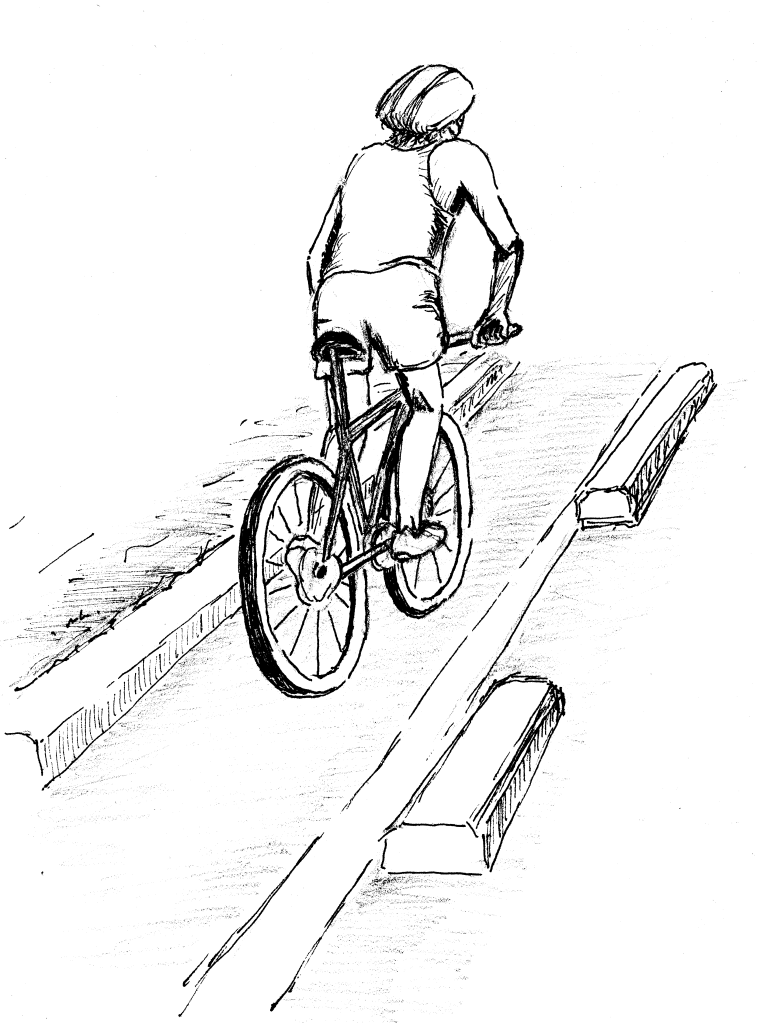
Last September, Merri-Bek Council, in a 4-5 split, voted to remove the trial separated bike lanes on Kent Rd, Pascoe Vale. These lanes were trialled for 2 years, with some variations to the design along the way.


In October, however, this resolution was rescinded after another vote, conducted on the basis that there were too many councillor absences at the September meeting. Just when it looked as if the bike lanes were there to stay, in the very next meeting in November, this resolution was again put on the agenda, and rescinded in a 5-6 split.


The controversy of this issue – a mere 320m of bike lanes in Pascoe Vale- to the point where it has been voted on 3 times by Council, seems curious in the scheme of things. Local opposition campaigns and other complicating factors such as a state government backflip on a commitment to connecting the lanes to a greater bike route, leaving Kent Rd an isolated stretch, are partly responsible.


Councillors who spoke out against the lanes cited reasons to do with the specifics of Kent Rd, including traffic congestion, cyclists safety upon reaching the end of the lanes, and the inappropriateness of the chosen route. Cr Davidson argued that no voters were not ideologically opposed to bike lanes in general, but rather that the location was a poor choice.

Surprisingly, Socialist-affiliated Cr Harte joined the no vote, stating that she was not convinced of the appropriateness and safety of the bike lanes.
Whilst Councillors against Kent Rd are adamant that there is no hostility per se to bike lanes, and that their decisions are strictly about the poor location choice, the no-voters proceeded to use Kent Rd as a reason to also rescind a previous commitment from Council to keep separate bike lanes along a previously non-controversial road — De Carle Street, Coburg. This was overturned and De Carle was back before you even knew it was gone (yes, we know this is confusing).


De Carle’s swift return was a big relief for locals in the area who have been voicing concern for children and cyclists making their way to the Merr-bek primary school for years.


In support of De Carle, Maria Giordano, the principal of Merri-bek Primary School, said that the streets ‘are congested with lots of traffic and pose a serious risk regarding the safety of our children’. In her opinion, separated bike lanes would encourage healthy and environmentally friendly bike riding, discourage anti-social driving, and improve safety.

Merri-bek’s own website mirrors these sentiments, stating that narrowing roads for cars increases safety and decreases traffic volume, speeding and ‘rat-running’.


Local climate advocate, John Englart, has said that removal of the Kent Rd bike lanes because of poor driver behaviour ‘would seem to reward that poor behaviour’, as well as incur a reputational loss to Merri-bek’s climate credentials and slow down our transition to sustainable transport in this crucial time.

An ideological opposition to prioritising bikes from some councillors is a disappointing reality for Merri-bek which, to date, only has 3 protected bike lanes across the city.

By Valdo P

Categories
Uncategorized

Co-option: A Reflection on CERES and Joe’s

The Last Hurrah for Joe’s garden was an example of people showing up for something they love.

I won’t go into the details of what led to the Last Hurrah, but I do want to explore what repeatedly came to mind as I watched the back and forth between the Joe’s community and those in Ceres: Co-option.

Co-option has multiple meanings. To me it means to assimilate or absorb a group or person into a larger group, culture or system. It’s a process happening to all of us who live, work and shop in systems driven by values we don’t necessarily share. One of the most powerful of those values is the primacy of profit, which drives our economy.

One effect of co-option is the fact that most of us don’t have access to the means of our own subsistence – land, skills, resources, commons – to provide all or most of the things we need to survive and thrive. This means we have no choice but to participate in a profit-driven system.


Many organisations, especially non profits or social enterprises like CERES, have other values that can take precedence over pure profit seeking. Evaluating the choices of these organisations by their purported values is a great way to push back against co-option. However, decisions about seeking donations and grants are easily co-opted. Once people become dependent on an organisation for their wages, the importance of the organisation making enough money to pay those wages can slowly and subconsciously take precedence over the values of the organisation.


Co-option within an organisation is dependent upon people not raising concerns for fear of being in the ‘out-group’ or losing standing with those who control employment.


The values CERES say they hold are great: being ‘part of a bigger story’, ‘generosity’, ‘practising what they teach’, ‘everyone is welcome’, ‘hope grounded in action’, and ‘working with love’. But what I saw in the discussion between the CERES board and the community at the Last Hurrah, was money and time taking precedence over the other values they hold.

I watched these people from the Ceres board defend and explain themselves on that sunny morning at Joe’s, reiterating their good intentions. But they need to be open to criticism and doing better, and understanding that we are all constantly being co-opted, and it takes a critically constructive community to help each other push back and keep carving out the spaces where community is more important than money.


Defensiveness is usually the first response when conversations are brought up about sticking to our values. If we ourselves are feeling defensive, that is a great time to stop and reflect and ask questions. I hope the CERES board, and all of us, can keep getting better at this.

By Ani Seed

What are your experiences with co-option? Have you felt the pull yourself? Have you given into it? Why? Why not? Send your experiences to thecoburgmeddler@gmail.com and they will be anonymously included in the follow-up article – ‘Pushing back against co-option’.

Categories
Uncategorized

Farmgategate

Joe’s Farm Gate receives non-fatal blow, but questions over CERES’ integrity remains

In mid-May 2023, CERES’ CEO Cinnamon Evans announced on ABC’s 774 breakfast program that the Farm Gate at Joe’s Garden was closing due to financial stress. Evans joined the program because earlier that morning, a local, long-term volunteer of Joe’s Market Garden had called in to express her disappointment at the recent news from CERES about the Farm Gate closure.

Locals mobilised immediately, organising a ‘Last Hurrah’ event at the Farm Gate, and sending letters to the CERES board, Evans, and the Merri-bek Council.


A day before the Last Hurrah, it was announced that CERES received a state government grant of $1 million over 2 years for the ‘CERES Community Enterprise Precinct’. The next day, an update was provided by CERES, stating that the organisation was ‘heartened’ by the community support for the Farm Gate announcing that it would remain open on Saturdays over Winter and that they would review the decision in Spring.


During COVID, the Farm Gate opened everyday. Local artist Gabrielle Pounsett wrote about it as a place “where we gather, are sustained… isolation, anxiety, and loss fall away… the garden was a constant during the long bleak years”.


Between lockdowns, the Farm Gate continued to grow in popularity with locals offering edible weed and medicinal herb tours, ‘weed’ dating, local bird tours and a monthly ‘open carrot’ (open mic). However, as Victoria’s restrictions eased, the space naturally became quieter, and the Farm Gate reduced its hours to four days a week.

Abruptly, Farm Gate staff received an email from HR being told that their roles were going to be ending within two and a half weeks and that the Farmgate would be closing, triggering the Last Hurrah.

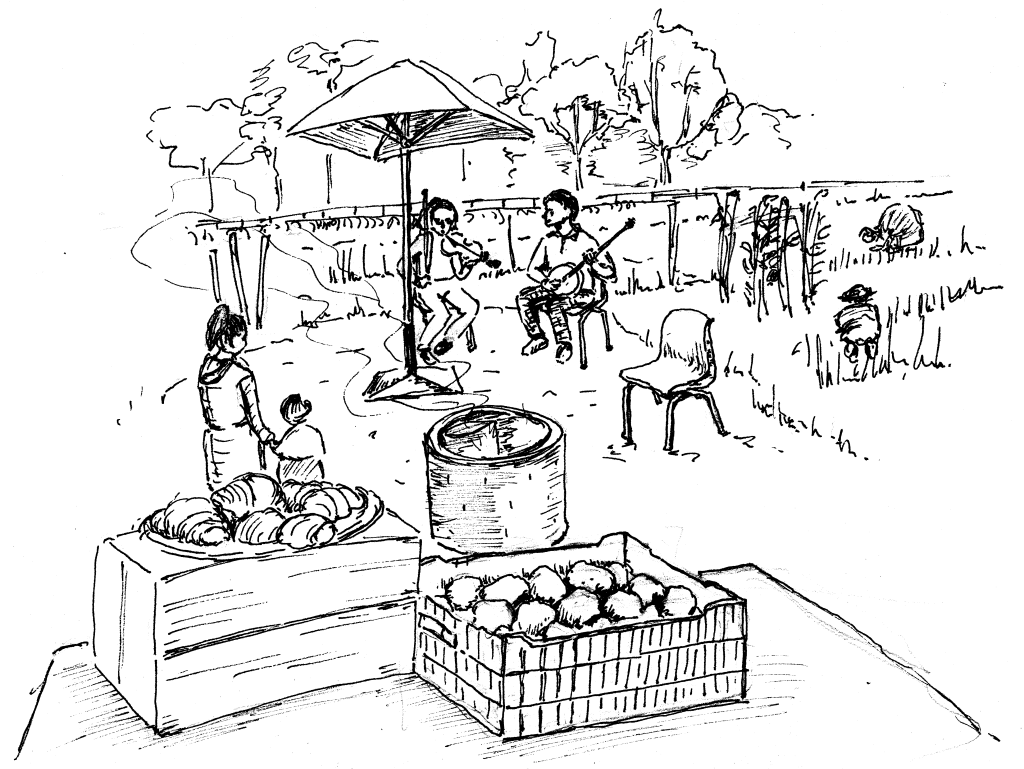
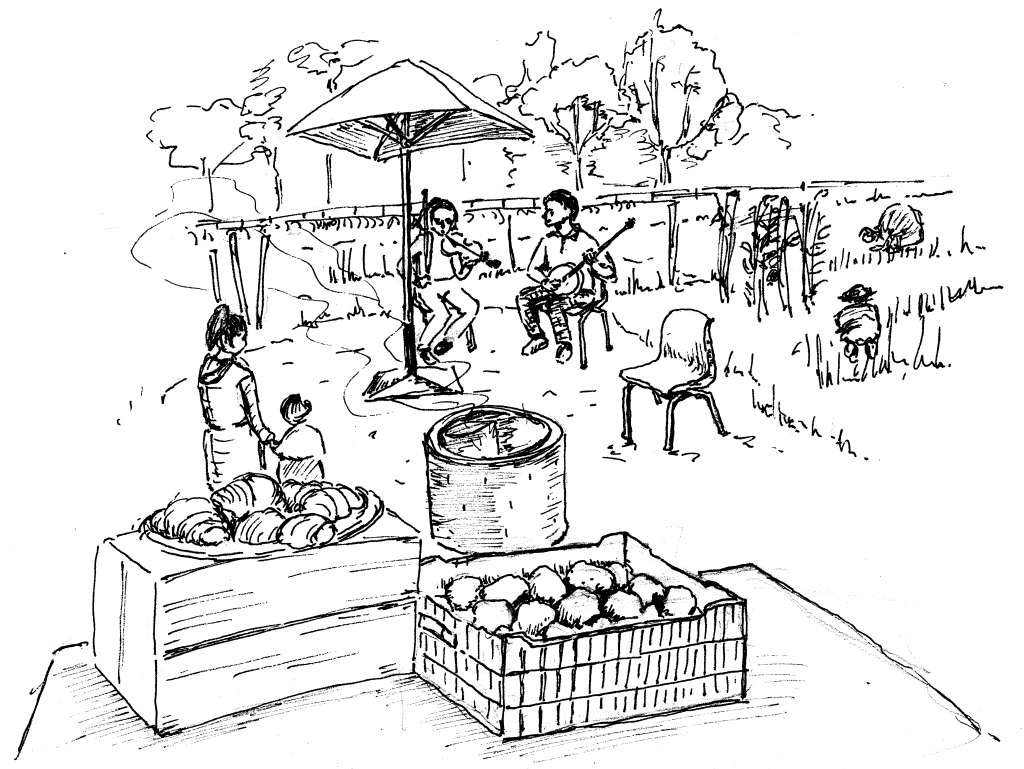
At the event, a large group of disgruntled but cautiously optimistic locals descended upon the site to munch toasties and sip coffees whilst discussing the future of the site. A discussion circle was dominated by questions directed to those executives and staff from CERES in attendance.


Cr Mark Riley spoke out against the corporatisation of CERES, questioning his own part in the recent Council decision to support a grant of $120k (which is usually given annually).

The loss of $12,000 in the last financial year was cited by Evans and other CERES’ staff as the main reason for the reduction in Farm Gate hours. However, this only accounts for roughly 13 per cent of the total loss that CERES faced in the last financial year. The loss was also during a time of managerial changes at Joe’s.

The events at CERES are a reminder that despite a business having a good reputation, they can still make bad decisions. Local support shows us that Joe’s Farm Gate was worth saving and is worth investing in.

By MC, SS and LB

Categories
Uncategorized

Flavours of Coburg

Nellie Nights – Big Elma by day

When Big Elma becomes Nellie Nights, it’s like a cat winking at you – a strangely exciting experience.


Feeling self-conscious about being in a small group gathered around a laptop (we wanted to write this review ‘as it happened’), we were forced to feign a D&D game – repeating the phrase ‘the left fork in the path leads you to a bubbling brook’ whenever a staff member was in earshot.

Big Elma is the new-ish cosy cafe on Nicholson st, near the ill-fated Harding st bridge. The owners originally hoped to annex the block next door to establish a deli, allowing more kitchen space, as the little cafe makes ‘pretty much everything’ from scratch. With that falling through, they instead create many of their ingredients in a separate warehouse in Preston.

Having recklessly already had dinner, we are not best placed to write a review of the food. But, the wine and dessert themselves were worthy of a plug.


The house red wine was a King Valley sangiovese, apparently chosen during a staff tasting night involving 25 wines. What we can only assume was a heady affair, still resulted in a fine selection.

We ordered two different vegan cakes, mango swirl, and a burnt caramel chocolate, which was tasty, moist, rich, and intentionally salty.


The port-poached pears were sophisticated, and served on a home-made mascarpone base – buttery and mildly sweet.


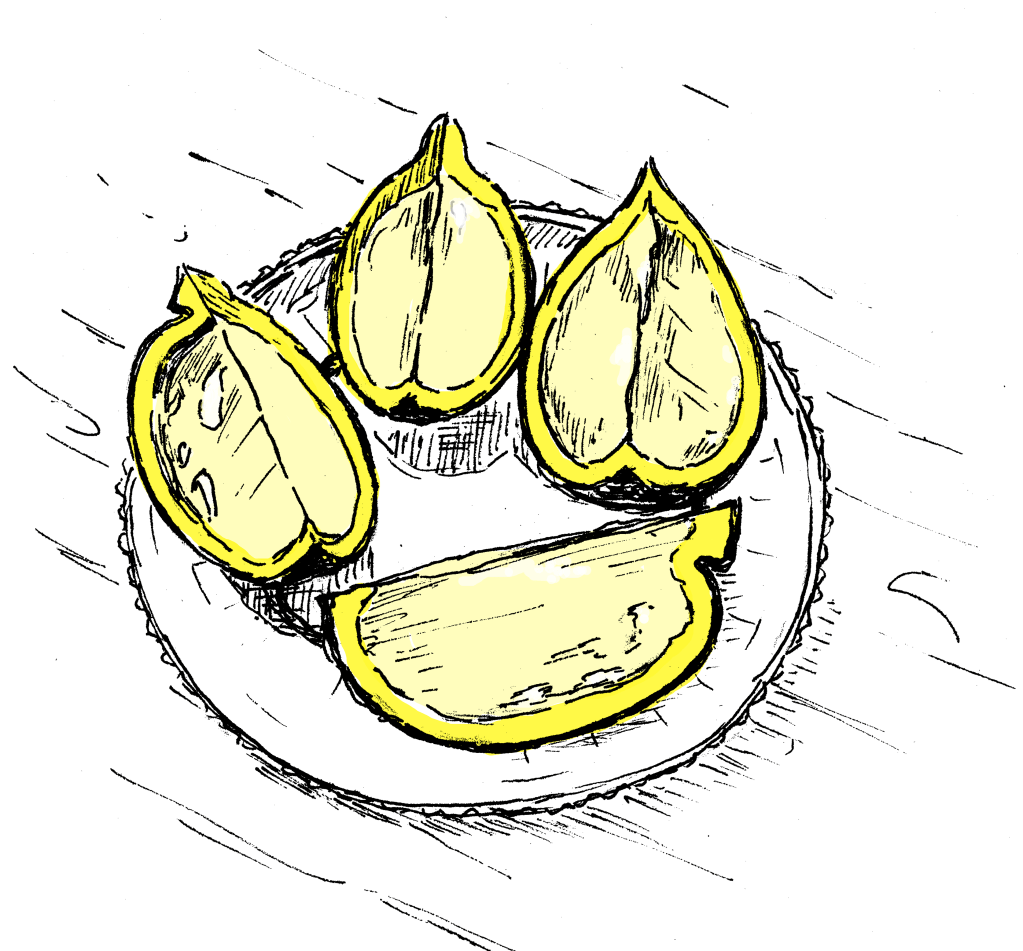
The lemon jelly was more of an artwork than a dessert. A yellow wedge of jelly sat on a lemon peel looking like a glimmering plastic lemon slice. “They should make all lemons like this”, was one conclusion.

Always a friendly cafe, this was no different after dark. Adding to the cosy string-of-lights-and-blankets atmosphere of Big Elma’s backyard, was the fact that there were no little cameras that we could find. We appreciated this and decided not to steal any cutlery.


Lastly, the plates were ‘Noritake’, which one of us claimed to have heard of, and nodded approvingly with a superior look in his eye.


Our only real criticism would be that there was nothing to suggest this is open at night, unless you are standing right out the front peering in. We would suggest some sort of billboard or sign out the front could help people in the distance believe a cafe is open after 4pm in our ‘global city’.

By Teddie Burns

Categories
Uncategorized

Artist of the Month

Polly Bastow
@merricreekmusing

Ink and watercolour.

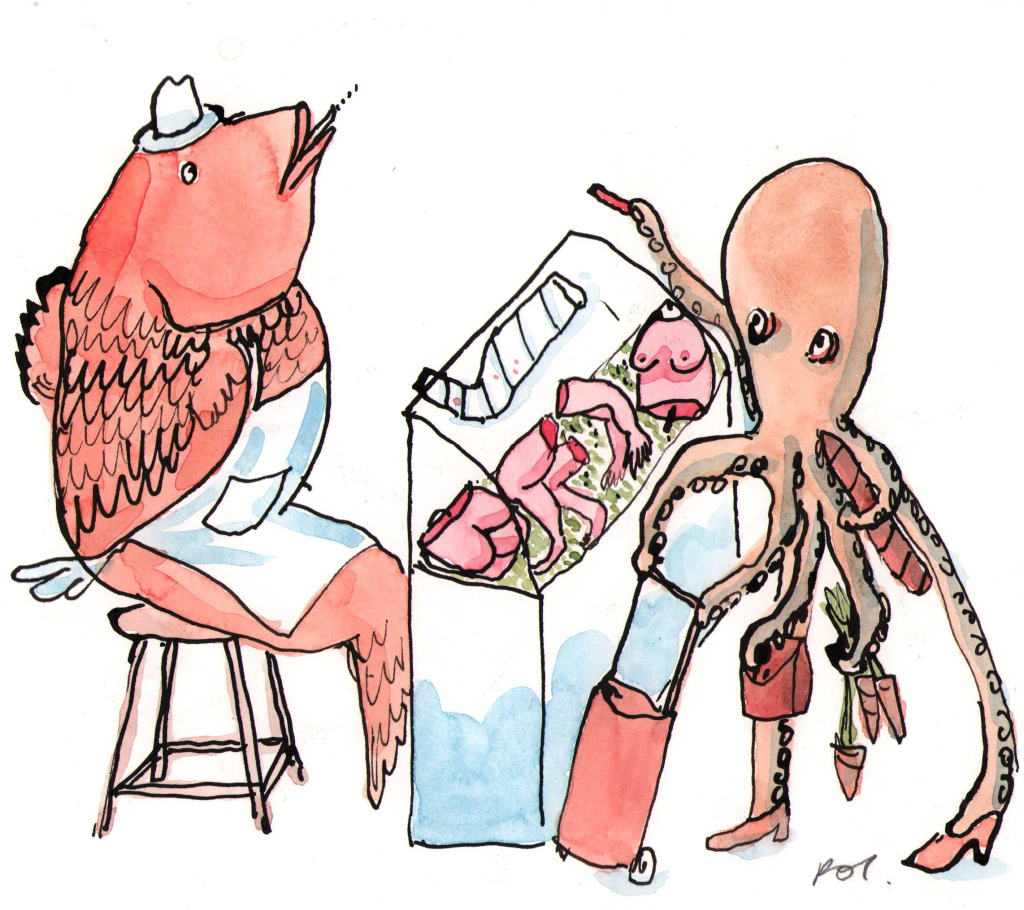
I have been drawing a 35m long image of the Merri Creek (since 2013) that continues to grow. It presents scenes both real and imagined from my daily walk around the Merri Creek. All drawings connect on to the next one (and the one before) which is quite a challenge. I have made a film of it and also printed the first section in a foldable postcard form.I also draw cartoons and observational drawing.I find reversing the power imbalance in everyday life can highlight the weirdness of contemporary living.

Categories
Uncategorized

Hear ye, Hear ye! Bring Back the Town Clerk

Under no circumstances should any municipality be put in the hands of persons who have not been democratically elected

— John Colinton Moore, 1986.
Liberal Shadow Minister for Local Government


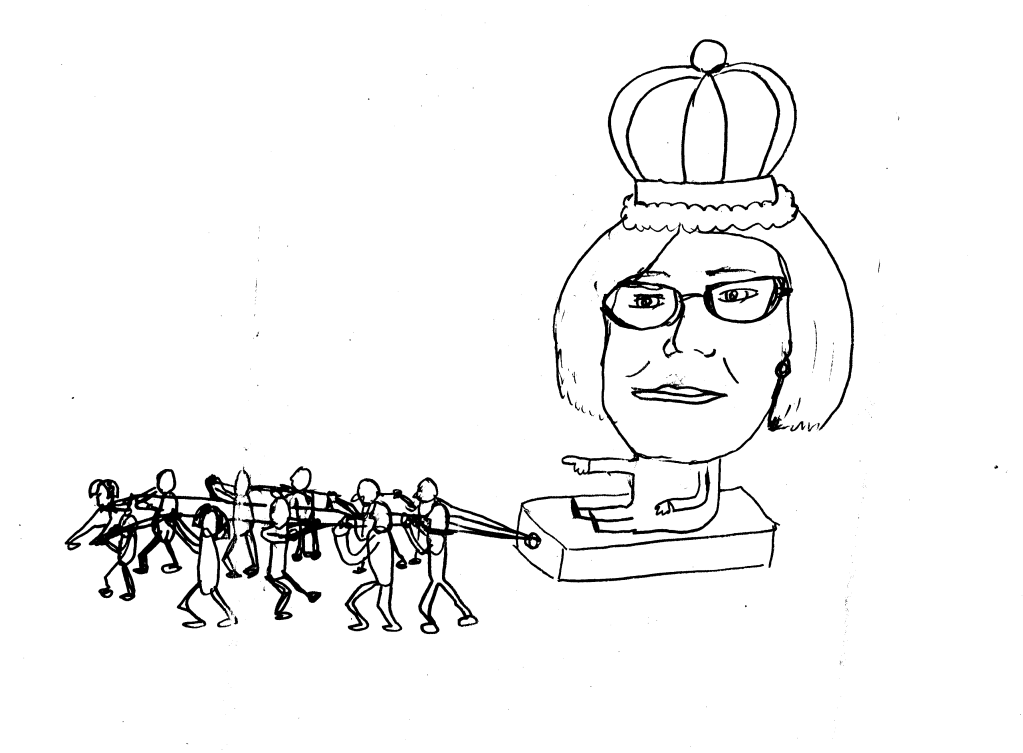
You could be forgiven for not knowing that the third-tier of government — local council — is partially governed by a CEO. For Merri-bek, this is Cathy Henderson (pictured).


Local government is the only tier of government that has a CEO – a non-elected head of operations. Before the 1980s, there was no CEO in local government. The progenitor of the CEO position was the town clerk, whose role was more about keeping accurate records and ensuring council compliance with various laws and policies, and they were much less powerful than today’s CEO.


The reason for this change can be traced back to a decision in the 1970s by the state government to commission a man named Malcolm Bains to review Victoria’s local government system. The 1979 Bains Report criticised local government for being out of step with the needs of their constituents. The report suggested a corporate management approach to the local council, and proposed the creation of a CEO position.


Efficiency vs democracy would dominate discourse about local government for the next decade.


The Liberal Kennett Government (1992-99) cut through these debates with its radical reforms to local councils in 1992. The reforms reduced the number of municipalities from 210 to 78, dismissed all elected councillors, and appointed interim chief executive officers. The reason for the mass dismissals and insertion of CEOs was purportedly to facilitate the major amalgamation. However, the move demonstrated the vulnerability of local government to state intervention, which can be partially attributed to its not being enshrined in the Australian Constitution.


Over time, the roles and responsibilities of CEOs in local councils have increased. The Local Government Act 1989 (Vic) allows councils in Victoria to delegate any power, duty or function of a council to their appointed CEO (with a number of important exceptions, such as making local laws or borrowing money). It is seemingly standard that councils will delegate the CEO a broad number of powers through an ‘instrument of delegation’. Merri-bek’s instrument of delegation provides Cathy Henderson with the broadest power possible.


At a certain point, we need to ask the question: do we still want an unelected person with broad delegated authority, to be running local council? Do we agree with the logic of punters from 1980? The position of a CEO in a local council is not only a compromise between democracy and efficiency, but it is also an extremely overpaid position.


Whilst exact figures are confidential, the 2022/23 Merri-bek annual report implies that our CEO is paid between $390,000 – 399,000. In 2022, when Merri-bek council workers were striking for marginal increases to wages for librarians and garbage collectors, Henderson requested a pay rise in a meeting which was closed to the public.

Whilst decisions may be slower in local council if the role of the CEO were to be abolished and elected councillors were to become the main decision makers instead, this would bring the third tier of government in line with public expectations about Australia’s democratic system.

By Elena Snagge

Categories
Uncategorized

The Town Crier

News Updates

INVASION DAY MOURNING
CEREMONY
From 9:30am-10:30am on
26 January, behind the Coburg
Town Hall, a mourning ceremony
has been organised. Welcome to
country will be done by Elder
Uncle John Gardiner.

CATALYST UPDATE
Incendium Radical
Library (IRL) moved from
its Braybrook location into
Coburg’s Catalyst Social Centre
last May. Membership to IRL
requires a deposit.
Members can borrow
two books at a time, generally
for three weeks unless the book
is ‘high demand’.
IRL host regular reading
groups, post-protest debriefs
and letter writing sessions.
IRL is open on Sundays
between 1-4pm at Catalyst
Social Centre (144 Sydney Rd,
Coburg)

CARPE CARP
Jason (pictured) shocked
the online fishing community
with the size of the carp he
pulled from the Merri Creek
near Murray Rd on New Years
Eve.
Jason caught the carp
using sweet corn, and uses the
fish as fertiliser in the garden.

COBURG STRATEGIC PLAN
Coburg is well-known for
its sea of car parks. The Merri-
bek Council has released a
number of plans over the years
to revitalise the area around
Coburg Library, and is giving it
another go this year!
Recently the Council
invited people to contribute
ideas for how they would like the
space to be used. Some of the
options they proposed included
parks, community facilities,
shops and housing. Council
hopes to release details of their
initial consultation in March.
If the Council does
end up devoting significant
resources into revitalising the
space, this will be an incredibly
important project to get correct.
Whatever the plans may be, we
hope that public land won’t be
sold to achieve it

HARDING ST BRIDGE
Merri-bek’s annual
report from 22/23 was released
in September. It was revealed
that the Council has already
spent $17,414 on the Harding
St footbridge project, however
this is only 4% of the projected
costs…that’s right folks – it’s not
too late to save the bridge.

SYDNEY RD STREET PARTY
The annual Sydney Rd
Street Party takes place on Sunday
3 March, which triggers our yearly
rant to extend the party into
Coburg

Categories
Uncategorized

A Fertile Plot

A Commons Project by ‘Radicle Roots

In the spirit of the ‘Commons’ – a concept relating to the collectively-organised and self-governed use of common land – a group of locals have reappropriated a patch of public land in Coburg’s De Chene reserve, next to Bell st.’


‘Radicle Roots’ (named after the the first part of a seed that develops roots) took inspiration from ‘Growing Forward’, a Brisbane-based group which has started several community gardens, growing food to support those who need it and as an attempt to move away from unsustainable food production methods. Growing Forward has three principles: nobody owns the garden, the food is free, and mistakes are welcome.


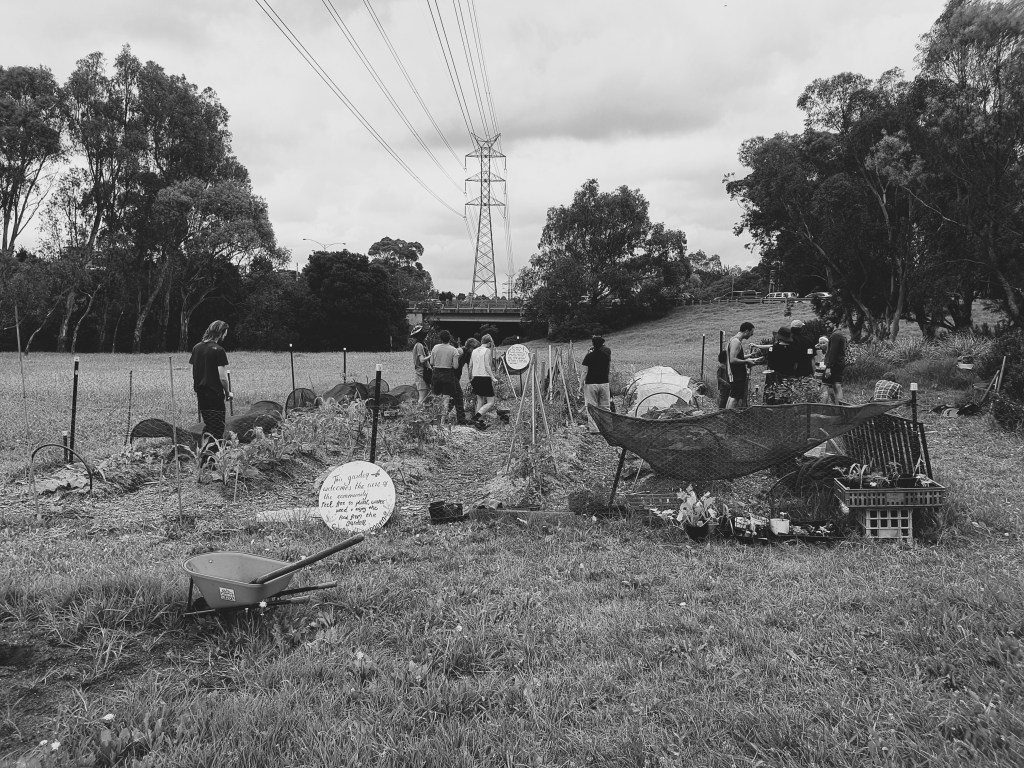
When the Meddler visited the Coburg garden on a recent Saturday, workers were sharing a garlic and lemon laden zucchini salad, which was made with the garden’s first produce.


Two of the founders of the De Chene reserve garden told the Meddler that it’s not just about growing food, but connecting people by growing things together, adding that every Saturday there were new and different faces. Amongst the regulars are burnt out activists, looking to connect with others by contributing to a tangible project, and those living in the nearby block of apartments on the corner of Bell St and Nicholson St.

Some locals frequent the plot during the week; people who might be able to grow pot plants on their balconies, but don’t have a place to garden. Signs encourage the public to contribute in whatever way they like. On Saturdays there is a regular working bee from 10am-1pm, but it’s always open.


The gardeners have been developing ideas on how a disparate group can communicate across the week, and are trialling a ‘Garden Communication Book’ – a diary that remains on the site – where people can let others know what they’ve done to the site and when. Tasks that need to be done can also be logged on a whiteboard next to the entrance, which helps provide a starting point for those who aren’t sure how to contribute.

The location of the Coburg garden was carefully chosen to invite public participation, as well as to have access to a large open space with a source of water: “we looked for places people accidentally walk through on their way somewhere”, said one of the founders.


The garden lies next to the park playground, is adjacent to a sports field (home of Brunswick Juventus FC), and close to two open air gyms and the Merri Creek trail. People and dogs regularly pass by the gardens as the working bee is in action, some of whom come up to find out what the garden is all about.


Unfortunately, these ‘guerilla gardens’ can be vulnerable to hostile community members. In QLD, this has led to some plots being vandalised by individuals or pulled down by Council.

Similar concerns that Merri-bek council workers might rip up the De Chene garden were brought to the Council. Cr James Conlan added a motion about the garden to the next council agenda, which has the practical effect of keeping the garden safe from Council intervention until then.


The group has a number of plans, including linking up with local initiatives to donate some of the produce to those who need it.

By SAS and BB

Donate to their cause using this QR code.

UPDATE: Radicle Roots is running an info day about the garden on 4 February at 3pm, at the garden in De Chene Reserve!

Design a site like this with WordPress.com
Get started