Categories
Uncategorized

MALL-CONTENTS

Andy has been operating the milkbar on Harding Street since 2008. He set aside some time in his busy schedule to answer some questions.

What was this place before it was a milkbar?
It’s always been a milkbar I think. The orig­inal person who lived there did it for 4-5 years and then moved here. They are the ones who started it. He then sold it to the next owner, who did it for about 5 years.

Has Andy’s Cafe ever had seating?
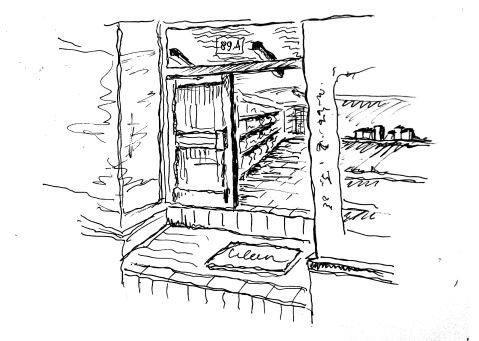
We’ve never had seating – I think the building has always been like this. It hasn’t changed much. I think we’re the only ones who did renovating; when we came and refurbished it we made it brighter. There were a lot of old adver­tisements around and it was kind of messy. The walls were yellowish and the lights were quite dim. So, we closed the shop for 4 or 5 days and we did a bit of painting and a lot of moving things around.

Could you tell us about the poem outside on the win­dow?

If I’m not at home
I’m at Andy’s Cafe
If I’m not at Andy’s Cafe
I’m on my way

We put it there when we decided to cut through the wall to get into the next room – which used to be an accounting firm — because we want­ed to make a little cafe. At the beginning it was kind of difficult because when we moved in my son was in year 1 or 2. So I was by myself. We had a toaster here as well, but then we were burn­ing the toast and croissants when I would be busy making the coffee. So it was kind of smokey as well. So we thought, this needs two man-power, not one.

Do you have future plans to make a cafe?
There’s not enough traffic to make a suc­cessful cafe. There’s never been that much traffic here. If I had opened a cafe on Sydney Road, I’d say go for it; but not here.

What’s the story with the books? (One wall in the store is dedicated to second-hand books)
The books are a long story. There was a second hand shop next to Rubys; the shop on the corner. The lady who rented out the room there to sell her second hand books couldn’t pay the rent. She asked me if I minded her bringing the books to me. I didn’t mind. So the store room became a bookstore with shelves and everything. She came every week to get the money. We did that for a few months. Slowly and slowly she began to dis­appear. Then I found out she moved away, and she left me with these books.
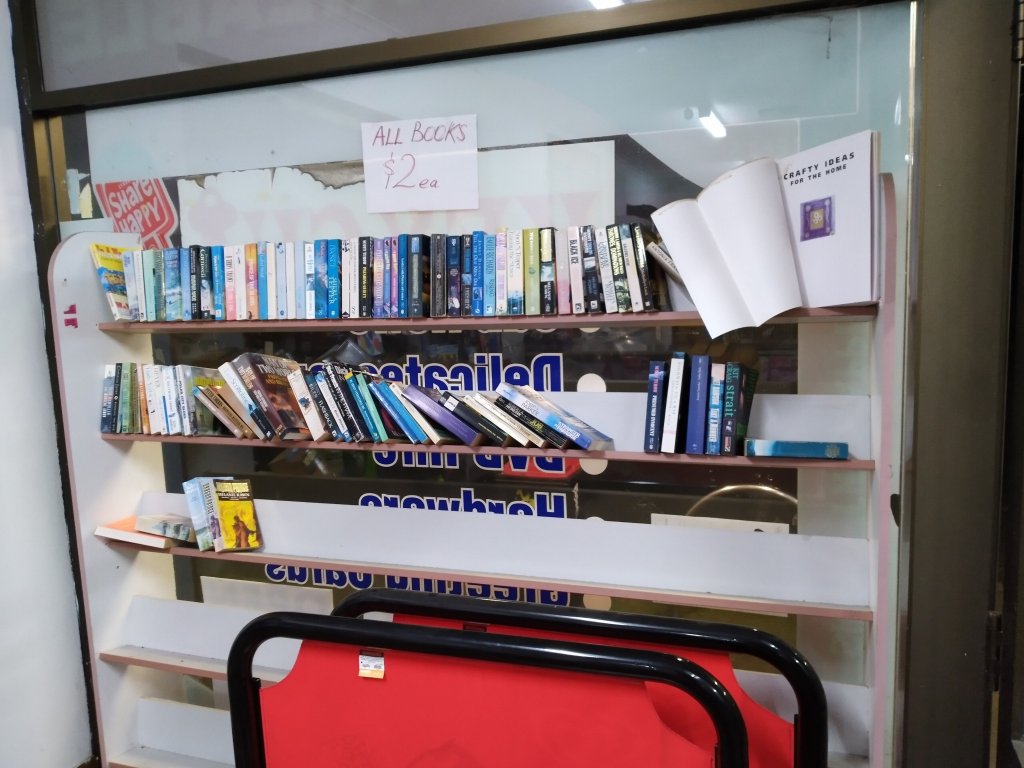
There are so many books. I asked the op-shops if they’d take the books, but they don’t want them. Initially I took them all down, but now I just put them on the shelf. And now I’m just being lazy – I can’t be bothered taking them down.

Andy’s Cafe
89A Harding St, Coburg
9378 8896
Categories
Uncategorized

81 Bell St, Coburg

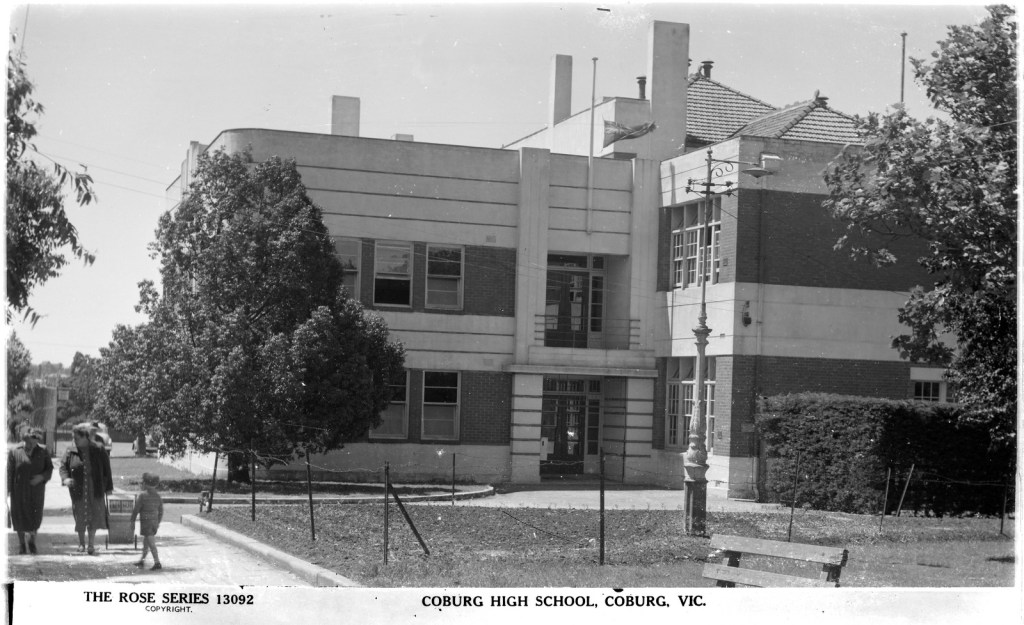
For more than 25 years, 81A Bell St — di­rectly opposite the Town Hall — has stood empty of the life that once filled old Coburg High School.

Through the early 1990s the Liberal State Gov­ernment led by Jeff Kennett closed more than 300 schools; Coburg High was one. Opened in 1916, the school had a rich history obliterated by a short-sighted decision that robbed our commu­nity for more than 20 years of a local secondary school. But that’s a whole different story…

This short piece is an examination of the site’s sordid development history and the cost of short term political decisions that have resulted in a New Zealand for-profit aged care company now owning the site (with plans to build a facility with the capacity for 600 people should the company still see a way of turning a quid from old and dying people post Covid).

To pay off massive state government debt, Kennett used a real estate company directed by (premier to be) Ted Ballieau to sell the site. The original purchaser, the Royal Victorian Institute for the Blind, had plans for a low level retirement village for elderly blind people, but the institute was stymied by a heritage listing of the art deco façade that demanded its conservation.

Sleaze then touched the site when the frus­trated institute sold it to George Tandos, Steve Angelodemou and Henry Kaye. Kaye was famous for the concept of mezzanine financing of prop­erty developments, whereby sales of one floor financed the building of the next floor; a sort of bricky Ponzi scheme that eventually col­lapsed under the weight of its own greed. During this time a mysterious fire destroyed the heritage listed façade of the school, depleting Coburg of an amazing piece of early 20th Century architecture.

Hamton and ‘the Million­aires Factory’, Macquarie, took ownership in 2009 and cobbled together a plan — partly financed by federal social housing money — for a massive 520 apartment complex. This all fell apart after a change in social housing funding made the proposal unprofitable and the site passed into the hands of Double LZ — a shady operation that had plans for 391 boxes. This development was opposed by Moreland Council and residents, who quixotically appeared before VCAT. As with most VCAT cases, VCAT decided on behalf of the developer.

In 2017 NZ based Ryman Healthcare, in partnership with Becca, took possession of the site and the approved plan. The Coburg site is but one of more than 8 huge ‘retirement villages’ Ryman plan to build in Victoria. Now, three years later, the site sits empty still. Nearby residents await anxiously for the rude intrusion of construc­tion works that will build a gated community with an 11 storey palliative care quasi-hospital on the north west edge of the site abutting Bridges Re­serve.

Once home to patients affected by the Spanish Flu in 1918, perhaps a pandemic will again influence this once proudly owned public land, now turned towards the profit of NZ share­holders.

By Peter Robertson

Categories
Uncategorized

FLAVOURS OF COBURG

On an uncharacteristically sunny Saturday in August, four friends decided to order and review Paninoteca.

Coburg isn’t known for its sandwiches, but maybe it should be. There are a number of local places that boast excellent sandwiches; O’Hea’s Bakery focaccias, True North’s reubens, 9 Meal Cafe’s falafel sandwiches, or Tasty Sub’s $1 toast­ed wrap. Going further north, however, is a store dedicated to the humble sandwich; Paninoteca. Located on Gaffney Street in Coburg, Paninoteca opened for business in October 2016 and has been reliably providing locals with Sicilian-style sand­wiches, arancini and hand-cut chips ever since.

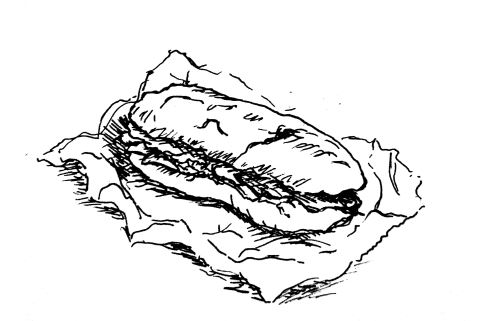
After a refreshingly simple and quick over-the-phone order, we picked up our panini from the red and white themed store that felt like it would fit in perfectly on a busy beach front. The ‘vege­tariano’ ($16), two San Danielle prosciutto ($13), and the scotch fillet panini ($16) were swaddled safely in butchers paper and packed into a brown paper bag. A nice touch — one that lessened the shock of receiving such hefty panini. These panini were big.

The vegetariano is a warm panino with marinated peppers, eggplant and mushrooms, roasted fennel, rocket and tomato and a generous spread of pesto. Most vegetarian sandwiches are either very rudimentary or they go the opposite way and have very fancy fake cheeses and meats. This panino was packed with flavour and did not leave the vegetarian feeling as though they were missing out on anything.

The scotch fillet panino is also warmed with caciocavallo cheese, onion, rocket and bal­samic vinegar. Steak sandwiches can often be bland, but this panino was flavourful; the steak was tender, had a good amount of fat and a nice smokey flavour. It was also so juicy that there was an after-meal shirt change.

The San Danielle prosciutto panini is a cold sandwich with buffalo mozzarella, tomato and pes­to. This panini was creamy and mild. The prosciut­to was good, but the panino was lacking “some­thing”; pepper? Moisture? Whatever was missing was minor, as this was a great, classic panino.

Although these panini sit at a higher price point than other sandwiches around Coburg, the Paninoteca panino should not be treated as a sim­ple ‘I’ll just have a sandwich today for lunch’ affair. This decision requires commitment, and a place to sit down. Paninoteca use soft, well-cooked and thick white Italian bread. Potentially a crunchier and thinner roll might be welcomed, but the bread chosen is distinct, visually appealing and satisfy­ing.

Overall, we were very happy with our panini experience; we will be back and we would recommend locals head there, too. The panini se­lected were simple and like something you might make at home, but the nicer version of it.

Maybe it was a coincidence, but it is worth mentioning that our previously sick-feeling friend ate her panino and felt restored.

PRO TIP: don’t take this panino completely out of its wrapping, even for dramatic effect. It will be­come difficult to manage and you’ll get eggplant juice all over the new bed sheets that you bought to make yourself feel better – I mean suit pants.

Paninoteca
130 Gaffney Street, Coburg
8354 7541

By Saln Sabagar

Categories
Uncategorized

HELICOPTERS IN COBURG

You begin to notice more things when you’re stuck at home; the usual time the post ar­rives, where the light is best during the day, how long it takes for cabbage to grow — and how many helicopters seem to pass overhead in Coburg. Maybe you’re asking yourself: Am I just becoming grouchy and paranoid? Am I really going to contact the Victoria Police ‘Air Wing’ to say: “Why are there so many choppers in Coburg? Before you say I’m paranoid I have a list of all the times and places I’ve seen a chopper this month”? Is this all just an incidence of me being home more? Yes. Yes…and no!

In the last two months the Air Wing of the Victoria Police increased their capacity. While there used to only be 3 helicopters, there are now 7.

These choppers are deployed from Essen­don Airport and, according to Victoria Police, pa­trol Melbourne indiscriminately, assisting police units on the ground. We are told that even though the choppers may be hovering above Coburg, they can see 10kms away and so may be focusing on some other suburb.

Whilst it’s easy to think of helicopters as being fairly innocuous and novel parts of the po­lice force, in reality police helicopters primarily assist ground units to make them more efficient in their operations. They travel quickly and can rapidly deploy police. Increasing helicopter fund­ing should therefore not escape critiques of police funding more generally. We want and need to fight for a system of safety that provides assistance and reassurance to everyone in our society. At present we have a notoriously violent police system that inappropriately defaults to using brute force to manage situations, particularly when dealing with marginalised and vulnerable people, creating un­safe environments for people interacting with the police, and deterring people from seeking help.

Those helicopters should be given to Am­bulance Victoria, who should be the ones respon­sible for the search and rescue work currently be­ing conducted by the police. Health professionals are more necessary and useful in a rescue mission than police, afterall.

By ES

Categories
Uncategorized

UNPICKING THE UNDERPINNINGS OF ECONOMIC THEORY: THE MYTH OF BARTER

 This article borrows heavily from Chapter 2 in David Graeber’s book Debt: The First 5000 Years – thanks Graeber!

The power of economic theory in our soci­ety is very strong and it holds a tight grip over our lives. Economic advisors shape a lot of our gov­ernment policy, and economic rhetoric shapes a lot of our thinking. This is the reason I find it most interesting to unpick the assumptions of main­stream economics, and the particular assumption I’m interested in here is the myth of barter.

In pretty much all university economics textbooks the history of money starts with barter. The story goes like this: before money humans traded goods for other goods. After a while this got too complicated and so money was invented. After a longer while we complicated our econo­mies even more by creating virtual money. This story became the founding myth of economics, promulgated by Adam Smith — a political econo­mist from 18th century Scotland.

Over the subsequent centuries, in partic­ular the last hundred years, it has come to light how untrue this story is, but mainstream econo­mists have largely ignored the developments. You might be wondering: ‘why does it matter if the founding myth is wrong?’, and ‘why have econ­omists deliberately tried to keep it?’ Because it props up the idea that the economy is separate to the rest of society, and that it can be studied in relative isolation using graphs and maths.

Here is a quote from David Graeber that explains it quite well:

“For there to even be a discipline called ‘economics’, a discipline that concerns itself first and foremost with how individuals seek the most advantageous arrangement for the exchange of shoes for potatoes, or cloth for spears, it must assume that the exchange of such goods need have nothing to do with war, passion, adventure, mystery, sex, or death. Econom­ics assumes a division between different spheres of human behavior that, among people like the Gun­winngu and the Nambikwara, simply does not exist. These divisions in turn are made possible by very specific institutional arrangements: the existence of lawyers, prisons, and police, to ensure that even peo­ple who don’t like each other very much, who have no interest in developing any kind of ongoing rela­tionship, but are simply interested in getting their hands on as much of the others’ possessions as pos­sible, will nonetheless refrain from the most obvious expedient (theft) . This in turn allows us to assume that life is neatly divided between the marketplace, where we do our shopping, and the ‘sphere of con­sumption’, where we concern ourselves with music, feasts, and seduction.”

Graeber goes on to explain that this seg­mented worldview is so embedded in our text­books as well as our ‘common sense’ that it takes a concerted effort to imagine it any other way.

In my humble opinion those with money and power in our society want to continue the il­lusion of economics as separate from everything else. It means, for example, that when a landlord is kicking out a tenant for not paying rent it is simply a question of economics, and not of the single parent of 3 children that just got fired be­cause their workplace is cutting costs to keep the high profit rate for their shareholders. It means that when a company wants to dig a coal mine the main question is whether it is cost effective, not whether communities are displaced, biodiversity lost, indigenous culture disrupted, and so much more than can’t be measured in money, but will be given an arbitrary value as an externality — if it is given any value at all.

Neoclassical economics, which is pretty much the only strain taught in economics depart­ments, and which underpins a lot of mainstream political understandings, needs to be questioned and undermined as we fight for a fairer world.

By Ani Seed

Categories
Uncategorized

SHORT STORY OF THE MONTH

Illustration by Tyson Kalender

In 2066, a small group of haematologists testing a new imaging technique discovered an unfamiliar sight in a blood sample. It resembled DNA, yet didn’t conform to its conventions. To confirm it wasn’t an aberration with the donor of the sample, each scientist took a sample of their own blood and examined it – in each sample, they found the existence of the same strand.

The application of existing modelling tech­niques yielded little but a string of seemingly ran­dom letters and numbers. When the preliminary data and findings were published, scientists and the public alike saw it as an object of fascination, as we thought we had come to know everything there was about the human body. Answers were less forthcoming, however.

18 months later, an amateur cryptographer claimed to have decoded the letter-number string using a variant on a cypher used in Poland during World War II. She sent a decoded version of the original sample to the scientists, but the results turned out to be laughable. They were simply a list of what could loosely be described as ‘mis­deeds’ – petty theft, lies, adultery, cowardice, vio­lence, all with a timestamp and some descriptive information. For example: “08/10/2032 17:59:32 – Lied about whereabouts to wife Clara.”

This was widely written off as the work of a crackpot, but when the ‘results’ were jokingly published in the paper, the donor of the original blood sample contacted the scientists in a panic to explain that, in fact, everything on the list was something he’d done.

The theory then turned to it being a hoax, but there was certain information on the list that he was sure that nobody could know. Further­more, each scientist began to receive their own decoded tests from the cryptographer. As with the first, it seemed to resemble a complete index of misdeeds, and, as with the first, they were all accurate.

In the following months, there was an ex­plosion of interest and speculation. The blood imaging technology got rushed to market, and testing became widely available after the cryptog­rapher made public her cypher. People flocked to get tested to see if it really worked, which it invari­ably did, though many were not prepared for the results.

Meanwhile, nobody could explain the new strand’s existence. Scientists were puzzled at the fact that it seems to have been designed to be read by humans. There were disputes over its veracity by scientists and those in the public sphere, but these quickly came to indicate guilt more than anything else. Religious figures speculated it was a message from God about the inescapability of judgement. Others decried it as devilry.

Since the discovery, we’ve initially seen a drop in crime, misdemeanours, and anything an­ti-social. Over time, though, people have begun to revert back to normal – small things at first, and now crime is returning. People lament that noth­ing has changed, but I disagree. Punishments have become lighter, sentences shorter, and per­sonal rifts less severe – in the absence of doubt and denial, and because we now know that no per­son is not a sinner, all we can learn now is forgive­ness.

By B Haughtly

Categories
Uncategorized

WHAT’S UP?

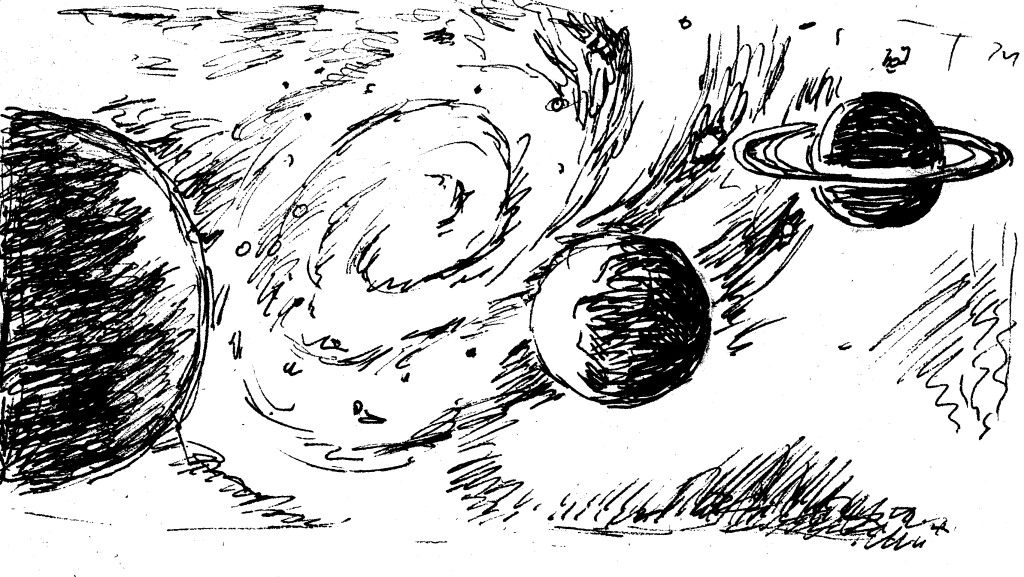
In the early evenings of late August the plan­ets Jupiter and Saturn can be seen high up in the north-eastern sky within ten degrees of each other, in Sagittarius – or if you prefer a more homely con­stellation, next to The Teapot. On the 29th they will have the almost full waxing Moon between them.

(Note: as a rough guide to celestial measure­ments, the Moon takes up about half a de­gree of view, and an adult human fist held up at arm’s length takes up about ten degrees.)

Mars is now relatively close to Earth, and almost as bright in the night sky as Jupiter. Rising after 9 pm on the 5th and 6th September, it can be seen very close to the waning gibbous moon.

Venus can be seen in the east before dawn (after about 5 am) in September. On the 2nd it will pass within a few degrees of the bright orange star Pollux (one of the Gemini twins), and on the 14th will be joined by the waning crescent Moon.

The more retiring planet Mercury will form a conspicuous triangle low in the west with the very new Moon and the bright white star Spi­ca in the early evening (about 7pm) of the 19th September, and on the 22nd, Mercury and Spica’s separation will be less than a degree.

Spica is the brightest star in the constella­tion Virgo, the sixteenth brightest star in the sky, and is a binary star: two suns orbiting each other so closely that they are indistinguishable by tele­scope. An Arabic name for Spica was Azimech, de­rived from words for the Defenceless One or Sol­itary One, probably referring to Spica’s relatively large distance from other bright stars in the sky. In northern Australia when one of the Wardaman peo­ple dies, their spirit is believed to be taken up to a hole in the sky, seen as the star Garrndarin (Spica).

Jupiter and the Moon will make a strik­ing pair high in the sky in the evening of the 25th September. An interesting alternative time for viewing is during the daylight of that late af­ternoon. At times, the planets are bright enough to be seen in daylight – the problem is usual­ly knowing where to look for them. Now, Jupi­ter will be only about three Moon diameters to the north of the Moon- but still somewhat chal­lenging to spot without binoculars in daytime.

In the southern hemisphere, spring equinox this year occurs a little before midnight on the 22nd September. As an alternative to measuring equal­ity of daytime and nighttime, this can be defined more precisely purely by geometry, as a time when the Sun is directly above the Earth’s equator – that is, when the centre of the Sun lies on the (extend­ed) plane of the equator. Due to the tilt of Earth’s polar axis, this only happens two times a year.

By Vlack

Categories
Go See Your Doctor, But...

YOU SHOULD SEE YOUR DOCTOR, BUT…..


Local Coburg doctor answers questions and gives unsolicited advice.

Will my kid get sick from licking hand sanitizer off their hands?
Licking hand sanitiser won’t harm a child but can be dangerous if they drink a larger amount. Hand sanitiser contains a high concentration of alcohol which could cause alcohol poisoning. This can drop blood sugar levels, cause decreased consciousness and breathing troubles.

-Dr C Burger

Categories
General News

RENT AND MORTGAGE STRIKES

We’ve Been Here Before

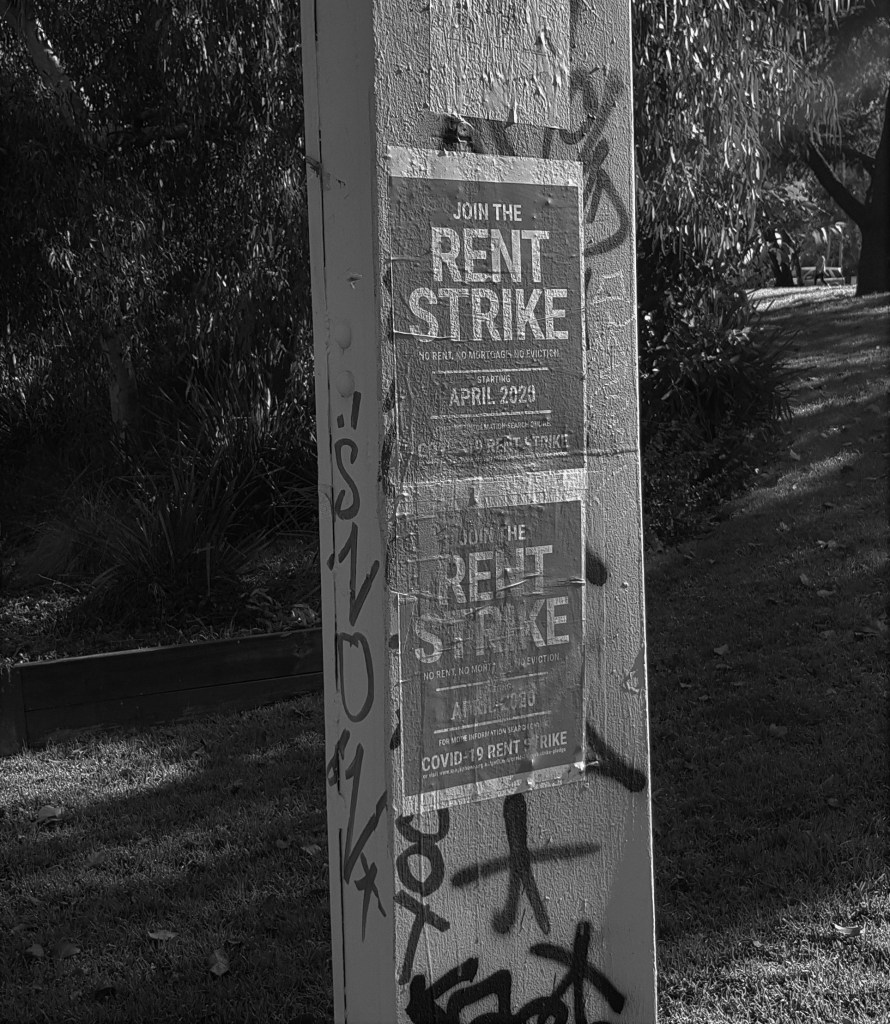
When the pandemic hit and a large proportion of the global population lost their normal income, many people were left wondering whether they could make their rent. Advocacy groups emerged in response to this concern, calling loudly for a halt to rent and mortgage payments and evictions. For the last few months in Coburg and the northern suburbs, a rent strike group run and contributed to by volunteers has been attempting to provide support and advocacy on behalf of tenants.

The group initially called for a wide-scale rent strike, claiming that this would even the playing field between landlords and tenants when negotiating fair arrangements. Before the strike could garner enough support, in April the government instituted a moratorium on evictions with an exception for people who were neglecting to pay their rent despite having the means. Although the rent strike movement was stymied, it was largely accepted by the broader community because it ensured that those who couldn’t afford their rent would be temporarily protected from evictions. The moratorium will be in place until the end of September this year.

Before the rent strike was largely abandoned by May, the online group provided comfort, advice and resources for those who feared eviction. It demonstrated the need for collective action and solidarity in situations where the current system fails to adequately assure and assist people.

This isn’t the first time that we’ve seen collective action in the northern suburbs in response to a catastrophe. During the Great Depression (1930-1936) the community of Coburg banded together to fight against hunger and homelessness. In his book “Between Two Creeks” Richard Broome writes that in 1932 an anti-eviction group intervened in an eviction in Coburg by returning the pieces of furniture that were being removed by the bailiffs, piece by piece. Broome noted that at the time there were 162 tenants owing rent and facing eviction. Back then the Coburg Council were willing to work with the anti-eviction movement, so long as the needs of landlords were also acknowledged. This can be seen in the local court cases at the time; while some evictions were ordered for situations where rent wasn’t paid for one or two years, other cases saw landlords agreeing to waive rent until a job was secured.

The rent strike movement in Melbourne’s northern suburbs has since formed the Renters and Housing Union (RAHU). They claim that they will be fighting ‘for the right to safe and secure housing through self-advocacy, education and frontline eviction defence’. They are not the first tenants union in Victoria. Tenants Victoria originally started as a union in the 1970s, however has in the last few years decided to distance itself from the status of a union and instead largely operates as a free information, advocacy and legal advice service. It appears as though RAHU aims to be more hands-on, however it is too early to say how they will perform.

Rent strike and anti-eviction movements are incredibly powerful initiatives that force landowners and banks to consider the human right to shelter above profit. Homelessness and rental security is still a major problem in Victoria; hopefully the new union and other housing advocates will find a more sympathetic ear now that more people have been exposed to the uncomfortable fragility of maintaining housing.

By ES

Categories
General News

POLICE VIOLENCE AND THE SYSTEM THAT PROTECTS THEM

Photo: Erik Anderson

The system of accountability that is meant to keep Victoria Police in check has never worked. The impact of this is felt particularly in Aboriginal and Torres Strait Islander communities where people are incarcerated at higher rates than any other race in the world and have seen 432 deaths in custody over the last 30 years. Despite these deaths no one has been convicted. So, why not? What happens when someone dies, is killed or is mistreated under the watch of Victoria Police?

When a complaint is made against the police, the Chief Commissioner of Victoria Police is legally obliged to refer the complaint to the Independent Broad-based Anti-corruption Commission (IBAC). IBAC is then tasked with either dismissing the complaint, transferring it back to Victoria Police or investigating it themselves. In practice, the majority of the complaints made by the public are referred back to the police, who then undertake their own investigation; put simply, the police investigate the police. As a result, Victoria Police consistently only finds 11 per cent of complaints are substantiated. In the period between 2018-2019 there were 3607 allegations assessed by IBAC from Victoria Police, with only 16 incidents investigated by IBAC.

Added to this is a cultural norm of not taking violence seriously by both the courts and the police force. In IBAC’s 2018-2019 annual report, only four outcomes from investigations were listed. One officer was found guilty of using excessive force but was given a good behaviour bond with no conviction recorded. Another officer was found guilty of two charges of unlawful assault; he was convicted but is now simply on a 12-month good behaviour bond. On the other hand, the other two outcomes show that the non-violent crimes (both unauthorised uses of police information), resulted in large fines of $3000 and $5000 and the officers either resigned from the police or retired. Presumably within the Victoria Police it’s more of a career-ending move to misuse police information than to be excessively violent; they can work with a racist and violent co-worker, but not with someone who won’t uphold confidential information.

On Saturday 6 June, tens of thousands of people protested in Melbourne’s CBD against police racism and the system that enables, protects and aggravates it. Aboriginal and Torres Strait Islanders led the rally, calling for justice and change for their loved ones who have died in police custody and for those who face incessant police discrimination. This comes off the back of Australia’s tone-deaf outrage at the racism faced by people in the US at the hands of the police. The rally was a reminder that the situation in Australia isn’t any better, as well as a show of solidarity with the Black & Blak Lives Movement happening locally and around the world.

If you need help with a police complaint, call the Kensington Police Accountability Project on (03) 9376 4355.

Consider donating to families of the people who have died in custody and who have been left with enormous legal and funeral costs.
• Justice for David Dungay Jnr: https://bit.ly/justicefordavid
• Justice for Kumanjayi Walker: https://bit.ly/justiceforyuendumu
• Justice for Tanya Day: https://bit.ly/justicefortanyaday
• Justice for Joyce Clarke: https://bit.ly/justiceforjoyceclarke

By BB

Design a site like this with WordPress.com
Get started