
By A Small Wet Frog
I first came across Extinction Rebellion (XR) in the city in 2019. I was trying to mind my own business when I saw a spectacle drawing a crowd near Flinders St station. A group of activists had blocked the Princes St bridge and were calling for action on climate change. I hadn’t been involved in street protest or any activism before this time but it struck me instantly that I ought to be on their side. This, I thought, was the kind of seriousness demanded by the situation.
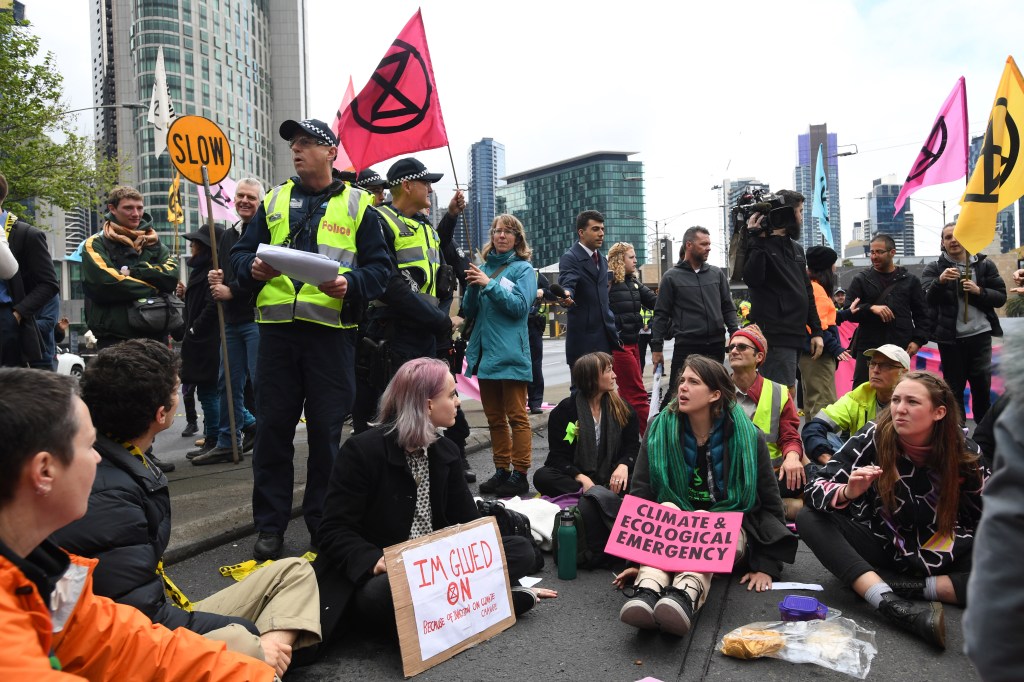
So I jumped in and found a hopeful, friendly and growing grassroots movement under way. I hadn’t been involved long before the pandemic came and took the wind out of the movement’s sails. When I crawled out of the rock I had been under for most of 2020 & 2021 things looked much different. The 3 local chapters of Extinction Rebellion in Melbourne’s north (one of which had filled every room of East Coburg Neighbourhood House during weekly meetings) had amalgamated into a single group, and the remaining participants could all now fit comfortably around a dinner table.
2022 and 2023 saw us pushing on in much the same vein as before. We cooperated with other XR groups around Victoria to plan ‘weeks of action’ – tightly scheduled periods of daily protests, media stunts, workshops, trainings, talks and performances all culminating in a big march or sit-in at the week’s end. There was some really amazing work done and I was constantly impressed by what was being achieved without anyone getting paid and without anyone being in charge. This model of intensive action periods, though, was starting to tire many participants out and new ones weren’t often coming in to take the weight off their shoulders.
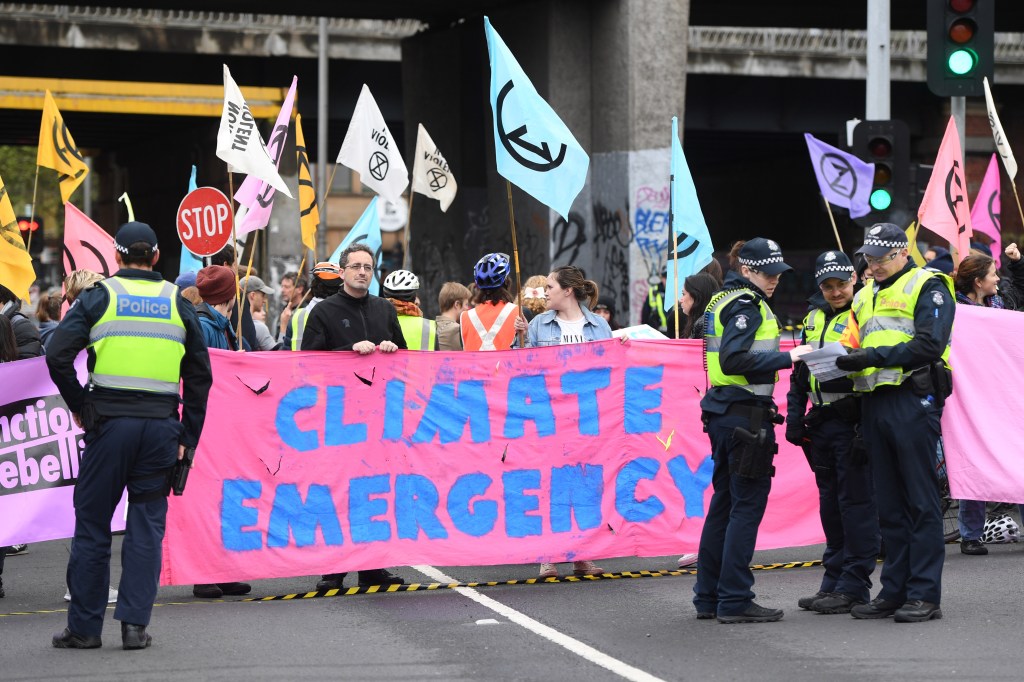
More recently the strategy has changed. High flying schemes for synchronously dancing flash mobs, specially crafted puppets and costumed characters to take over the city centre in a riotous display of colour and life are out for now. Many organisers have been focused on a different and more straightforward tactic: the Slow March, which has recently been taken to the shopping strips of Brunswick, Preston and Collingwood.
It’s a decent loophole. You can march down the street with your signs and so on, but you get from A to B pretty quick and then you have to get off the road and go home without offering any material threat to the status quo. Or you can stand your ground and sit down on the road to make a demand. You’ll gain the leverage of stopping economic activity but police usually appear pretty promptly and carry you away.
The slow march cuts it both ways. You block the road and you move – just very, very slowly. “But officer,” you say “we ARE moving…” and somehow that’s good enough for them to let you do your thing (at least for a while). Slow marching has been pretty effective at causing the kind of disruption that makes people pay attention.
The TV crews like these actions – they’ll usually show up and film for the morning news. And they tend to cover it reasonably fairly, though they will always run to interview someone through the window of a truck or ute. The voice of reason in the Australian media: the everyday punter. The comment is usually “Yeah, I get that climate change is bad but I think we can deal with it.
These people are just being idiots.” Maybe that’s what they really believe and honestly I would like to believe it too. It’s not pleasant to know that the government isn’t doing what is needed to mitigate the escalation of deadly weather events and ecosystem destruction made worse every day by our economic activity. But it’s plainly factual as far as I can tell.
What we do often makes people very upset. People who are affected by road blocks feel targeted or punished by what we’re doing. I’m frequently shouted at and threatened with death. Sometimes I’ve been praised and thanked. It’s not always easy to know how to feel about it. Marching in your own neighbourhood is more complicated emotionally than in the CBD, where you can feel like you’re sticking it to “The Man” instead of getting in the way of people you might see at the grocery store later. I know that no-one who participates in these marches enjoys pissing people off and that everyone is there in good faith. So what is the correct way to protest climate inaction? Lots of things have been tried, and no-one thinks about this question more than the activists. But doing nothing and doing things that haven’t worked aren’t reasonable options so this is what we’re trying, either until it works or someone has a better idea.
Global warming primarily caused by burning fossil fuels has already exceeded 1.5°C above pre-industrial levels (the safe limit agreed to by countries like Australia when it joined the 2015 Paris Agreement) and may pass 2°C later this decade. Projections from climate scientists indicate that the effect of this global change on our health, livelihoods and environment will be profound and devastating.
From some other dimension where none of this is real, the Labor government has approved or extended 16 fossil fuel projects in their current term. Australia is the world’s third-largest fossil fuel exporter. It’s a fact conveniently ignored because the coal and gas we ship overseas doesn’t count towards our already comparatively high domestic emissions. Will a movement like Extinction Rebellion make a difference? I have no idea, but I hold onto the hope that ordinary people can do something, and these are the people I have found who are genuinely trying.




 The Coburg Meddler