
Under no circumstances should any municipality be put in the hands of persons who have not been democratically elected
— John Colinton Moore, 1986.
Liberal Shadow Minister for Local Government
You could be forgiven for not knowing that the third-tier of government — local council — is partially governed by a CEO. For Merri-bek, this is Cathy Henderson (pictured).
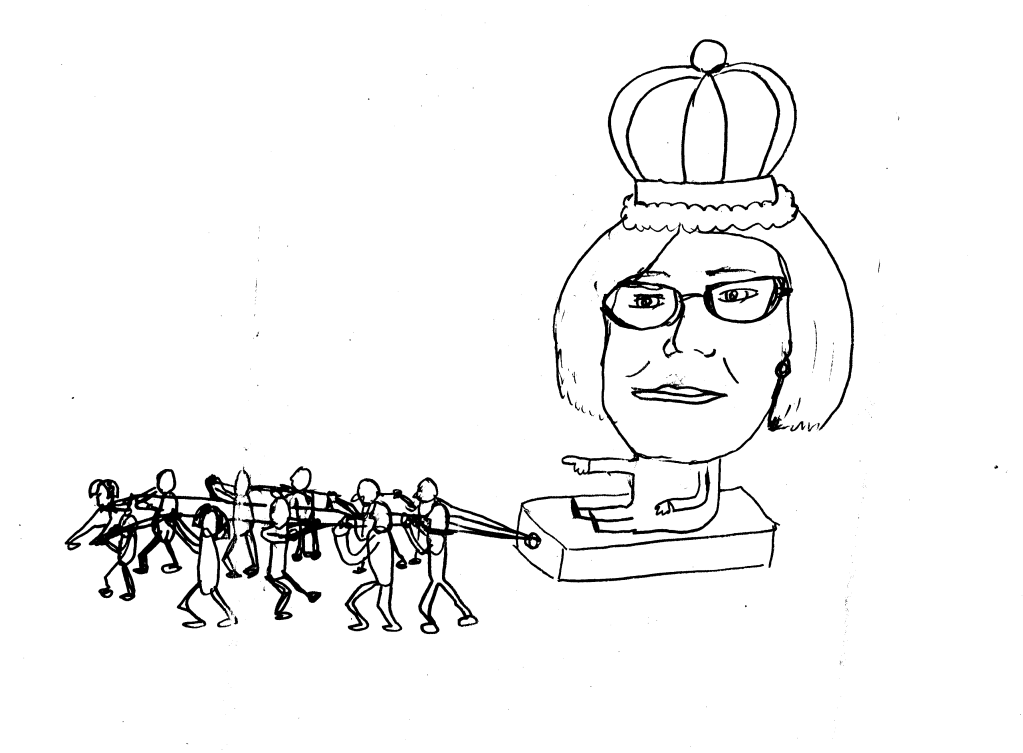
Local government is the only tier of government that has a CEO – a non-elected head of operations. Before the 1980s, there was no CEO in local government. The progenitor of the CEO position was the town clerk, whose role was more about keeping accurate records and ensuring council compliance with various laws and policies, and they were much less powerful than today’s CEO.
The reason for this change can be traced back to a decision in the 1970s by the state government to commission a man named Malcolm Bains to review Victoria’s local government system. The 1979 Bains Report criticised local government for being out of step with the needs of their constituents. The report suggested a corporate management approach to the local council, and proposed the creation of a CEO position.
Efficiency vs democracy would dominate discourse about local government for the next decade.
The Liberal Kennett Government (1992-99) cut through these debates with its radical reforms to local councils in 1992. The reforms reduced the number of municipalities from 210 to 78, dismissed all elected councillors, and appointed interim chief executive officers. The reason for the mass dismissals and insertion of CEOs was purportedly to facilitate the major amalgamation. However, the move demonstrated the vulnerability of local government to state intervention, which can be partially attributed to its not being enshrined in the Australian Constitution.
Over time, the roles and responsibilities of CEOs in local councils have increased. The Local Government Act 1989 (Vic) allows councils in Victoria to delegate any power, duty or function of a council to their appointed CEO (with a number of important exceptions, such as making local laws or borrowing money). It is seemingly standard that councils will delegate the CEO a broad number of powers through an ‘instrument of delegation’. Merri-bek’s instrument of delegation provides Cathy Henderson with the broadest power possible.
At a certain point, we need to ask the question: do we still want an unelected person with broad delegated authority, to be running local council? Do we agree with the logic of punters from 1980? The position of a CEO in a local council is not only a compromise between democracy and efficiency, but it is also an extremely overpaid position.
Whilst exact figures are confidential, the 2022/23 Merri-bek annual report implies that our CEO is paid between $390,000 – 399,000. In 2022, when Merri-bek council workers were striking for marginal increases to wages for librarians and garbage collectors, Henderson requested a pay rise in a meeting which was closed to the public.
Whilst decisions may be slower in local council if the role of the CEO were to be abolished and elected councillors were to become the main decision makers instead, this would bring the third tier of government in line with public expectations about Australia’s democratic system.
By Elena Snagge
 The Coburg Meddler