
On January 5th the Sun will appear the brightest and largest of the year, as the Earth reaches perihelion, the closest approach to the Sun during its elliptical orbit. By way of contrast, three days later the Moon will be at apogee, the greatest distance from Earth, in its monthly orbit.
On the night of Jan 7, looking to the northeast, the full Moon can be seen passing through the Gemini constellation very close to the twin stars Castor and Pollux.
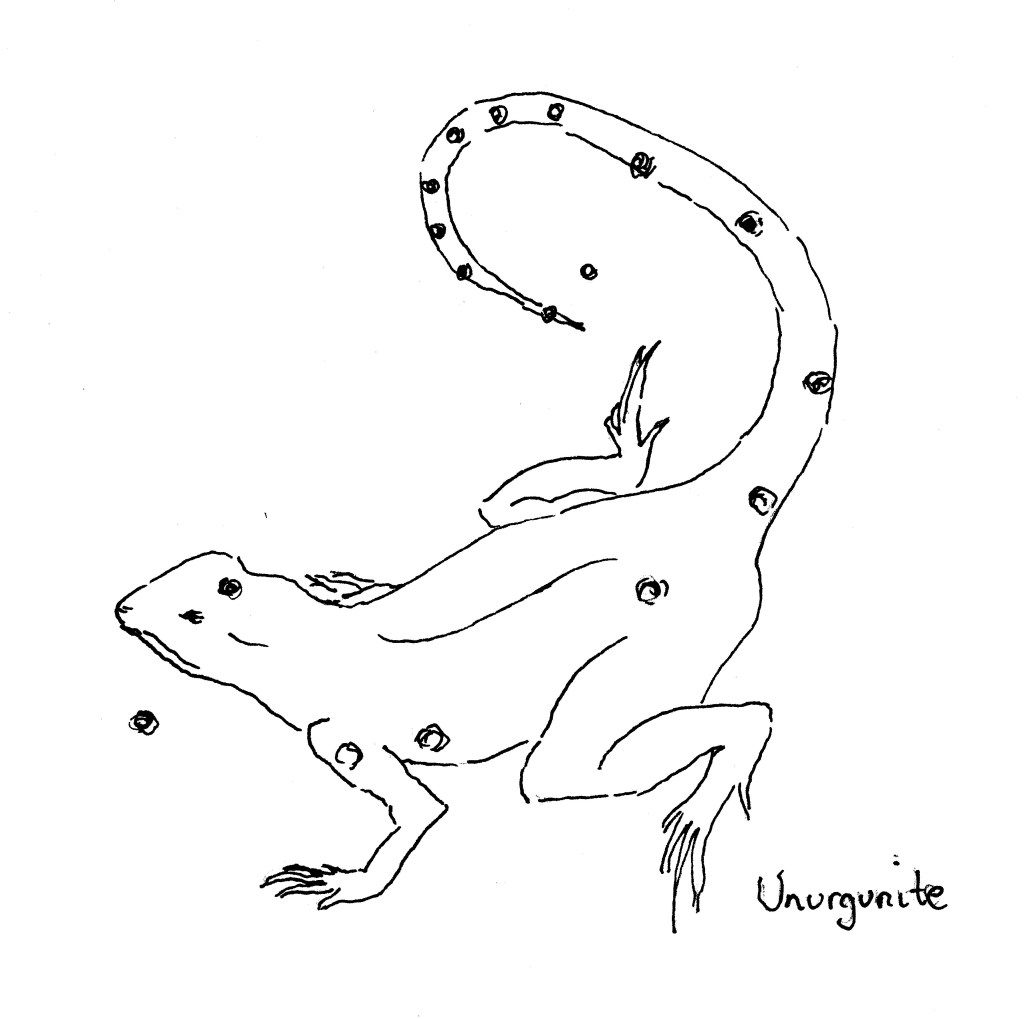
For the Boorong people of northwestern Victoria (who prided themselves in knowing more astronomy than any other Aboriginal group), the Moon is a man called Mityan, whose counterpart on Earth is the Eastern Quoll, a promiscuous and rather antisocial creature. Mityan falls in love with one of the wives of Unurgunite, who is a constellation in the night sky, as well as being Jacky Lizard on Earth. Mityan urges the wife to run away with him, but they are discovered by Unurgunite, who, smaller but braver and fiercer, attacks Mityan and chases him off. Ever since then Mityan has been wandering through the heavens, with no fixed home. (It should be noted here that the star known to western astronomers as Sigma Canis Majoris is, since 2017, known internationally as Unurgunite- one of only four stars so far to be given Aboriginal names.)
Fleet-footed Mercury returns to our morning skies briefly in January, and on the 20th & 21st, may be seen near the almost-New Moon very low in the East, from about 5:30 am.
Venus is now prominent, low in the evening twilight, and moving to meet Saturn. On Jan 22 they will be separated by less than 1°, as on the 23rd, when they will be even closer and more spectacular next to a very thin crescent Moon. Look west at about 9 pm- but not much later, as setting time is about 9:30 pm.
The alpha-Centaurid meteor shower will be active in February, peaking on Feb 8 with an hourly rate of about six – not the most prolific, but they sometimes display bright yellow and blue fireballs, with trains that can last for minutes. Their apparent source is around Alpha Centauri, brightest of the two Pointers, next to the Southern Cross. A possible detraction will be the almost-Full Moon, rising at about 11 pm.
On Feb 19, Mercury and the Moon will repeat their appearances in the early dawn sky, with the Moon even closer to Mercury than in January. Look low in the east soon after 6 am.
On Feb 22 at about 9 pm, low in the west, the two-day old Moon and Venus will only be 1° apart, with Jupiter near- and nearing. Look here again at about 8 pm on March 2 for another great spectacle: Venus and Jupiter, each more brilliant than the brightest star, Sirius, separated by only 0.5°.
By Vlack
 The Coburg Meddler