
During the first three weeks of February, you may chance to spot an alpha-Centaurid passing through the night sky. The alpha-Centaurids are bits of discarded comet appearing to fall from the region of the two Pointers in Centaurus in the southern sky. While they are not as plentiful as some meteor showers, at no more than 6 sightings per hour, their occasional pyrotechnics are worth a wait: yellow or blue fireballs, sometimes brighter than stars, and with trains lasting up to minutes long. These can be seen at any time of night, but chances of a sighting are best after midnight.
The February dawn sky will reward the planet-spotter. On the 11th, rising at about 6am, Venus and Jupiter will be separated by only 1°, with a thin sliver of New Moon close by in the eastern sky. On the 12th, their separation will only be 0.5°. But you will need good visibility of the eastern horizon for these viewings, as the planets will be still very low before they fade into the morning twilight.
On the 14th, Mercury returns to the morning skies to make a striking quartet of planets with Venus, Jupiter, and Saturn – but this is another difficult viewing, very low on the eastern horizon soon after 6am. Mercury is, as usual, being elusive and making only brief appearances. However, after the 20th, it can be found more easily and viewed for longer in the eastern dawn sky between Jupiter and Saturn.
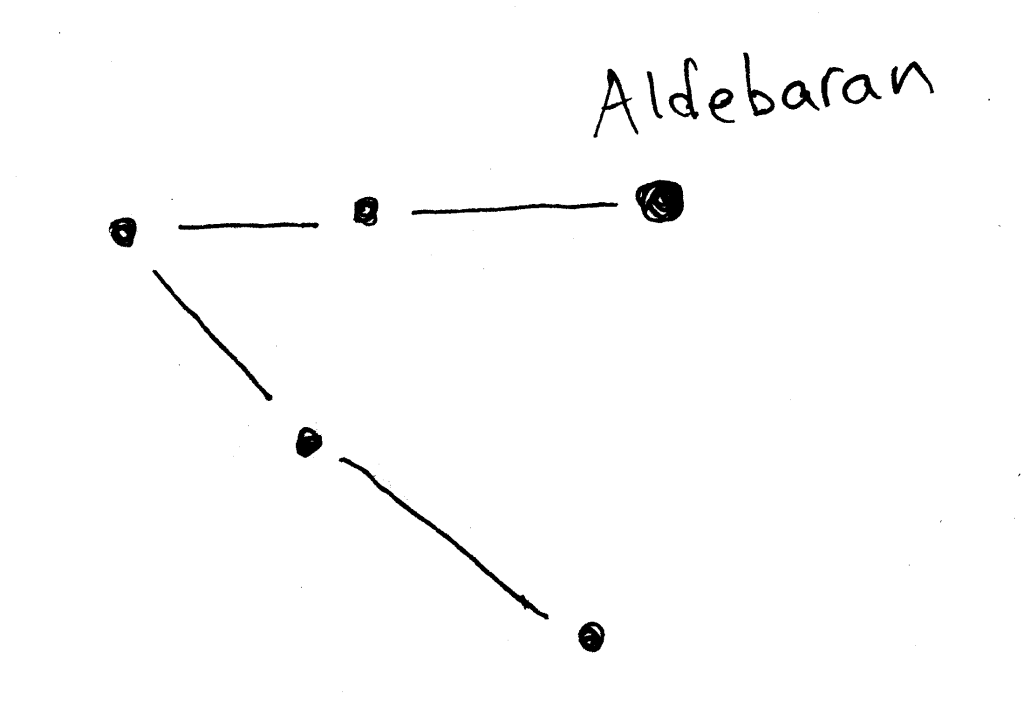
February evening skies show up the Moon: on the 19th, in First Quarter phase, only 5° from Mars and the Pleiades (Seven Sisters); on the 20th, close to Aldebaran and the Hyades (who were, in Greek mythology, half-sisters of the Pleiades); on the 23rd, near Castor and Pollux, the twin stars of Gemini.
March provides more spectacular dawn views of planets – including the best of Mercury this year. Look in the east anytime after 5am until twilight (about 6am).
On the 5th & 6th, Mercury and Jupiter are only 0.5° apart, with Saturn above.
On the 10th & 11th, Mercury, Jupiter and Saturn line up, with a very thin waning Moon beside them.
The 2021 Autumn equinox falls on March 20th.
Full Moon, at 5am on March 29th, is a supermoon, i.e., the Moon, in its elliptical orbit around Earth, is relatively close, and typically 30% brighter than at its furthest distance.
By Vlack
 The Coburg Meddler