
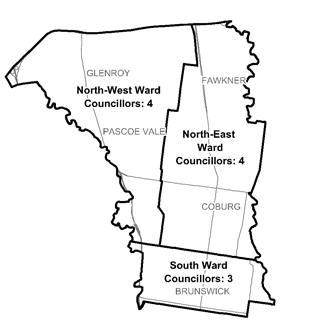
Late last year the State Government passed the Local Government Bill 2019. One of the most significant things that this bill introduced was a state-wide single-member ward system for all municipalities excluding rural shires and Melbourne City Council. This means that by the next local council election in 2024, Moreland will have exclusively single-seat wards.
In Moreland, the current three wards will likely be split into between 8 or 12 smaller wards. Each ward will be represented by one councillor. The single-member wards must ensure that they have approximately equal numbers of voters per councillor and that variance between wards does
not exceed 10 per cent. The State’s justification for these changes is that single-member wards create stronger local democracy. Put simply, the idea is that councillors who solely represent a ward will be elected on the basis of their championing the interests of a smaller population with hyper- local concerns. This might be attractive to residents who feel as though there is an unfair amount of attention given to development in the more popular or lucrative areas of Moreland.
The move to adopting multi-member wards in the early 2000s was also justified on ‘better democracy’ grounds. The Victorian Electoral Commission has weighed in on the issue, claiming that councils with an exclusively single-member ward structure can lead to councils failing to work together when necessary in unshakeable pursuit of own-ward interests.
There are also real concerns from alternative parties and independent councillors who feel as though they have only been able to get a foot in the council due to the multi-member ward model which uses proportional representation. Some have also criticised the move as an effort from the
Labor party to wrestle back the inner-city suburbs from the Greens.
This year only 5 municipalities had exclusively single-seat wards, and so these new changes mark a significant difference in the way that local council elections work.
By El S
 The Coburg Meddler