
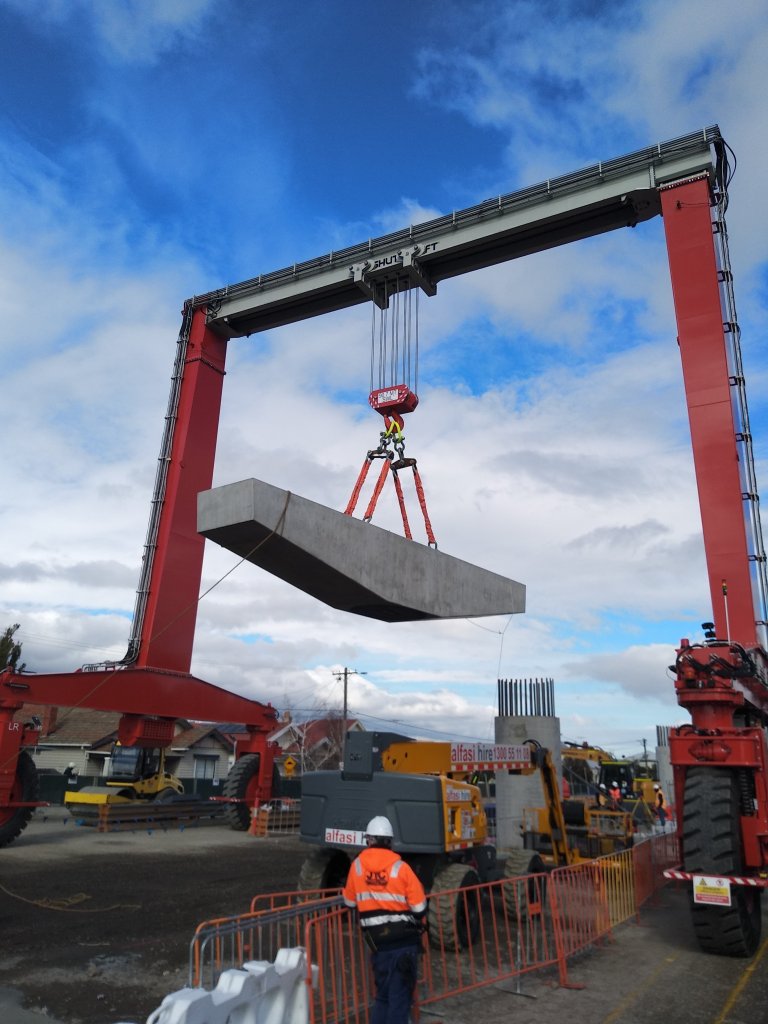
From 28 July until 15 November, the Level Crossing Removal Authority (LXRP) will be working through the night to remove level crossings at Bell Street, Munro Street, Reynard Street and Moreland Road and to install the much-talked about sky-rail. They will also be using this opportunity to build the new stations at Coburg and Moreland, the designs of which were released in June.
While the sky-rail project is an inevitable and an important improvement to the Upfield Line, residents in Moreland who live close to the railway are facing an unusually protracted and intense period of construction noise.
Ordinarily the EPA’s guidelines for normal hours of operation for major works is between 7:00am – 6:00pm on weekdays and 7:00am – 1:00pm on Saturdays. The EPA usually enforces these restrictions by requiring adherence to the guidelines as a condition of the mandatory licences that contractors must acquire before work can begin. The guidelines allow an exception for work outside of these hours where the work is unavoidable; for example, work needing to continue overnight to avoid the risk of a major traffic hazard.
The LXRP have stated that their project meets the threshold for this exception, however it’s not clear what the justification was for this determination.
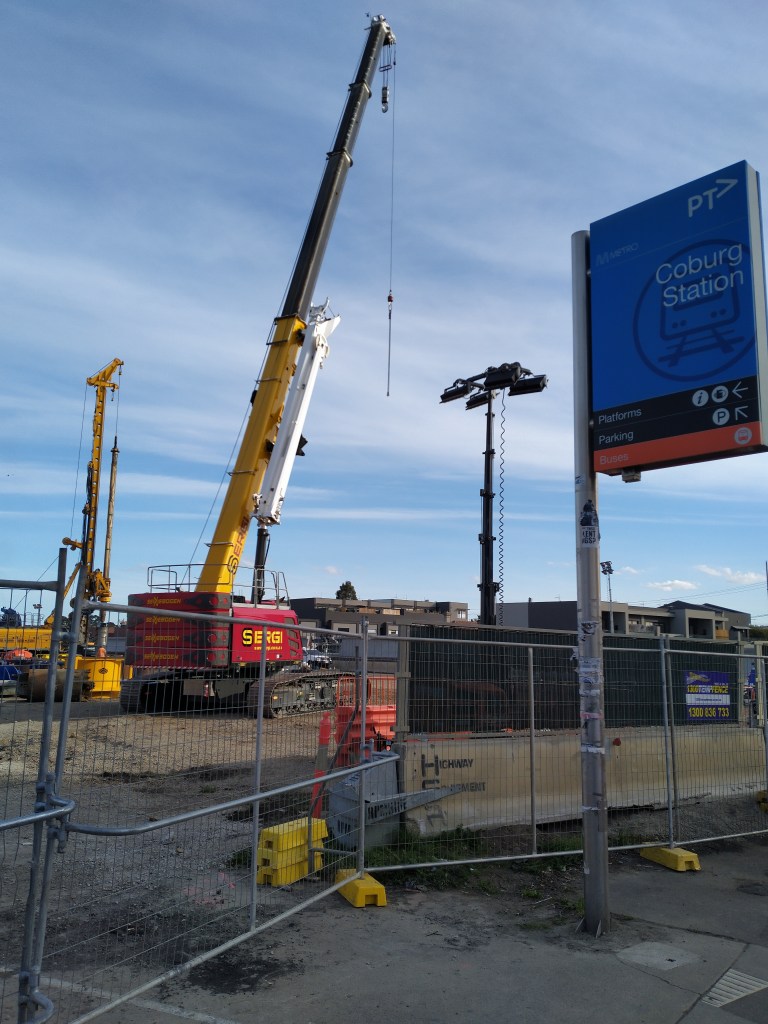
Under the EPA, the impacts of night work on the community, such as ongoing sleep disturbance over many nights, must be managed by the contractor, LXRP. In accordance with this, LXRP have offered temporary and paid relocation to rental properties for affected locals within 50m of the construction. They have also offered to provide locals with earplugs and headphones, and consecutive days of respite in alternative accommodation.
However, the LXRP have recently come under criticism from local groups regarding the inadequacy of their noise-mitigation measures. As a result of this growing dissatisfaction, on 16 August concerned residents and members from local interest groups formed a new campaign, ‘Sleepless in Moreland’ (‘SiM’). SiM say that they have ideas for possible solutions to some of the key issues they have identified with LXRP’s approach to the intense construction in Moreland.
One of the major concerns held by SiM relates to LXRP’s offer to relocate affected residents within 50m of the construction site. They argue that this offer is woefully inadequate given reports that the noise from the construction site is clearly audible overnight up to 3km away from the construction site.
SiM member, Tanya Pittard also argues that relocation is not always tenable for residents, in particular, ‘the vulnerable residents of the John Fawkner hospital palliative care units [and] detox patients in local residential programs’. These people, as well as families and essential carers, says Ms Pittard, ‘are all being denied sleep, and will be for up to 105 continuous nights’. SiM members also criticise the LXRP for ineffective communication about the support residents can ask for, claiming that some streets that were eligible for relocation were not contacted.
SiM are also concerned that the health and well-being of the residents left behind to deal with the noise is not being considered in the scheduling of jobs to be completed. They report that the type of construction happening at night is more intense than during the day. The decision of LXRP’s contractors to schedule heavy-duty works, such as pile-driving, throughout the night and seemingly less noisy work during the day has infuriated locals. SiM are therefore calling for the EPA to enforce the ordinary guidelines that prohibit overnight work, and failing that, for quieter works to be scheduled between 10:00pm – 7:00am.
These recent developments demonstrate the tension between the importance of protecting residents’ quiet enjoyment of their property and development for public benefit. The question here is whether the 24-hour, almost four month long blitz (if such a long period can be called a ‘blitz’) is strictly necessary and whether it therefore justifies the imposition on locals, some of whom will face mental and physical health consequences due to sleep deprivation.
If you wish to get involved in the ‘Sleepless in Moreland’ campaign, contact Better Level Crossings for Moreland via Facebook or moreland.lx.communityactiongroup@gmail.com.
If you’re being impacted by the construction noise and want to find out what LXRP are able to do for you, contact the LXRP on 1800 105 105
 The Coburg Meddler